Meloni’s overhaul of Italian electoral system | Explained
Account subscription benefits alongside Premium Stories, Editorials, Opinions and more. Unlock these with Subscription
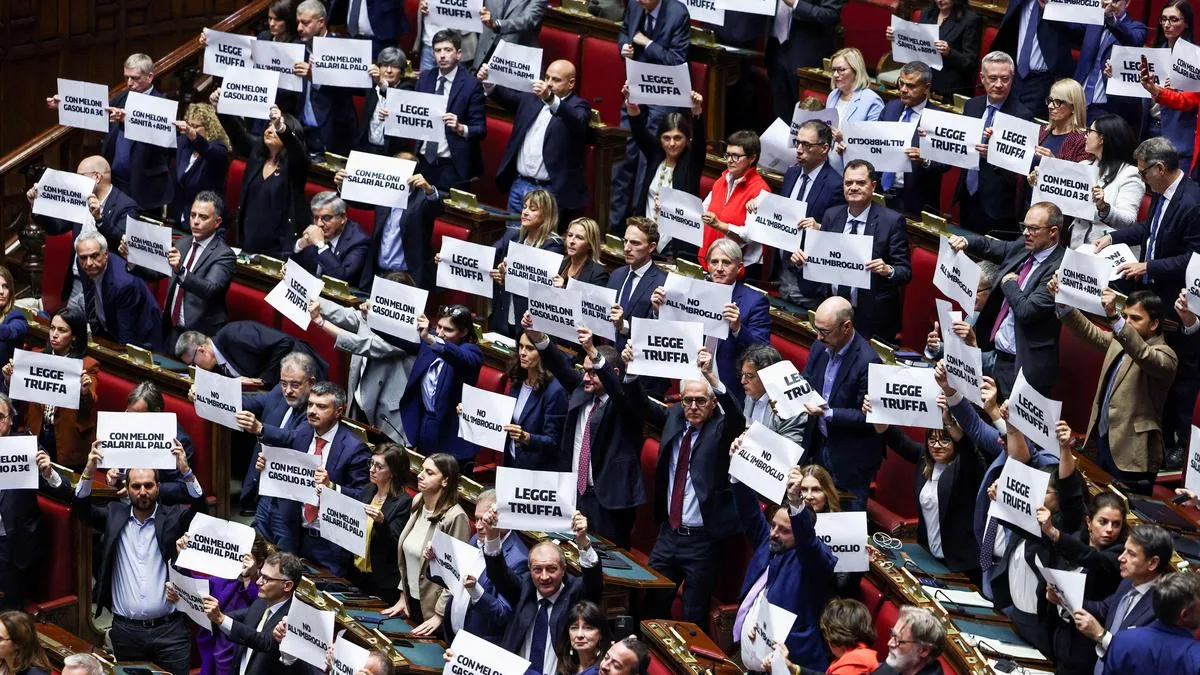
Members of parliament hold up signs at Italy's lower house of parliament on the day of a final vote on a contested electoral reform proposed by Prime Minister Giorgia Meloni, in Rome, Italy, on October 8, 2026. | Photo Credit: Matteo Minnella
With just more than a year to go before her coalition government has to step down for election, Italy’s Prime Minister Giorgia Meloni has successfully introduced a set of reforms in parliament to overhaul the European country’s electoral system to introduce a fully proportional structure with ‘bonus seats’ for the most popular party or coalition. T
The approval for the reforms comes weeks after Ms. Meloni’s centre-right coalition, in its first term, became the longest-serving administration in the country since the Second World War, and the move has been heralded by its supporters as key to ensure political stability. However, critics and Opposition lawmakers have raised concerns, saying that the overhaul is aimed at ensuring that the ruling coalition, trailing in opinion polls, hold on to power.
The fact that Ms. Meloni’s administration made the record for the longest continuous post-war reign in its first term shows that Italian politicians have always had trouble staying in power.
Following the Second World War and the end of the dictatorship of Benito Mussolini, the ‘first republic’ devised the parliament in such a way that it would be difficult for a single party to consolidate power. While the whole system has gone through multiple changes thorugh the years, the complex multi-member constituencies and proportional representation at the base incentivised coalitions and ensured decentralisation.
The system that brought Ms. Meloni to power in 2022 was a hybrid one, nicknamed ‘Rosatellum’ after independent lawmaker Ettore Rosato, where roughly 64% of seats in both the 400-member Chamber of Deputies and the 200-member Senate were decided through proportional representation while the remaining 36% seats went to first-past-the-post winners. While first-past-the-post seats gave popular candidates entry into parliament and proportional representation, where seat allocation for a party or coalition was decided based on its vote share, ensured that smaller and regional had their voices in parliament.
ALSO WATCH Watch: Giorgia Meloni: Can she survive Italy’s next election wave in 2027?
The new rules, approved by lawmakers in a secret ballot on Thursday (October 8, 2026) with 227 votes against 164, scraps the first-past-the-post seats and puts the whole parliament under proportional representation. While similar systems have existed previously, the contentious/ambitious clause guarantees up to 70 bonus seats in the Chamber, and 35 in the Senate, to the party or coalition that secure at least 42% votes.
5News aggregated this summary from the outlet’s public feed. The full article, with all the context, is on www.thehindu.com — the content belongs to The Hindu - International.