ClearWay Mobility Introduces Obstacle Detection Device to be Added to the Standard White Cane Used by Visually Impaired People
Account subscription benefits alongside Premium Stories, Editorials, Opinions and more. Unlock these with Subscription
ClearWay Mobility Introduces Obstacle Detection Device to be Added to the Standard White Cane Used by Visually Impaired People
The device adds obstacle alerts to a standard white cane without requiring users to change canes or rely on a smartphone
MUMBAI, India , Aug. 28, 2026 /PRNewswire/ -- What began as a school science-fair project five years ago has developed into ClearWay Mobility, a smart attachment designed to add obstacle detection to the standard white cane used by visually impaired people.
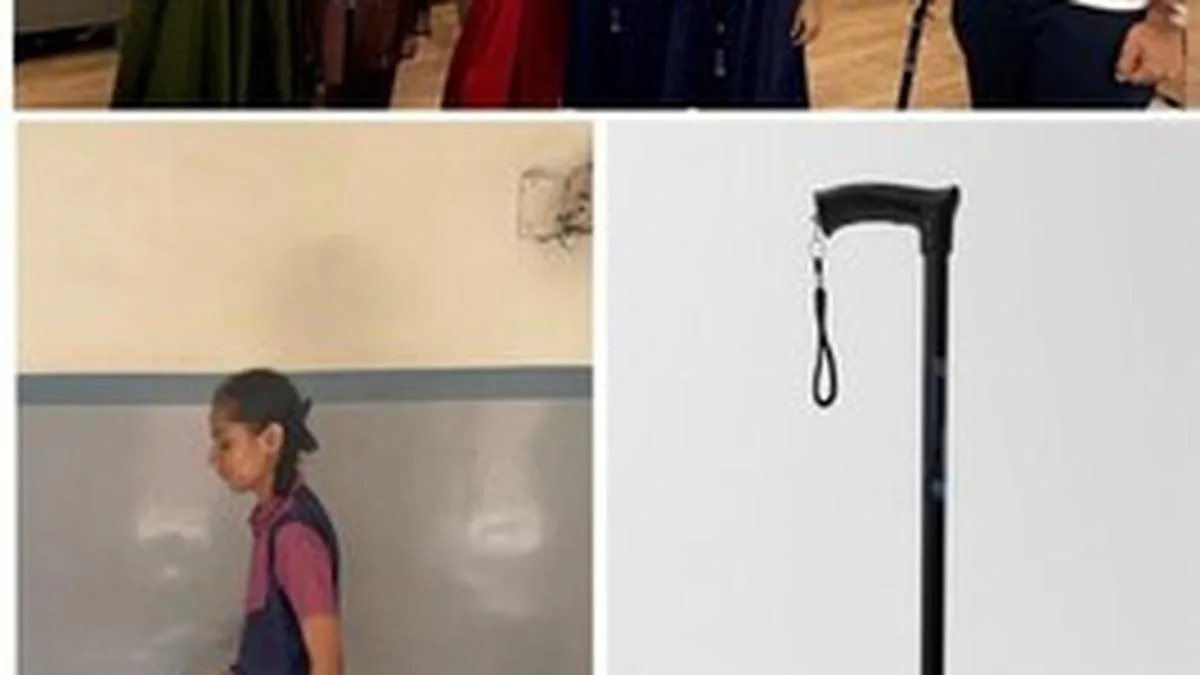
Developed by 17-year-old Mumbai student Jaiveer Talwar, ClearWay fits onto a standard white cane and alerts the user to obstacles in their path through vibration, with optional audio feedback. The idea is not to replace the white cane, but to add useful technology to something users already know and are comfortable using.
The attachment has been designed around three priorities: affordability, reliability and ease of use. It works independently, without requiring a smartphone, app or a change in the user's existing cane.
For visually impaired people navigating busy urban environments such as Mumbai, crowded streets, uneven pavements and unpredictable obstacles can make independent movement more challenging. ClearWay is intended to provide an additional layer of information while allowing the traditional white cane to remain at the centre of how the user navigates.
Talwar, a student at The Cathedral & John Connon School in Mumbai, first began working on the idea for a school science fair in 2021. He had long been interested in the intersection of technology and entrepreneurship, and chose to focus on a problem he could see around him: the difficulties visually impaired people face while navigating the city.
In 2024, he completed an internship with a prosthetics company to gain practical exposure to mobility challenges and assistive technologies.
In 2026, a revised version of ClearWay was tested with students and teachers at the Smt. Kamla Mehta Dadar School for the Blind in Mumbai. The experience provided encouraging feedback, but also gave Talwar a clearer understanding of how important simplicity, reliability and ease of use are in an assistive device.
"What started as a school project became something I wanted to keep working on once I understood how real the problem was," said Talwar. "The most useful learning has come from speaking to users and seeing what actually matters in everyday use."
The visit also raised concerns around the safety of visually impaired young women. In response, the current version of ClearWay incorporates GPS tracking, intended to enable family members to check a user's location when needed.
ClearWay has now entered the manufacturing stage, with an initial batch being produced.
The next phase will focus on refining the product through further user feedback, working with institutions on wider testing and deployment, and exploring how the device can be made accessible at scale.
5News aggregated this summary from the outlet’s public feed. The full article, with all the context, is on www.thehindu.com — the content belongs to The Hindu.