UPI MDR from October 15: Will your mutual fund SIP, insurance premium or OTT AutoPay get costlier?
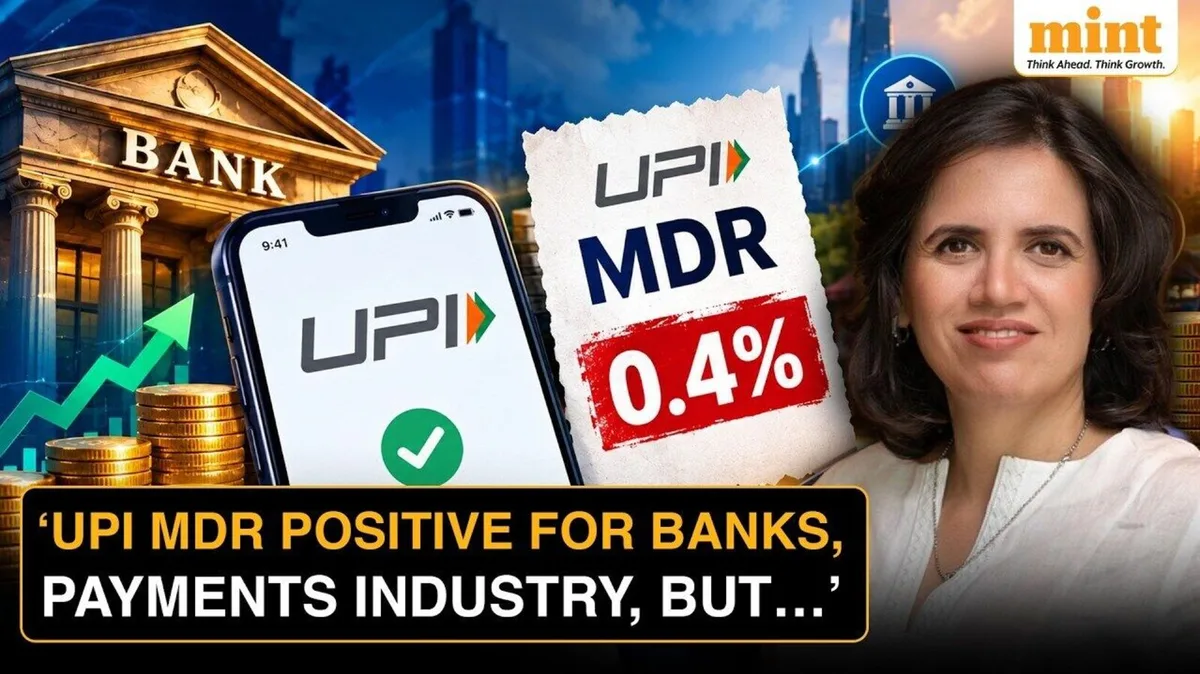
From 15 October, selected UPI payments above ₹ 2,000 will attract MDR. But recurring payments through UPI AutoPay and mandates are treated differently, while mutual fund and other capital-market payments have a separate lower rate.
UPI users will see a new merchant discount rate (MDR) framework from 15 October 2026, but the change does not mean that every payment above ₹ 2,000 will become chargeable. The new framework applies to specified person-to-merchant (P2M) transactions, while customers themselves will not be charged MDR.
This distinction is particularly important for people who use UPI to pay mutual fund SIPs , insurance premiums, utility bills and OTT subscriptions. The payment mechanism matters, not just the amount being paid.
For mutual fund investors, there is an important difference between a one-time UPI payment and a payment collected through an existing UPI mandate or AutoPay.
NPCI's UPI AutoPay facility supports recurring payments including mutual funds, insurance, utility bills and OTT subscriptions.
Therefore, investors who have set up a recurring mutual fund SIP through UPI AutoPay can continue with their scheduled payments without the prescribed MDR being applied to the AutoPay transaction.
The new framework separately provides a concessional rate for capital-market transactions. Payments to mutual funds, securities, stockbrokers and dealers will attract an MDR of 0.02%, subject to a maximum of ₹ 300 per transaction.
This means a one-time UPI payment for an eligible mutual fund transaction falls under the capital-market category, while an automated SIP collected through a UPI mandate is treated differently.
The government has clarified that MDR is a charge within the merchant payment system and is not a transaction fee payable by the customer.
Insurance has been placed in a separate category under the new framework.
For specified insurance payments above ₹ 2,000, the MDR is ₹ 5 per transaction, rather than the standard 0.4% rate. The same ₹ 5 treatment applies to certain other specified sectors such as railways, telecom, fuel and agricultural inputs.
For consumers, however, the key point is that this is an MDR payable within the merchant payment ecosystem, rather than a new UPI transaction fee imposed directly on the person making the payment.
Someone paying an annual insurance premium through UPI therefore should not assume that a ₹ 50,000 payment will automatically mean a ₹ 200 charge to their bank account.
UPI AutoPay is designed specifically for recurring payments. NPCI lists mobile bills, electricity bills, EMIs, entertainment and OTT subscriptions, insurance and mutual funds among the recurring payments that can be handled through UPI AutoPay.
5News aggregated this summary from the outlet’s public feed. The full article, with all the context, is on www.livemint.com — the content belongs to LiveMint - Money.