Andhra University plans Centres of Excellence in quantum technology, AI and semiconductors
Account subscription benefits alongside Premium Stories, Editorials, Opinions and more. Unlock these with Subscription
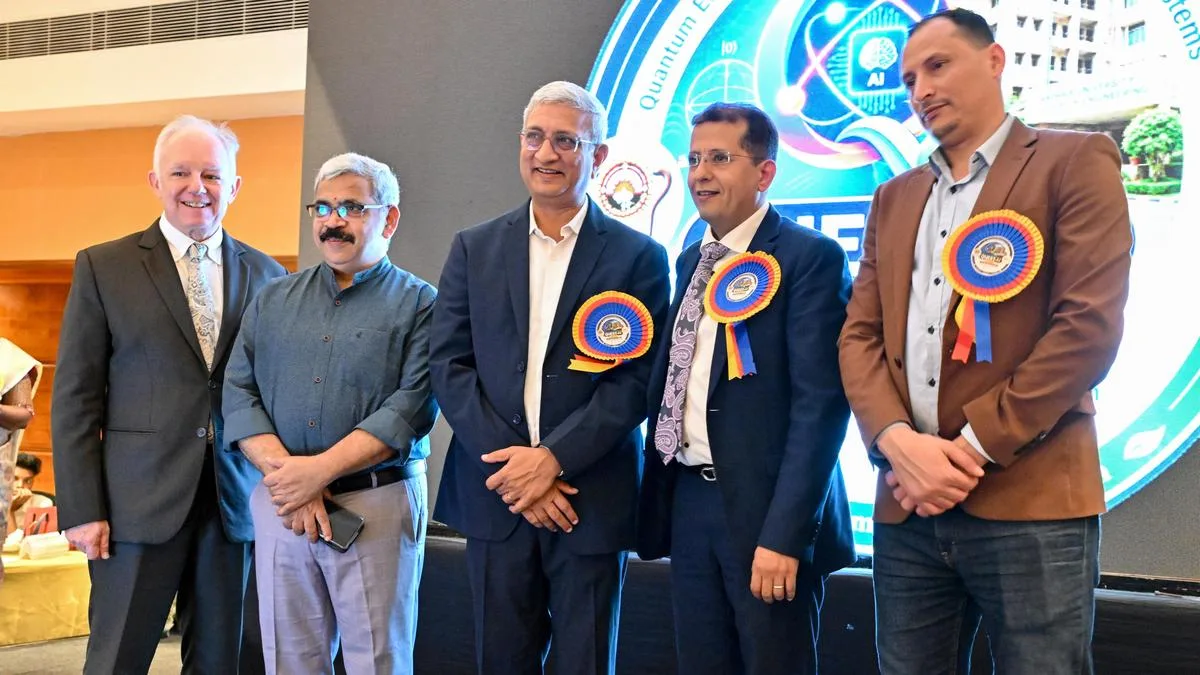
(From left) Gregory J. Skulmoski, Associate Professor, Project Management, Bond University, Australia; G.P. Raja Sekhar, Vice-Chancellor, Andhra University; K.N. Satyanarayana, Director, IIT Tirupati; Marwan Dhamrin, Professor, Graduate School of Engineering, Osaka University, Japan; and Nabil Mohammed, Lecturer, Electrical Engineering, Federation University, Australia, at the QUEST-AI conference in Visakhapatnam on Tuesday. | Photo Credit: KR DEEPAK
Andhra University plans to establish Centres of Excellence in quantum technology, AI systems and semiconductors, Vice-Chancellor G.P. Raja Sekhar said on Tuesday.
Mr. Raja Sekhar was speaking at the inauguration of the three-day international conference on Quantum-Enhanced Sustainable Technologies for AI Systems (QUEST-AI), organised by the cluster departments of Andhra University College of Engineering (A) in Visakhapatnam.
“Following the conclusion of the centenary celebrations of Andhra University, we are focusing on quality developmental activities,” Mr. Raja Sekhar said. He expected the deliberations to encourage the university to focus on establishing the three laboratories over the next two to three years. Research in quantum technology and artificial intelligence should not remain confined to theory, he said, but must be translated into solutions of use to society, he said.
Delivering the inaugural address, K.N. Satyanarayana, Director, IIT Tirupati, said the Union government had launched the National Quantum Mission with an outlay of ₹6,000 crore. Quantum computing would not replace classical computing, Mr. Satyanarayana said, and the more likely course would be a hybrid model in which the two worked together. Andhra Pradesh, he said, had the opportunity to build not merely a quantum valley but an integrated quantum-AI ecosystem, drawing together the government, academic institutions, industry, start-ups and partners such as IBM and TCS.
Mr. Satyanarayana also linked the theme to the city. “Visakhapatnam is a city where data centres are coming up, and to drive AI, we need data centres,” he said. Such facilities consumed large quantities of energy and water, he said, making sustainability central to the discussion.
Marwan Dhamrin, Professor at the Graduate School of Engineering, Osaka University, Japan, called for closer research collaboration between India and Japan. . It was time for India to build what industry called “a vertically integrated society for semiconductors and AI”, he said.
Nabil Mohammed, Lecturer, Electrical Engineering, Federation University, Australia, said clean energy and data centres would have to develop side by side. “The challenge is how we can generate more electricity from sustainable resources to power these future data centres,” Mr. Mohammed said.
Gregory J. Skulmoski, Associate Professor, Project Management, Bond University, Australia, said India was well placed to address the global shortage of skilled professionals in quantum technologies.
Mr. K. Venkata Subbaiah, Principal, AUCE (A), welcomed the guests. Conference chair Mr. V.
5News aggregated this summary from the outlet’s public feed. The full article, with all the context, is on www.thehindu.com — the content belongs to The Hindu.