Gen Z vs the khap panchayats: Old rules, new rebels
Account subscription benefits alongside Premium Stories, Editorials, Opinions and more. Unlock these with Subscription
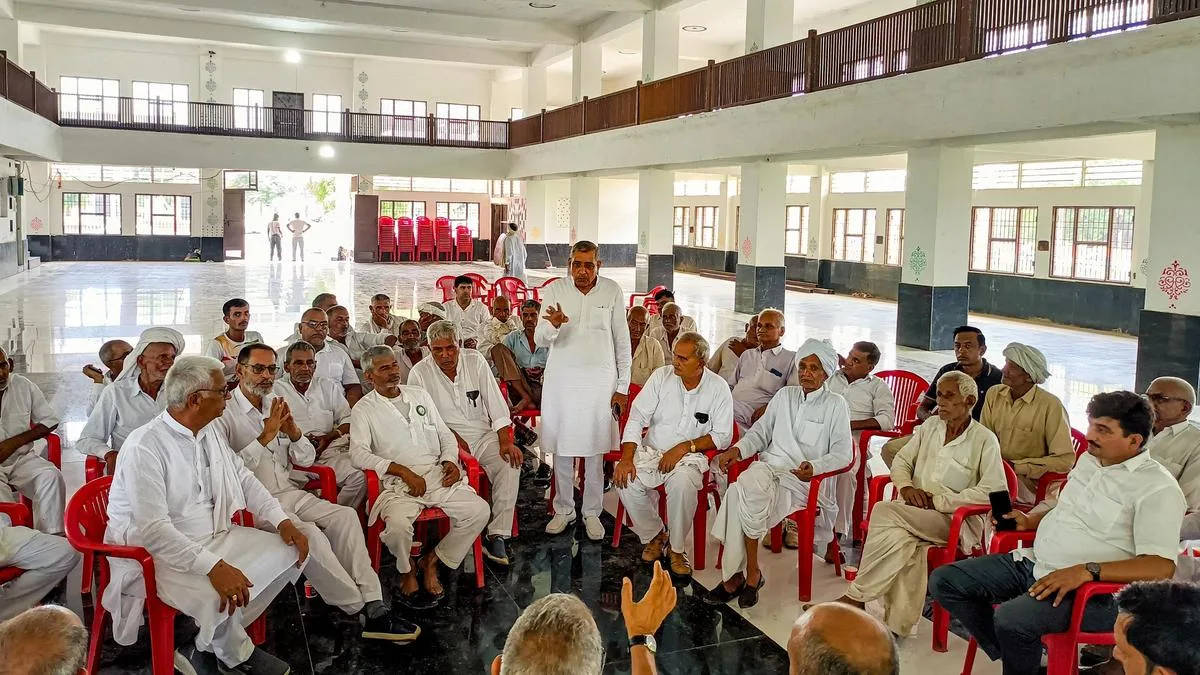
Kandela khap panchayat senior deputy president, Raghubir Bhardwaj (standing), holds a meeting with fellow members, to finalise the agenda and fix duties for the Khap Sammelan, which was held in Jind district, Haryana, on August 9, 2026. | Photo Credit: Special Arrangement
Anchal, an M.A. student and a resident of Igra village, Jind district, posted a video on social media satirising khap panchayats, the powerful but unelected community bodies dominated by elderly men from landowning communities in Haryana. Imagining what a “Gen Z panchayat” might look like, she suggests in the video that elderly men face restrictions on playing cards, smoking hookahs and bidis , and wasting time, while tobacco sellers be fined. The money collected through such fines, she jokes, could be used to replace phones damaged or confiscated from girls.
Anchal was responding to a controversy that exploded after a khap panchayat member, Virender Dhull, a resident of Ikkas village in Haryana, made a remark about young women at the Naugama khap meeting in Jind on August 1. The comment that went viral was about women riding pillion with their fathers on two-wheelers, their legs astride, while using mobile phones and wearing clothes the khap thought unsuitable. He said their phones should be smashed. Dhull, a director of physical education at Jat Senior Secondary School in Jind, was hit by social-media criticism.
Over the past few weeks, several khap panchayats across parts of north Haryana have unleashed a series of resolutions, many against women. The khaps have opposed marriages within the community and live-in and same-sex relationships, while also resolving to fight drug abuse, online betting, and obscene social-media content.
Khap leaders insist they are not issuing diktats. They describe themselves as community elders offering guidance to the youth, and argue that their goal is to preserve social cohesion and protect families. Except, ostracisation will be a penalty for those who disregard these social rules. And the rules are targeted primarily at young women.
To many, especially the social-media-vocal Gen Z, the khaps’ message sounded like an attempt to regulate their personal choices in the name of tradition.
“Why are concerns over culture and social behaviour directed primarily at girls? If these restrictions are genuinely meant to protect society and preserve our culture, they should apply equally to men,” Anchal says.
Young women see the controversy as an enduring culture of social control over female agency, and have posted videos against the diktats. Several men too, like rapper Rahul Fazilpuria and content creator Paras Yadav, too, took to social media to condemn the resolution.
Naugama khap president, Jaivir Lohan, however, says Dhull’s remarks have been misrepresented. He maintains that the khap has not banned mobile phones for girls or prescribed what women should or shouldn’t wear.
5News aggregated this summary from the outlet’s public feed. The full article, with all the context, is on www.thehindu.com — the content belongs to The Hindu.