China’s strategy amid West Asia’s security realignment
Account subscription benefits alongside Premium Stories, Editorials, Opinions and more. Unlock these with Subscription
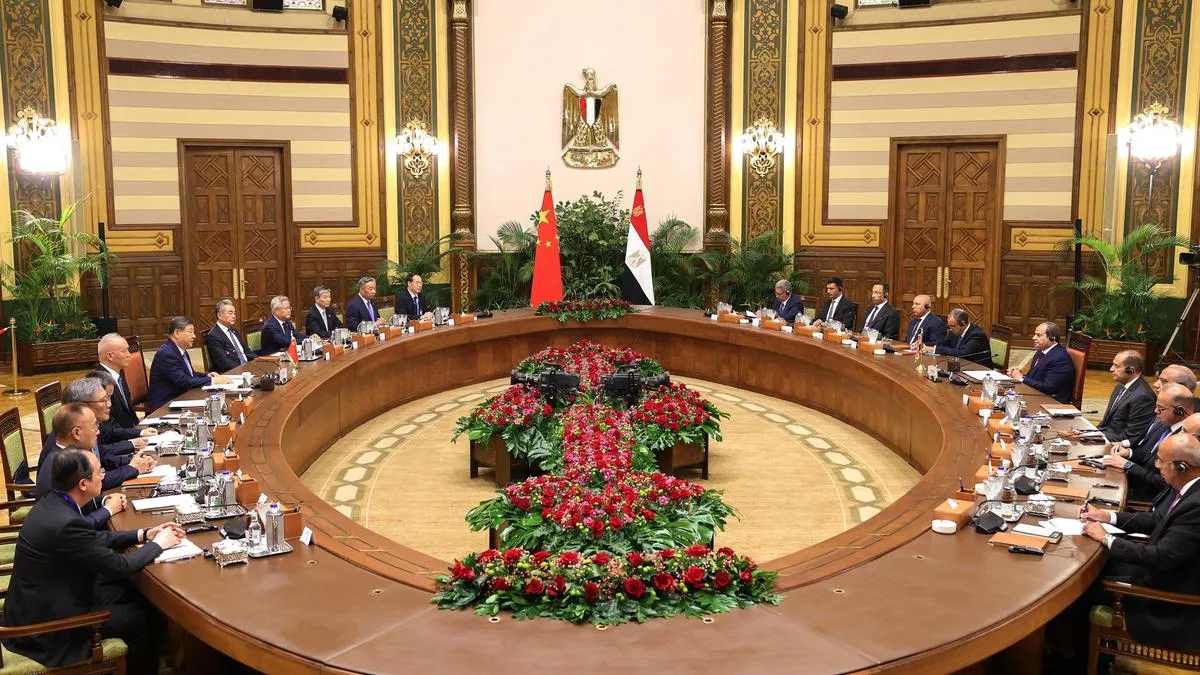
‘This is the first time that China has elaborated what such an architecture should look like’ | Photo Credit: Xinhua via AP
Chinese President Xi Jinping’s visit to Egypt (September 1-2, 2026) marked a shift in Beijing’s engagement with West Asia. In talks with Egyptian President Abdel Fattah El-Sisi, Mr. Xi set out a four-point formula for a new regional security architecture. Beijing has long talked about the need to rethink regional security, but this is the first time it has elaborated what such an architecture should look like.
Among the four points, the first is the need to “unleash the internal momentum of regional common security”. The core component of this is to reduce the “interference by external forces” while supporting regional countries to strengthen dialogue on peace and security. Second, Mr. Xi called for the issues in the region to be discussed comprehensively, while prioritising the goal of a two-state solution for the Palestinian question. Third, he stressed that “lasting stability and security in West Asia relies fundamentally on development”. In doing so, he articulated Beijing’s opposition to the weaponisation of international waterways, while positioning economic diplomacy and development cooperation as the preferred instrument for Chinese engagement. Finally, Mr. Xi insisted that all these efforts must happen through the United Nations framework.
The announcement comes at an interesting moment in the evolution of West Asian geopolitics. The United States-Israeli war against Iran, the fracturing of Gulf security assumptions, disrupted energy flows and the closure of the Strait of Hormuz, and rising Türkiye-Israel tensions have all pressed on Chinese interests. Pakistan’s brokering of a U.S.-Iran understanding, which Beijing supported, offered a template for extending influence without exposure. Then came the Mecca Joint Defence Agreement on August 7, 2026 between Pakistan, Saudi Arabia and Türkiye.
In theory, a North Atlantic Treaty Organization (NATO)-style mutual defence agreement would not be welcome in Beijing. Over the years, the Chinese leadership has repeatedly pushed back against what it says is Cold War mentality and bloc politics. But in this case, it has been extremely cautious. There has been no formal comment, no direct leadership statement, and no word from its ambassadors. That, however, does not mean that there has not been an internal debate.
For instance, Long Chen of Renmin University’s Chongyang Institute has argued that the Mecca pact might actually serve American purposes. Every administration since (then) U.S. President Barack Obama has sought to shed direct security costs, the 2025 National Security Strategy says as much explicitly, and regional states arming themselves is precisely what offshore balancing requires. He noted that all three signatories remain dependent on American weapons and intelligence.
5News aggregated this summary from the outlet’s public feed. The full article, with all the context, is on www.thehindu.com — the content belongs to The Hindu.