Why the Supreme Court struck down Maharashtra’s methanol rules? | Explained
Account subscription benefits alongside Premium Stories, Editorials, Opinions and more. Unlock these with Subscription
The story so far: The Supreme Court on Friday (September 18, 2026) has struck down Maharashtra government rules requiring methanol to be denatured with a colourant and bitterant before sale to non-drug manufacturers, holding that the measures were disproportionate and did not have a sufficient connection with the problem they sought to address.
A Bench of Justice J.B. Pardiwala and Justice K. Vinod Chandran allowed the writ petitions filed by the methanol-based product manufacturers against the mandatory inclusion of additives in methanol because of amendments to the Maharashtra Poisons Rules, 1972, which had affected the quality and usability of their products
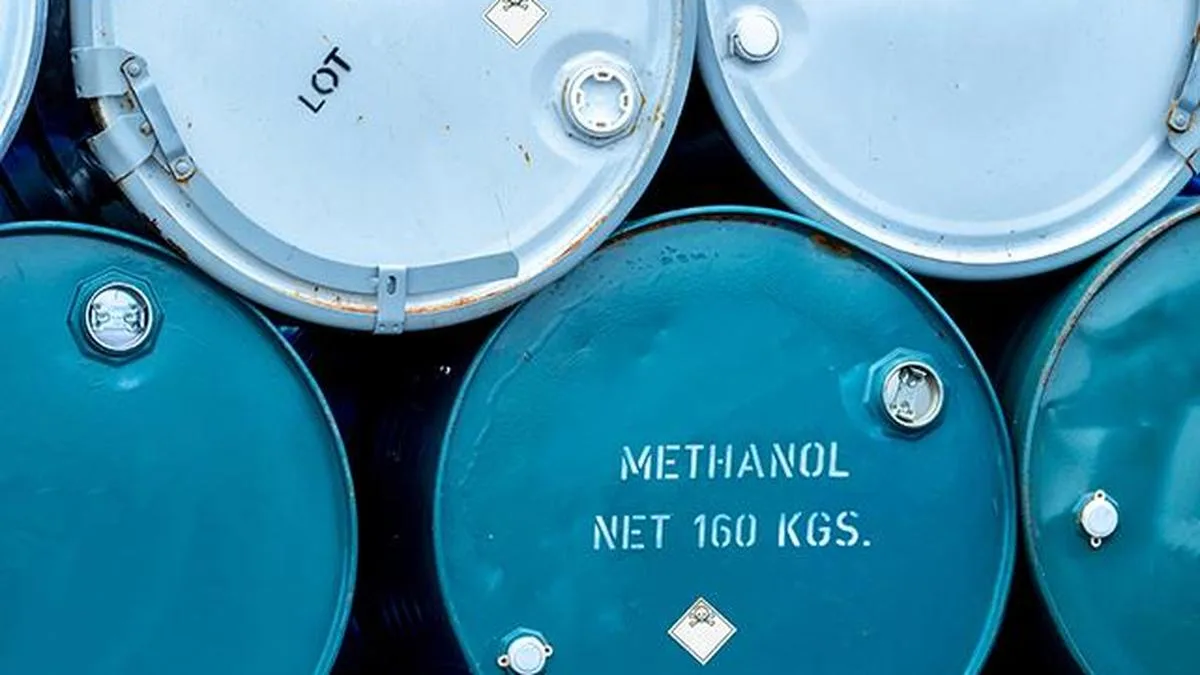
Methanol, or methyl alcohol, is a highly toxic substance. It is also widely used as an industrial raw material in products including formaldehyde, paraformaldehyde, paints, resins and other chemicals.
The Maharashtra government introduced stricter controls on methanol following a 1991 hooch tragedy in Mumbai, in which around 93 people died after consuming spurious liquor containing methanol. A committee headed by then Additional Director General of Police P.R. Parthasarthy was subsequently constituted to examine the causes of the tragedy and suggest measures.
In 2011, Maharashtra amended its Poisons Rules and introduced Rules 18A and 18B.
The petitioners are aggrieved by the operation of impugned rules 18A and 18B of the Maharashtra Poisons Rules, respectively, which restrict purchase of methanol, and mandate the addition of bitterant and colourant to methanol before sale to a non-drug manufacturer. Further, by operation of Rule 18B, any possession of methanol without a licence in Form A is liable to confiscation. The practical hardship for the petitioners lies in the fact that after addition of the denaturant, their final products are not acceptable by other industries.
Companies told the court that colour contamination could make products unacceptable to the paint and pharmaceutical industries, while the additives could affect catalysts, laboratory and pharmaceutical applications.
The State, however, argued that the rules were necessary because methanol could be mixed with liquor and cause fatal poisoning. According to the State, making methanol identifiable and bitter would help prevent its misuse.
The central question was whether Rules 18A and 18B violated Articles 14 and 19(1)(g) of the Constitution.
The basic tenet of Article 14 is fairness in action and non-arbitrariness, while Article 19(1)(g) protects the right to carry on an occupation, trade or business. The court said that the State does have the power to regulate methanol. The Poisons Act, 1919 permits State governments to make rules regulating the possession and sale of poisons.
But the question before the court was whether Rules 18A and 18B, respectively, of the Maharashtra Poisons Rules could be said to be arbitrary, disproportionate, and unreasonable.
The Supreme Court held that the impugned provisions of the Maharashtra Poisons Rules, 1972, were unconstitutional.
5News aggregated this summary from the outlet’s public feed. The full article, with all the context, is on www.thehindu.com — the content belongs to The Hindu - National.