A pantry with a past: Indian consumers are seeking indigenous, organic produce
Account subscription benefits alongside Premium Stories, Editorials, Opinions and more. Unlock these with Subscription
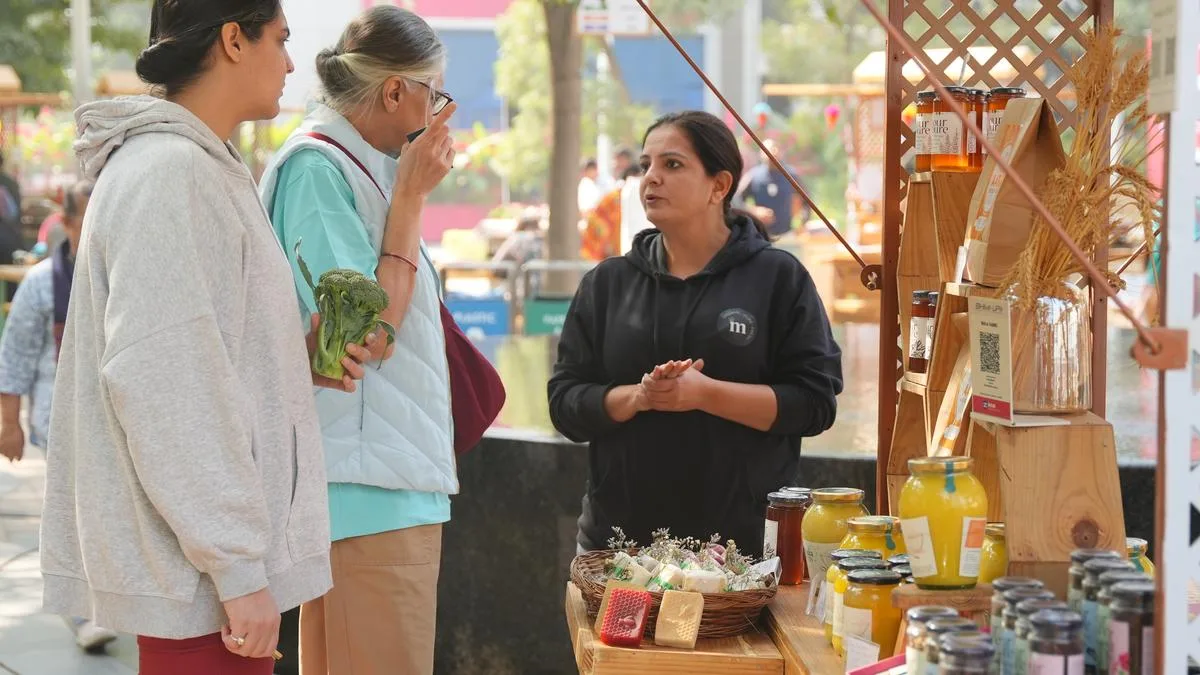
Customers at HandpickedByPC farmers’ market | Photo Credit: Special arrangement
At a recent dinner in a South Delhi home, the conversation moved quickly from the delicious meal to what had gone into its making. The host, Neeraj Singh, a tech consultant and enthusiastic home cook, shared that each dish had been cooked in cold-pressed groundnut oil — part of his effort to replace everyday pantry staples with what he considered were “healthier alternatives”, despite their higher price.
“I’ve replaced most of the basmati in my kitchen with varieties like joha that we grew up eating in Assam,” chimed in advertising professional and guest Pakhi Sharma. She used to bring back the indigenous short-grain rice after every visit home, she told us, but now buys it online — at almost twice the price. Another guest spoke of brewing only single-origin coffee from a small estate in Chikmagalur.
That dinner-table conversation reflects a broader shift in how a growing section of urban India shops for food today. Consumers are no longer only trying to eat right; they’re trying to eat better, choosing provenance-driven, clean-label products over mass-market ones. But, as is the wont in our country, people practise a selective kind of premiumisation: trading up things such as the oil, coffee or rice they care about, while remaining price-conscious about other items in the pantry.
My own pantry has gradually made room for cold-pressed mustard oil and extra virgin olive oil, different varieties of rice, including jeerakasala and black rice that I alternate with my regular rice, and options for refined sugar such as date sugar, coconut palm sugar and desi khand (unrefined sugar). There is even a jar of date honey sitting alongside the more conventional staples. None of these choices came about at once. But increasingly, I find myself looking beyond the brand name to ask where an ingredient comes from and how it has been made.
A snapshot of cold-pressed oils from the writer’s pantry | Photo Credit: Satarupa Paul
Cold-pressed oils are perhaps the most visible manifestation of this shift. Market research company IMARC Group estimates that the Indian market for such oils grew from ₹580.3 million in 2020 to ₹755.2 million in 2025, and could reach ₹1,213.8 million by 2034. And the trend extends beyond things such as oils, single-origin coffee and chocolate, varietal honey, and heritage rice.
Coffee harvesting at Nandan Coffee | Photo Credit: Special arrangement
Artisanal cheese and bread, for instance, have a big market; the latter being driven in part by demand for sourdough and other clean-label breads. Fermented foods are another expanding category: IMARC estimates India’s fermented superfoods market at $1.3 billion in 2025, including kombucha, kefir, kimchi and miso.
The shift became particularly visible after the pandemic, when food sourcing and health came under greater scrutiny. “There is now a mainstreaming of the idea that the food you get in the market may or may not be ‘healthy’.
5News aggregated this summary from the outlet’s public feed. The full article, with all the context, is on www.thehindu.com — the content belongs to The Hindu.