Pretty girls
Account subscription benefits alongside Premium Stories, Editorials, Opinions and more. Unlock these with Subscription
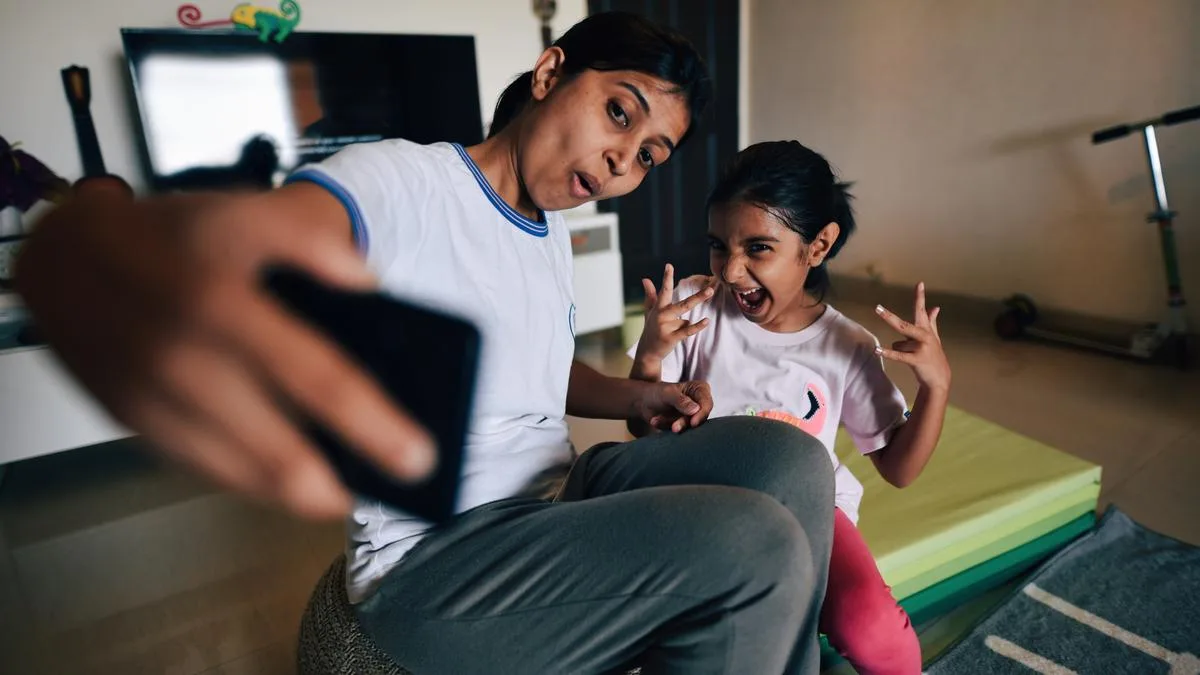
Earlier this week, a video of a mother-daughter duo doing an Instagram transition reel fell victim to the internet moral police. Several people on X (formerly Twitter) watched a mother abandon her old salwar-kameez and trade it in for a blue sleeveless crop-top, like what her daughter wore. This offended some. ‘What’s happening to our culture,’ they asked, distributing and quote-tweeting the video. Oftentimes, X sounds like a khap panchayat. It makes me wonder why women have to continue negotiating everyday life.
Leader of the Opposition Rahul Gandhi addressed this at a women-only conclave in Pune. This article speaks about how he framed women’s autonomy as ownership of their bodies and their lives. “Instead of considering women merely as a constituency to be protected, Rahul Gandhi questioned the very cage’ in which women are confined on the pretext of safety,” the article says. This framing matters. It shifts the focus from male protection to female possession.
Some days after this, his mother, Sonia Gandhi, was the target of AI-generated memes that jumped on a retro-photo trend that asked ChatGPT to picture people in the 1980s. They used the old trope of a woman at a bar surrounded by men.
Urvashi Butalia, the founder of feminist publishing house Zubaan Books, who writes about the questions of land, labour, caste, health, and violence, speaks about how Indian feminism has been shaped by ground realities. From the anti-price rise agitations of the 1970s to the Chipko movement, from the Shaheen Bagh protests to the dignity march — women have existed fully in public life and have made their own decisions.
There are no single figureheads in the Indian movement. Instead, there are thousands. Each of them has insisted on living on their own terms, while empowering others to do the same. This insistence remains urgent today. The fight persists, inherited by each generation that carries the torch forward.
Someday, it will mean nothing to see a mother-daughter duo in matching T-shirt and jeans dancing to Zara Larson’s ‘Pretty Girl’.
A strategy to achieve equality among all genders by focusing on how public resources are collected and spent. Economist Lekha S. Chakraborty, who worked on some of India’s first gender budgeting initiatives, was published in the coveted Routledge, an economics journal, on August 20. She spoke about how being raised by a single parent and economic constraints motivated her to persist in exploring this intersectionality between money and gender, as she worked with a reluctant government in the 2000s, she said.
Set in Thanjavur, R. Seshasayee’s new novel, The Grammar of Silence: Five Centuries. Three Women. Towards Liberation. follows the lives of three women through different centuries, navigating various oppressive structures of society. How they overcome them through a characteristic, mindful defiance of convention forms the crux of the story. “It is silence and a sense of sorority that binds together these women across the centuries, as also their lived experiences.
5News aggregated this summary from the outlet’s public feed. The full article, with all the context, is on www.thehindu.com — the content belongs to The Hindu.