The influence of Dalit voters in Uttar Pradesh
Account subscription benefits alongside Premium Stories, Editorials, Opinions and more. Unlock these with Subscription
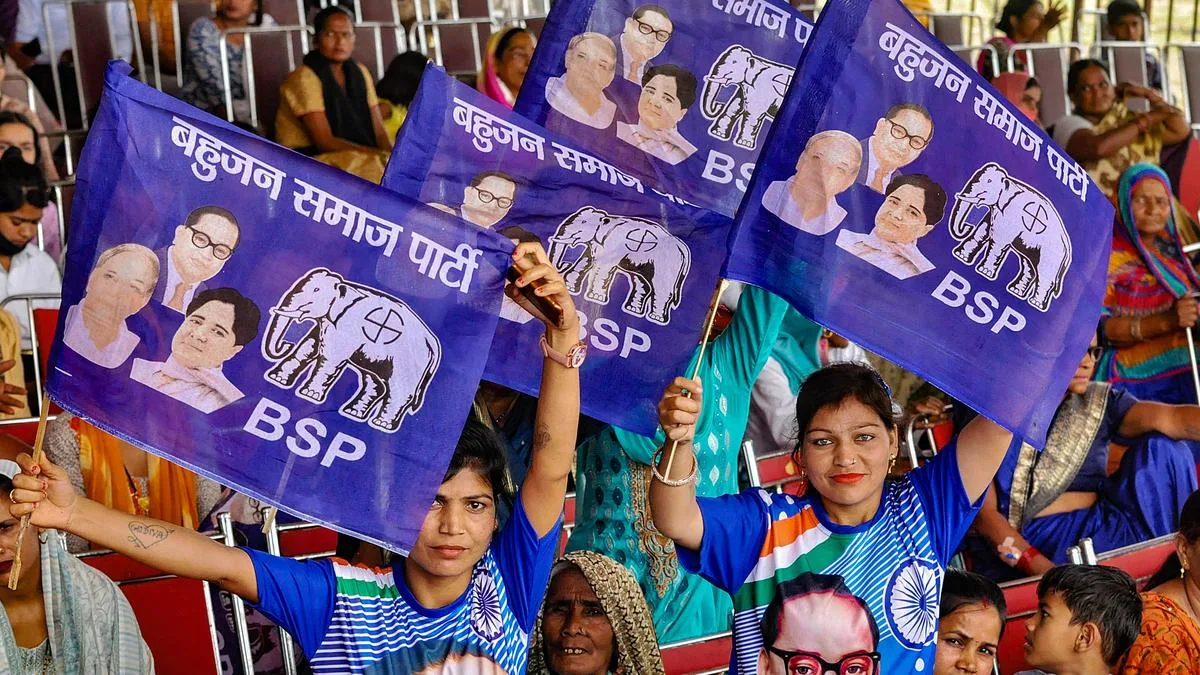
Moradabad: Bahujan Samaj Party (BSP) supporters during a public meeting addressed by party's Chief Mayawati ahead of Lok Sabha polls, in Moradabad, Monday, April 15, 2024.
More than six months ahead of the 2027 Assembly elections in Uttar Pradesh, political parties are already looking for issues that can help them mobilise voters. The Congress rally addressed by Mallikarjun Kharge at the Ramlila Ground in Haldwani, and the puja that was performed by some people afterwards, which has been described as a shuddhikaran (purification) puja, has emerged as one such issue that the Congress is seeking to capitalise on. Though the party knows that its Dalit support in the State is minuscule, it is trying to expand its appeal among Dalit communities.
For Uttar Pradesh, however, the larger question is not simply whether political parties will try to mobilise Dalit voters — they certainly will — but how much of the Dalit vote remains transferable, and which party or alliance can attract it in big numbers to make a difference in the 2027 Assembly election?
The Bahujan Samaj Party (BSP) had remained the most popular choice among the Dalit voters, though more so among Jatavs and slightly less so among non-Jatav Dalits. Over the years, a large number of Jatavs have voted for the BSP; however, some decline is visible in recent elections. When the BSP came to power in the State in the Assembly elections held in 2007, 86% of the Jatavs voted for the BSP while only 54% of non-Jatav Dalits voted for it. In the last Assembly elections held in 2022, this figure dropped to 65% among Jatavs, while its support among non-Jatav Dalits declined to 27% .
The BSP’s hold on the Dalit vote has weakened over the years. On the other hand, the Bharatiya Janata Party (BJP) has been able to make noticeable inroads among this group, though these gains are still not sizable enough.
The pattern becomes even more striking when one looks into the voting pattern of Jatavs and non-Jatav Dalits separately.
As showin in the table below, the support for the BJP/National Democratic Alliance (NDA) among Jatavs increased from just 3% in 2002 to about 20% in the Assembly elections held in 2022, while the BSP’s support among Jatavs declined from 76% in 2002 to 65% in 2022.
As shown in the table below, among non-Jatav Dalits, the shift is noticeably sharper. Here, the BJP/NDA support increased from 12% in 2002 to 40% in 2022, while the BSP’s support fell from 45% to 27% over the same period.
The data clearly suggest that the weakening of the BSP is not a mere fragmentation of the Dalit vote; rather, much of the vote that has moved away from the BSP has gone to the BJP, especially among non-Jatav Dalits.
Between 2002 and 2022, support for the BJP/NDA among non-Jatav Dalits has increased by 28 percentage points, compared to a 17-point increase among Jatavs.
The weakening of the BSP’s hold is also reflected in its overall decline in Uttar Pradesh.
5News aggregated this summary from the outlet’s public feed. The full article, with all the context, is on www.thehindu.com — the content belongs to The Hindu - Elections.