‘In the age of scrolling, journalism must adapt to shorter formats without losing its core values’
Account subscription benefits alongside Premium Stories, Editorials, Opinions and more. Unlock these with Subscription
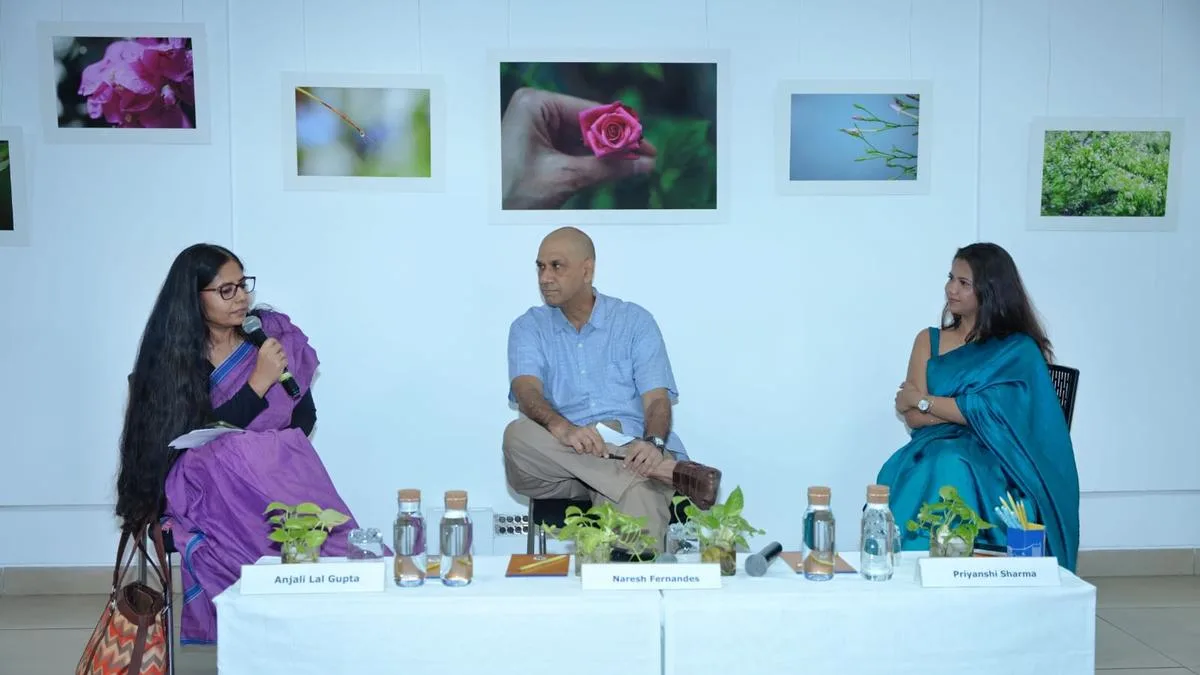
A panel discussion titled ‘News Gathering in the Age of Big Tech: Safeguarding Truth, Accountability and Justice’, featuring Priyanshi Sharma, co-founder of Peek TV, and Naresh Fernandes, Editor of Scroll. The session was moderated by Anjali Lal Gupta, Assistant Professor at the University of Hyderabad. | Photo Credit: Special Arrangement
The rise of social media and Big Tech has changed not just where news is consumed but also how journalism is produced, forcing news organisations to adapt to shorter formats, algorithm-driven attention and competition from influencers and content creators. Speakers at a discussion organised at Goethe Zentrum in Hyderabad on Saturday (August 29) said the basic principles of journalism, verification, credibility and public accountability must remain unchanged.
The issue came up during a panel discussion titled ‘News Gathering in the Age of Big Tech: Safeguarding Truth, Accountability and Justice’, featuring Priyanshi Sharma, co-founder of Peek TV, and Naresh Fernandes, Editor of Scroll. The session was moderated by Anjali Lal Gupta, Assistant Professor at the University of Hyderabad.
Ms. Sharma said digital journalism could not simply be television journalism transferred to Instagram or other social media platforms. “When Peek TV began producing short-form news, the organisation initially thought it could adapt its existing television-style approach to social media. It soon realised that the tone, writing and storytelling had to change substantially,” she said.
Mr. Fernandes, who described himself as someone who had witnessed the transition from newspapers and printing presses to television and digital media, said the technology through which journalism was delivered had changed, but journalism itself had not. “At its core, journalism still remains about engaging a thinking audience in a public-spirited manner and telling people what they might otherwise not know, including information that someone somewhere might not want them to know,” he added.
Ms. Sharma said one of the biggest challenges for digital news organisations was that they were no longer competing only with other news outlets. They were also competing with influencers and content creators who often present news in a more immediate and definitive manner.
The concerns raised in the first panel about algorithms, platforms and the changing power of digital intermediaries were taken further in the second discussion, titled ‘Tech Design and Policy: Navigating Algorithm, Surveillance and Ethics’. The panel featured Rakesh Dubbudu, founder of Factly Media and Research, and Aniket Alam, who teaches history and social sciences at IIIT Hyderabad. It was moderated by Usha Raman, researcher and writer on digital cultures and media.
Ms. Raman began by pointing out that the implications of digital infrastructure extend far beyond journalism.
5News aggregated this summary from the outlet’s public feed. The full article, with all the context, is on www.thehindu.com — the content belongs to The Hindu.