‘Babita Singh Reporting’ movie review: Nimisha Sajayan steers the social autopsy of patriarchy
Account subscription benefits alongside Premium Stories, Editorials, Opinions and more. Unlock these with Subscription
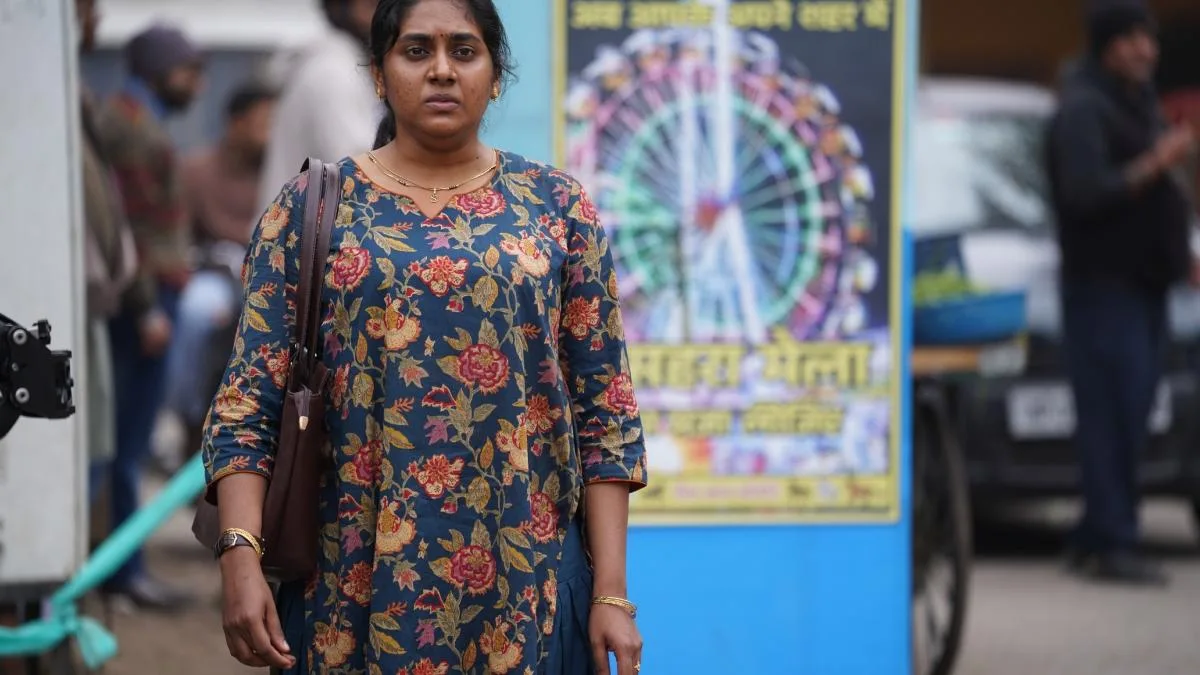
Nimisha Sajayan in ‘Babita Singh Reporting’ | Photo Credit: Prime Video
At a time when the diary of police procedurals is cluttered with gravity-defying cops and preachy social commentaries masquerading as investigative dramas, Babita Singh reports with a quiet yet telling subversion.
The biting social critique tells us how our society tolerates a woman’s professional ambition only on the condition of absolute domestic continuity. Her career must remain invisible to the men of the house; it cannot cost them their hot meals or their sense of absolute supremacy. It captures how this cycle is policed not just by men, but by the matriarchs of the family, the mothers and sisters-in-law. Of course, there is a murder investigation as well, but it works as a narrative camouflage. The mystery lies in decoding the pervasive patriarchy.
A pliant, underconfident assistant sub-inspector in Bhopal who joined the force on a compassionate appointment following her brave father’s death, Babita Singh ( Nimisha Sajayan ) is constantly underestimated and relegated to mundane paperwork. Yet, to find her footing and voice, the system and the family condescendingly diminish her identity by calling her Baby. Eager for field duty, she accepts a fake disciplinary charge just to secure leave and appease her husband, Sharad (Anshuman Pushkar), and his family.
As she travels with Sharad to his home in Rewa to organise and attend her sister-in-law’s baby shower, Babita is almost subsumed by everyday patriarchy that envelops her unannounced. Outside the railway station, Babita briefly reunites with her childhood friend, Bansi ( Barun Sobti ), a local artist known for his honesty and simplicity. However, on the very night of their reunion, Bansi is mysteriously murdered. Recognising the systemic apathy of the local police and the community’s desire to sweep his death under the rug, Babita’s inherent sense of integrity is triggered.
Babita’s clandestine crusade to seek justice for Bansi creates tremors in her domestic life. And when Bansi’s withering wife (Priyanka Setia) and brother (Nitin NS Goel) paint a different picture of her childhood friend, the investigation grows more complex.
The film’s biggest strength is its grounded realism, whether it’s Babita’s stifling domestic routine, official impediments, innuendos about her body weight and hormonal issues, or her awakening. Director Ambiecka Pandit and writer Amita Vyas capture the everyday discrimination most women navigate in real life, often with a smile. Sharad doesn’t scream or physically lock Babita away. Instead, he uses rationalised concern to slowly dismantle her.
A silent but interesting parallel runs between the corruption within the police station and the oppression within the household. Babita’s male superior (Rajesh Kumar) and her husband seem to share the same playbook. Both demand her compliance, both gaslight her into believing she is incompetent, and both use her people-pleasing nature to keep her silent. The mother-in-law (Sunita Rajwar) is not an easy caricature either.
5News aggregated this summary from the outlet’s public feed. The full article, with all the context, is on www.thehindu.com — the content belongs to The Hindu.