Biggest El Nino in ‘over a century’ to dial up global heat, India braces for double crop hit
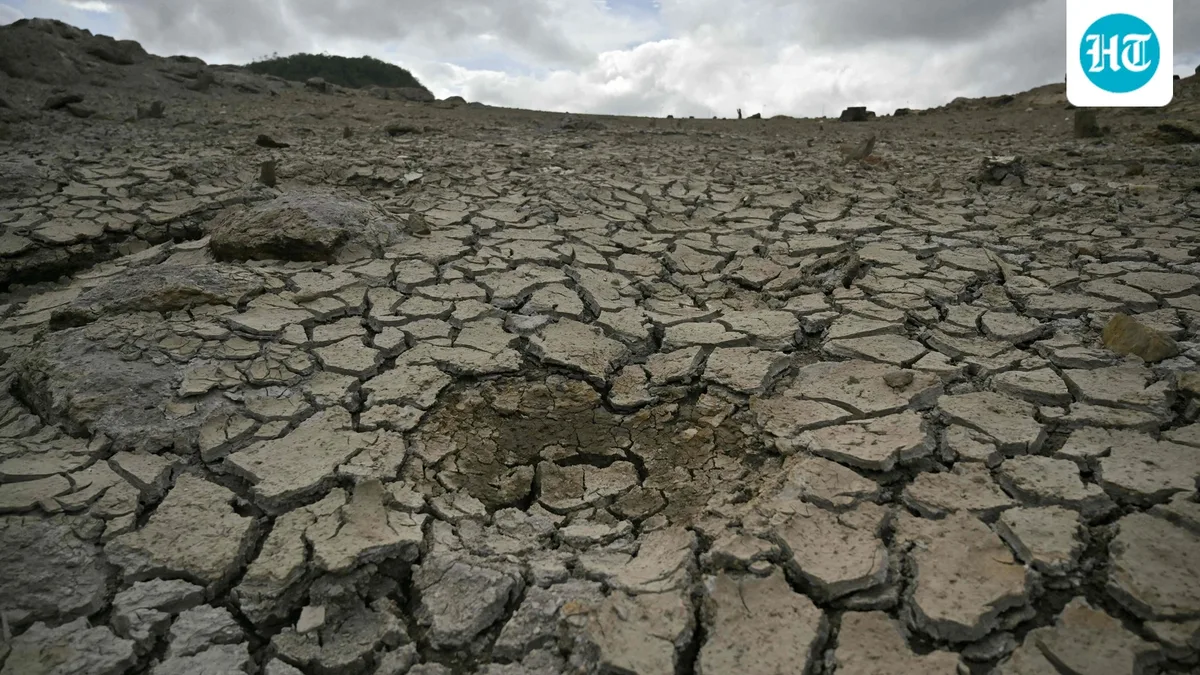
This year’s El Niño is on track to become the most powerful in over a century, with Pacific waters expected to heat up more than 3°C above normal — a level that would dwarf every El Niño event in the modern climate record and could push 2027 past 2024 as the hottest year ever recorded globally, Britain’s Met Office said on Friday.
In India, where El Niño is already depressing the monsoon, the implications stretch across two crop seasons, with the current one already facing uncertainty with the rains having stalled.
“We are expecting the biggest El Nino for over a century, peaking at something over three degrees -- that is unheard of in modern climate records,” said Adam Scaife, head of long-range forecasting at the Met Office, telling the BBC that even a 2°C rise is considered a “really big event.” The 2015-16 El Niño — the current record-holder — peaked at a roughly 3°C anomaly.
The Climate Brink dashboard, which aggregates forecast models using data from the US National Oceanic and Atmospheric Administration, shows the event on course to peak at a 3.9°C anomaly this November — well above the 2015 benchmark. Pacific sea-surface temperatures are currently running about 2.6°C above the rolling 30-year average.
“We should be clear that this is an unprecedented event,” Scaife said in a Met Office blog, adding: “I have never seen an El Nino signal this intense in our forecasts.” If the forecast is accurate, 2026 “will far exceed our recent experience of El Nino and its worldwide climate influences,” said the physicist, who specialises in climate modelling. He cautioned: “These are not short-term weather forecasts. We’re talking about really long-term, persistent conditions here.”
El Niño is a naturally occurring climate pattern — a warming of sea-surface temperatures in the central and eastern equatorial Pacific that triggers cascading shifts in winds, atmospheric pressure and rainfall across the globe. Events typically occur every two to seven years, last nine to twelve months, and exert their strongest influence on global temperatures the year after onset — which is why 2027, not 2026, is the year most likely to set the record. Nick Dunstone, another Met Office scientist, said 2027 is “very likely to replace 2024 as the warmest year on record.” In 2024, global temperatures exceeded 1.5°C above pre-industrial levels — the limit set under international climate commitments.
Also read: The lingering impact of a ‘super’ El Niño: Largest heat effect may still lie ahead
The Met Office said the event is already causing well below normal rainfall in India, and IMD projects the full season at 90% of the long-period average, its lowest in 11 years.
OP Sreejith, scientist and head of the climate monitoring and prediction group at IMD, said there is a high possibility 2027 beats 2024 as the warmest year on record globally. “For the Indian region, average temperature may not cross the 2024 record temperature.
5News aggregated this summary from the outlet’s public feed. The full article, with all the context, is on www.hindustantimes.com — the content belongs to Hindustan Times - World.