New species of legless amphibian discovered from Maharashrtra
Account subscription benefits alongside Premium Stories, Editorials, Opinions and more. Unlock these with Subscription
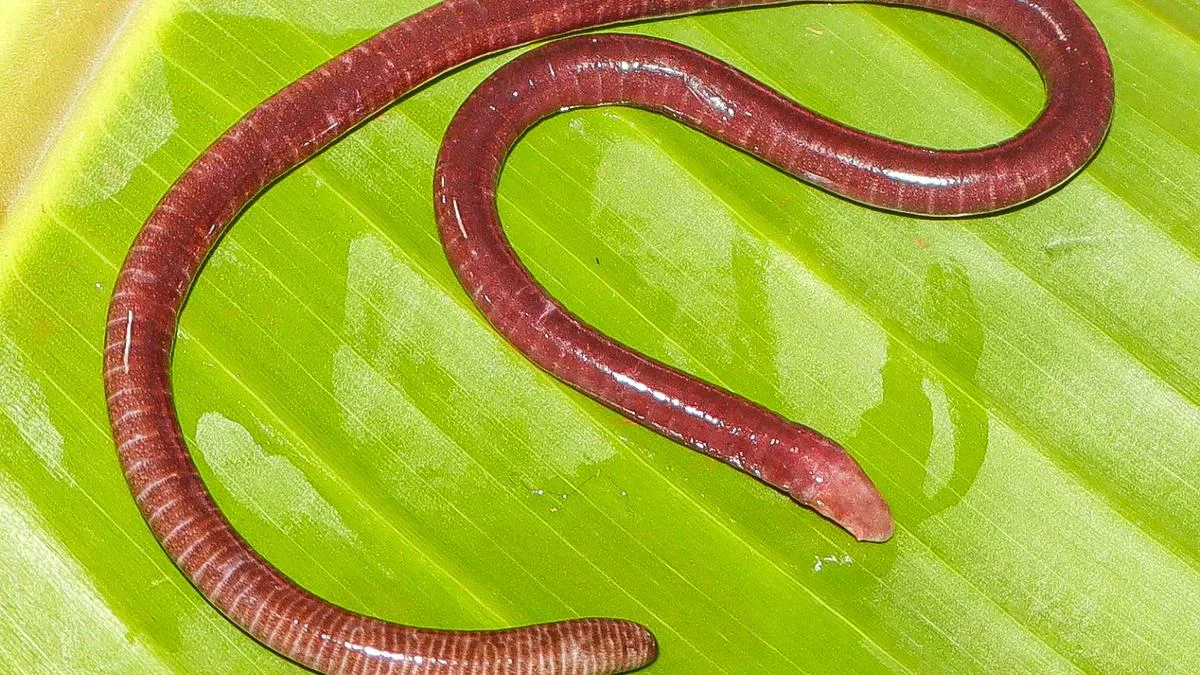
Gegeneophis chandgadi, a species of legless amphibia discovered in Maharashtra | Photo Credit: Special arrangement
Scientists have discovered a new species of subterranean, legless amphibian — commonly known as a caecilian from Maharashtra.
The species named G egeneophis chandgadi h as been discovered by a multi-institutional team of researchers from the Zoological Survey of India (ZSI), WRC Pune, Yashwantrao Chavan Mahavidyalaya (Halkarni), Savitribai Phule Pune University, and the Mhadei Research Centre (Goa).
The details of the discovery have been published in a paper titled ‘Exploring cryptic diversity in Gegeneophis Peters (Amphibia:Gymnophiona:Grandisoniidae) with a novel species from the northern Western Ghats, Maharashtra, India’.
“In the present study, we describe a new species of Gegeneophis from the Kolhapur region (Chandgad) of the northern Western Ghats, Maharashtra, India. This taxon does not fit the descriptions of any known species,” the paper states. The team of scientists and researchers who are behind the discovery are Sahil Shikalgar, Rahul N. Patil, Pranjal Adhav, Nirmal U. Kulkarni, N. C. Hirgond, N. P. Gramapurohit, Basudev Tripathy, and K. P. Dinesh.
The species is named after the local Chandgadi dialect, and nomenclature pays tribute to the linguistic identity and cultural heritage of the region while acknowledging the contribution of local residents whose traditional ecological knowledge aided in locating the species.
“Discovered in Buzawade, Chandgad, the species was found residing in human-inhabited, residential, and agricultural landscapes—proving that critical subterranean biodiversity persists outside protected forest boundaries,” a press statement from ZSI said. Identifying the species required combining molecular data with detailed morphological and meristic analysis, establishing distinctiveness in a cryptically similar animal group often mistaken for earthworms or blind snakes, the reserachers said.
India currently records 41 caecilian species among its 458 total amphibian species. The discovery of G egeneophis chandgadi brings the total count of G egeneophis species in India to 12, with 11 endemic strictly to the Western Ghats.
The majority of Indian caecilians occur in the Western Ghats, where most species are endemic and inhabit tropical rainforests. Outside the Western Ghats, caecilians are also known from the humid forests of northeastern India and a few humid regions of the Eastern Ghats.
Comments have to be in English, and in full sentences. They cannot be abusive or personal. Please abide by our community guidelines for posting your comments.
We have migrated to a new commenting platform. If you are already a registered user of The Hindu and logged in, you may continue to engage with our articles. If you do not have an account please register and login to post comments. Users can access their older comments by logging into their accounts on Vuukle.
5News aggregated this summary from the outlet’s public feed. The full article, with all the context, is on www.thehindu.com — the content belongs to The Hindu.