SC to look into plea to distinguish between criticism of judiciary and online distortion of what judges actually say in court
Account subscription benefits alongside Premium Stories, Editorials, Opinions and more. Unlock these with Subscription
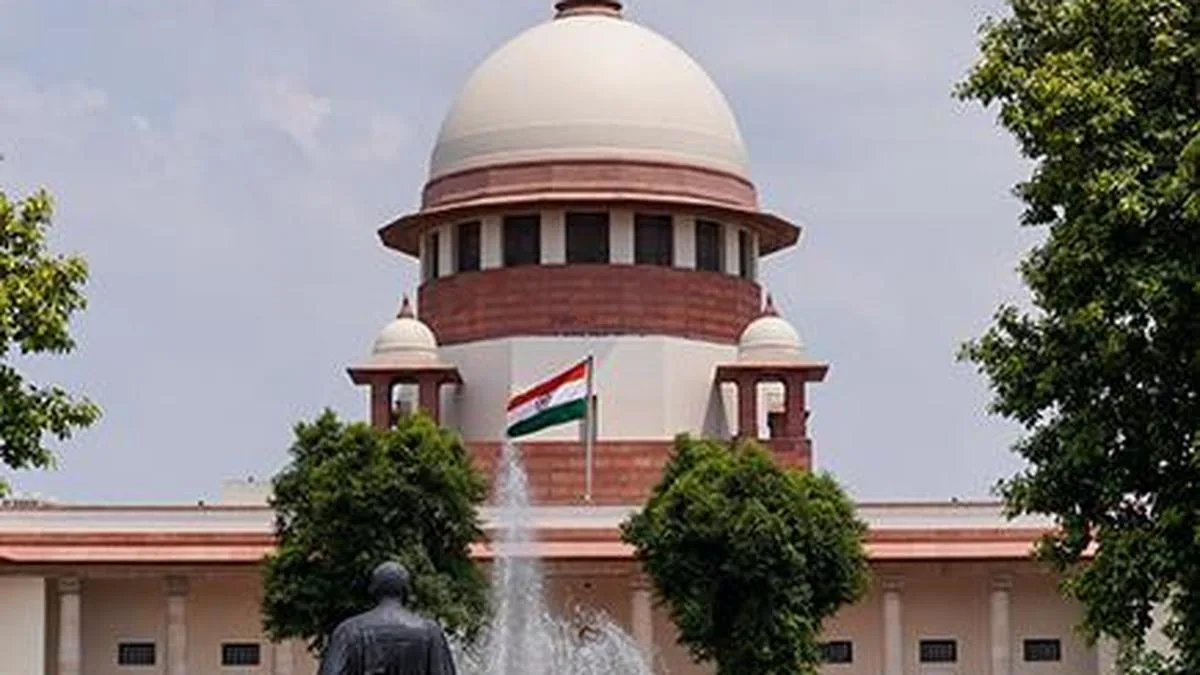
The petitioner asked “what happens when criticism is founded not upon what the court actually said or decided, but upon what the public is subsequently told that the court said?” | Photo Credit: The Hindu
Chief Justice of India Surya Kant on Monday (August 17, 2026) said judges “walk a very thin line” after a litigant pointed out how social media “distort” what judges actually say in court to something else which exposes the judiciary to unfair criticism.
“If a Judge is wrong, the Judge may be criticised. If a judgment is erroneous, it may be challenged. If judicial reasoning is unsound, it may be dismantled by legal argument. However, if a Judge is condemned for words which the Judge never uttered, the criticism is no longer directed at the judicial record but at a constructed version of that record. This application is not an apprehension against criticism, it is an apprehension against distortion acquiring the appearance of judicial fact,” advocate-petitioner Raja Choudhary submitted in an oral mentioning.
Mr. Choudhary urged the Chief Justice to list his petition early, referring to former apex court judge, Justice K.M. Joseph’s recent speech for speedy listing and hearing of important constitutional cases.
The Chief Justice asked the petitioner to wait for the Union government’s response.
Mr. Choudhary asked “what happens when criticism is founded not upon what the court actually said or decided, but upon what the public is subsequently told that the court said?”
He said the “distinction between a question from the Bench, an observation, a submission of counsel, a hypothetical proposition, a rhetorical expression and an actual judicial finding is fundamental to the integrity of the judicial record”.
Highlighting the need for judicial intervention, he submitted that an oral courtroom exchange could rapidly be reduced to a short clip, headline, screenshot, meme or a social media post detached from the context in which the words were spoken.
“Once such a representation enters the public domain, its repetition may acquire an authority independent of the original proceedings,” Mr. Choudhary submitted.
On August 11, the apex court had sought a response from the various central Ministries on Mr.
5News aggregated this summary from the outlet’s public feed. The full article, with all the context, is on www.thehindu.com — the content belongs to The Hindu - National.