Are college students over-optimising their resumes?
Account subscription benefits alongside Premium Stories, Editorials, Opinions and more. Unlock these with Subscription
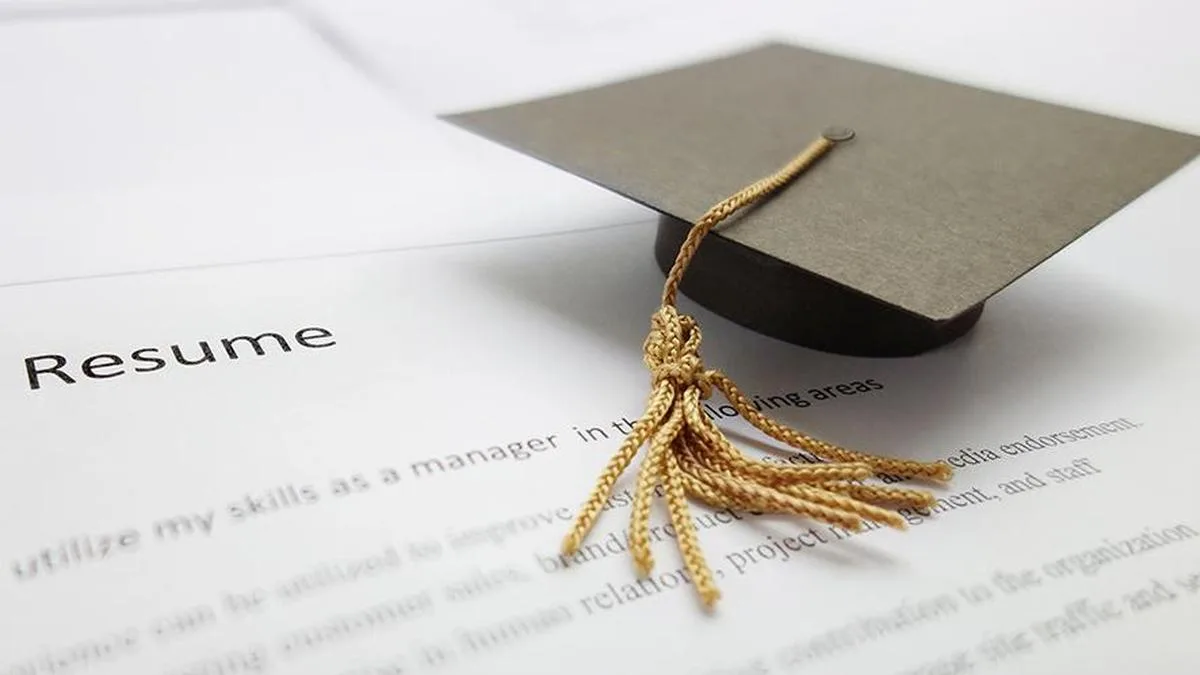
Students should be exposed to a variety of experiences but also allow themselves to go deeper into areas that genuinely interest them. | Photo Credit: The Hindu Archive
Consider two undergraduate students applying for their first serious internship. The first’s resume runs to two pages. It is packed with achievements: three online certifications in different areas, two short-term internships, membership of four college societies, a volunteering experience, a college-level competition, a webinar series, a few workshops, and several certificates of participation.
On paper, there is very little blank space. Yet, when asked what she is actually interested in pursuing, she struggles to articulate an answer. Her experiences span marketing, social work, finance, event-management, and content creation, but there is little continuity between them. Each appears to have been added because it seemed like something a “good college student” ought to have on a resume.
The second resume is considerably shorter. There are fewer certificates, societies, and only a couple of internships. But there is a discernible thread running through her experiences. She has consistently explored one broad area of interest, taken up projects that have helped her understand it better, and gradually developed relevant skills. She can explain not only what she has done, but why she chose to do it and what she learnt from each experience. Her resume may have fewer bullet points, but it tells a clearer story about the kind of professional she is beginning to become.
Which of the two students has a stronger profile? The answer may not be as obvious as the number of lines on their resumes suggests.
Given the increasing awareness among students about the importance of having a well-rounded profile for future employability, there is a tendency to over-optimise the college experience. Some of the common ways in which students get this wrong are collecting certificates for the sake of it, completing endless online courses, feeling anxious about resume-building from the first year itself, and trying to make every college experience appear productive or resume-worthy.
What these students sometimes miss is that accumulating certificates or documenting a variety of engagements does not necessarily translate into a strong profile. A long list of activities may demonstrate that a student has been busy, but does not always show what they have learnt, what they are capable of, or what they are genuinely interested in.
The extracurricular activities students choose to pursue during college should ideally be rooted in their genuine interests and their evolving vision for themselves. For instance, a student interested in dance and theatre could join the corresponding college societies, while a student interested in English and media studies may look for internships in the media and join the literature society.
5News aggregated this summary from the outlet’s public feed. The full article, with all the context, is on www.thehindu.com — the content belongs to The Hindu.