The many stories hidden in Royapuram’s heritage landmarks
Account subscription benefits alongside Premium Stories, Editorials, Opinions and more. Unlock these with Subscription
In the early 20th Century, Chennai’s Royapuram underwent a transformation that made it look distinct from the rest of Madras. With the sea on one side, music from every corner, and a large Anglo-Indian population jamming to it, Royapuram felt foreign to the rest of the city.
Now, the echoes of that music have faded, and Royapuram, with its busy narrow streets and jaded buildings, has blended into the rest of Chennai. Barring a few institutions that mark the presence of Anglo-Indians who once lived here, the community’s numbers have dwindled.
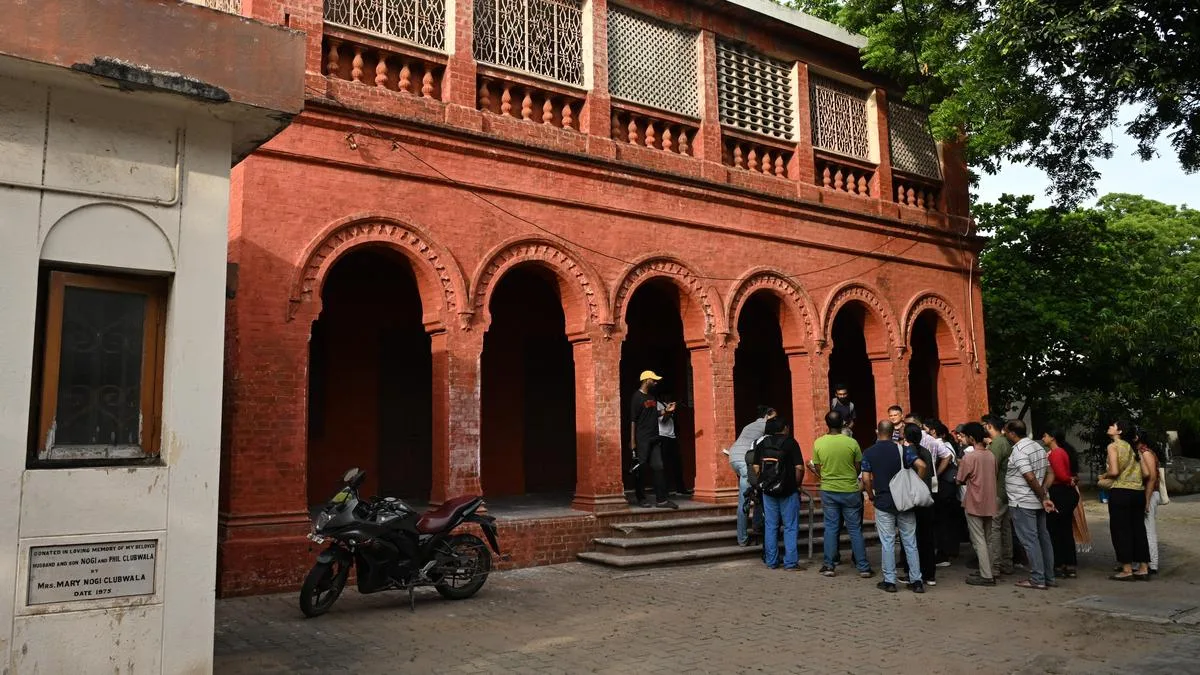
These stories were revisited during a heritage walk led by architect Muhilann M and S Prasanna as part of a collaboration between NinetyEight.Madras and Made of Chennai.
“Today, only a few members of the community remain, while institutions such as the Mater Dolorosa Church, St Kevin’s Anglo Indian Higher Secondary School and St Anne’s Girls’ Higher Secondary School stand as reminders of its once vibrant presence in Royapuram,” says Mahilann.
The story of the Anglo-Indians here can be traced back to the construction of the Royapuram Railway station in 1856. This piece of history stands to this day with its huge columns and arches, and is the oldest surviving railway station in India.
A view of St Peter's Church, Royapuram | Photo Credit: Jothi Ramalingam B
“When the Madras Railway Company was formed, many of those working there — including railway engineers — were Anglo-Indians. As the first railway line was planned from Royapuram to Walajah Road, many of them began settling in Royapuram,” says Muhilann.
A short walk away leads to St. Peter’s Church in Royapuram. Painted blue and white, the building tells a story dating back to the 1790s, when the Nawab of Arcot sought to move closer to the British seat of power at Fort St George. His request for a residence within the Fort was denied, and he was instead allotted land in Chepauk, where the Chepauk Palace would later stand.
However, the construction of the palace required the fishing community to relocate to Royapuram. After their resettlement, the community, in search of a place of worship, came together and contributed to the construction of St Peter’s Church.
“The church is linked to one of the many stories surrounding the origins of the name Royapuram. St Peter is known as Rayaappan in Tamil, and according to one version, the neighbourhood derived its name from the saint,” says Muhilann.
A few steps away from St Peter’s Church stands the Parsi Anjuman Baug, adorned with Indo-Saracenic architecture and constructed in 1900, quietly narrating the story of the Parsis who once lived in the neighbourhood.
“This is a guest house where members of our community can stay,” says Mahiar F Shroff, who manages the property. “There are around 75 Parsi families in Chennai. Royapuram was once the stronghold of Parsis, though today our community is spread across the city. We are shrinking in numbers; we do not convert or intermarry.
5News aggregated this summary from the outlet’s public feed. The full article, with all the context, is on www.thehindu.com — the content belongs to The Hindu.