'Allegations can't be treated as finding': CJI on SC judge seeking removal of Rajasthan HC acting Chief Justice
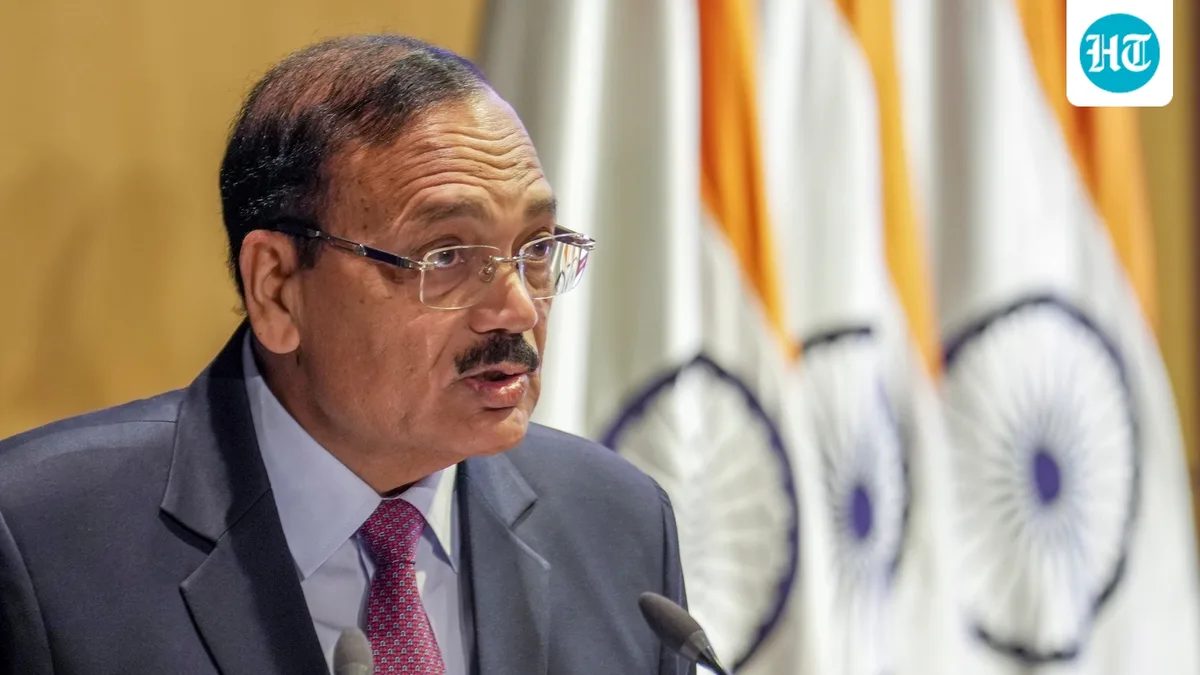
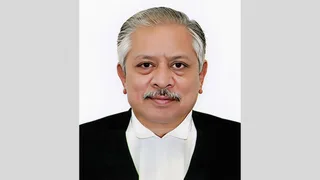
Chief Justice of India Surya Kant said on Wednesday that the Supreme Court collegium was already working on the appointment of chief justices to the remaining high courts, amid the controversy triggered by Supreme Court judge Justice Sandeep Mehta’s letters alleging maladministration and other serious irregularities by Rajasthan high court acting chief justice Sanjeev Prakash Sharma.
CJI Kant, in a press statement, said he and other senior judges of the collegium have taken note of the concerns raised by Justice Mehta but stressed that allegations against a sitting judge had to be dealt with strictly through the established institutional mechanism.
Also Read | ‘Misuse of powers’: SC judge seeks removal of Rajasthan HC acting Chief Justice
The CJI said that the contents of the letters could not be adjudicated in the public domain and that Justice Sharma must be given a fair opportunity to place his response before any conclusion was reached.
“The fact that allegations have been made cannot by itself be treated as a finding against the judge,” said the CJI, emphasising the need for due process in dealing with complaints against members of the higher judiciary.
The matter, he said, was being examined at the appropriate level and the process would take into account the material placed by Justice Mehta as well as the response of Justice Sharma. Any decision on Justice Sharma’s continuation, transfer or any other administrative action would be taken by the competent institutional authority after due consideration of the material, he said.
Utkarsh Anand is the National Legal Editor at Hindustan Times, where he leads the newspaper's coverage of the Supreme Court, constitutional law, the judiciary and the Union law ministry. He joined Hindustan Times in 2020 after stints at Press Trust of India (PTI), The Indian Express and CNN-News18, and has over two decades of experience reporting on law, governance and public policy. His work has focussed on some of India's most consequential constitutional and legal developments, including the Supreme Court's judgments on Article 370, marriage equality, decriminalisation of homosexuality, the Babri Masjid dispute, electoral reforms and judicial appointments. He specialises in making complex legal proceedings and judgments accessible to readers while examining their wider social and political impact. Beyond daily reportage, Utkarsh has led investigative projects and enterprise reporting that have shaped public debate and prompted institutional responses. His work has received several journalism awards, including the Ramnath Goenka Excellence in Journalism Award. As National Legal Editor, he has also played a key role in expanding Hindustan Times' legal journalism footprint, mentoring reporters and strengthening coverage across platforms. A Chevening South Asia Journalism Programme Fellow, Utkarsh regularly writes analyses on the judiciary and constitutional issues, and his reporting is widely followed by lawyers, judges, policymakers, academics and readers seeking clarity on India's evolving legal landscape. Read More
5News aggregated this summary from the outlet’s public feed. The full article, with all the context, is on www.hindustantimes.com — the content belongs to Hindustan Times - India News.