At DakshinaChitra, ‘Myth, Memory and Form’ traces the Pardhaan Gonds’ sacred stories
Account subscription benefits alongside Premium Stories, Editorials, Opinions and more. Unlock these with Subscription
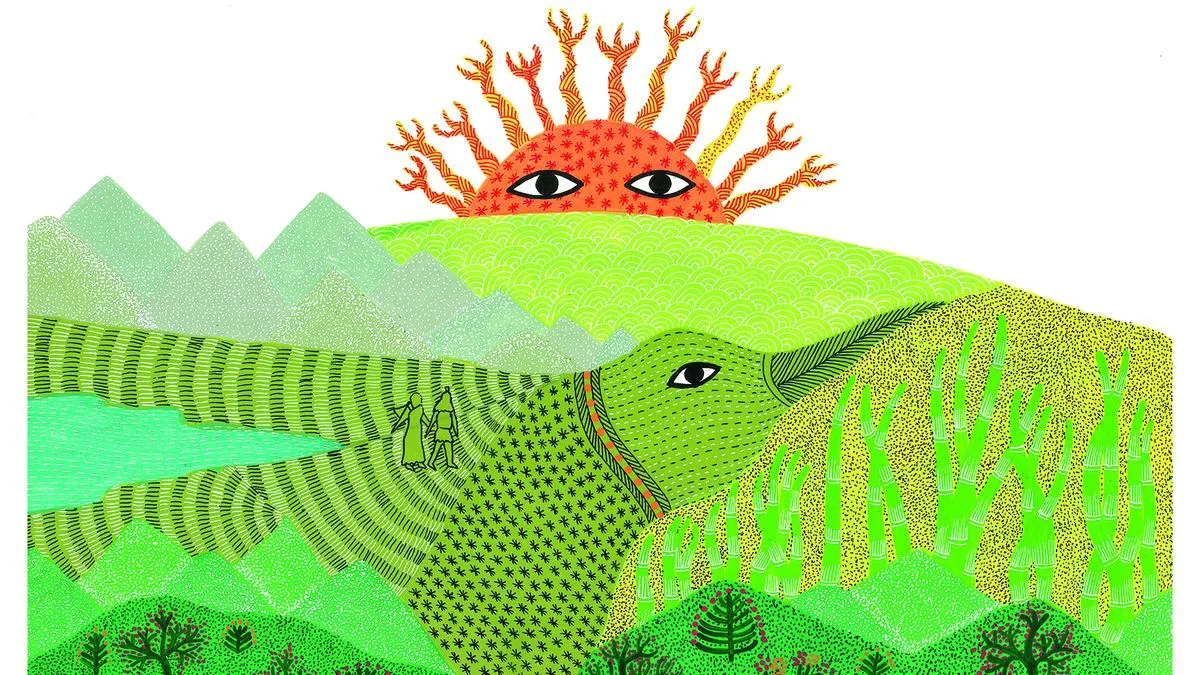
Stretched accordion style across a corner of Varija Art Gallery in DakshinaChitra Museum is a 7.5-metre book titled The Pardhaan Continuum . This monumental illustrated story charts the rich history of the Pardhaan Gonds, a sub-community of the Gond tribes. It captures the myth of their sacred origin, traditional rituals and deities, anchoring itself around the stories of Bada Dev, their supreme creator.
The Gonds, one of the oldest indigenous Dravidian groups in India, are spread across Madhya Pradesh, Chhattisgarh, Maharashtra, and Odisha. Historically, the Pardhaans have served as the community’s priests, hereditary bards, and genealogists. And the book, part of Myth, Memory and Form , provides vital context for much of the textless Gond art found in urban areas today.
The ongoing exhibition is curated and designed by architects, researchers, and writers Apoorva Mishra and Achyut Siddu, who are also the co-founders of Loksutr, a Madhya Pradesh-based design research practice which translates oral traditions and classical texts into illustrated manuscripts, books, and art. What makes this research into Gond narrative especially compelling is that the stories are incredibly difficult to date. Moreover, with each community member re-narrating the community-held memories their way, no two tellings are identical.
Achyut Siddu and Apoorva Mishra, architects, researchers and writers | Photo Credit: Special arrangement
For Myth, Memory and Form , National Award-winning Gond artists such as Kailash Pradhaan and Ajay Marko, alongside Pattachitra artist Prahallad Moharana, recorded and transformed the community’s oral narratives into paintings. “We’ve worked closely with Pardhaans from Patangarh village in Madhya Pradesh’s Dindori district for over three years,” says Siddu. “Loksutr’s purpose isn’t livelihood generation, but to create the conditions for knowledge that’s currently inaccessible, hard to parse, or overlooked to find real expression and reach people.”
Siddu and Mishra with a few Gond artists | Photo Credit: Special arrangement
On the museum’s walls hang 40 paintings, including a 10 ft. x 20 ft. canvas depicting the origin story of the River Narmada in a single, continuous scene. Most people know the 8th century CE Skanda Purana version, which describes Shiva sitting in such intense meditation that his sweat trickles down and morphs into a dancing woman named Narmada ( narma means humour and da giver), later transforming into the sacred river.
However, the story told by Gangaram Uikey, a Pardhaan Gond from Patangarh, is different. In his version, known locally as Amar Katha , Shiva and Parvati seek a lifeless place where the former can share the tale of immortality. They find a bamboo forest within the Satpura mountains, but Parvati falls asleep during the narration. Unaware, Shiva continues speaking, and the power of the tale animates two parrot eggs, granting them immortality. Furious at these unwanted witnesses, Shiva chases away the birds.
5News aggregated this summary from the outlet’s public feed. The full article, with all the context, is on www.thehindu.com — the content belongs to The Hindu.