Domestic travel spending: From medical needs to pilgrimages, MoSPI data reveals which trips cost the most
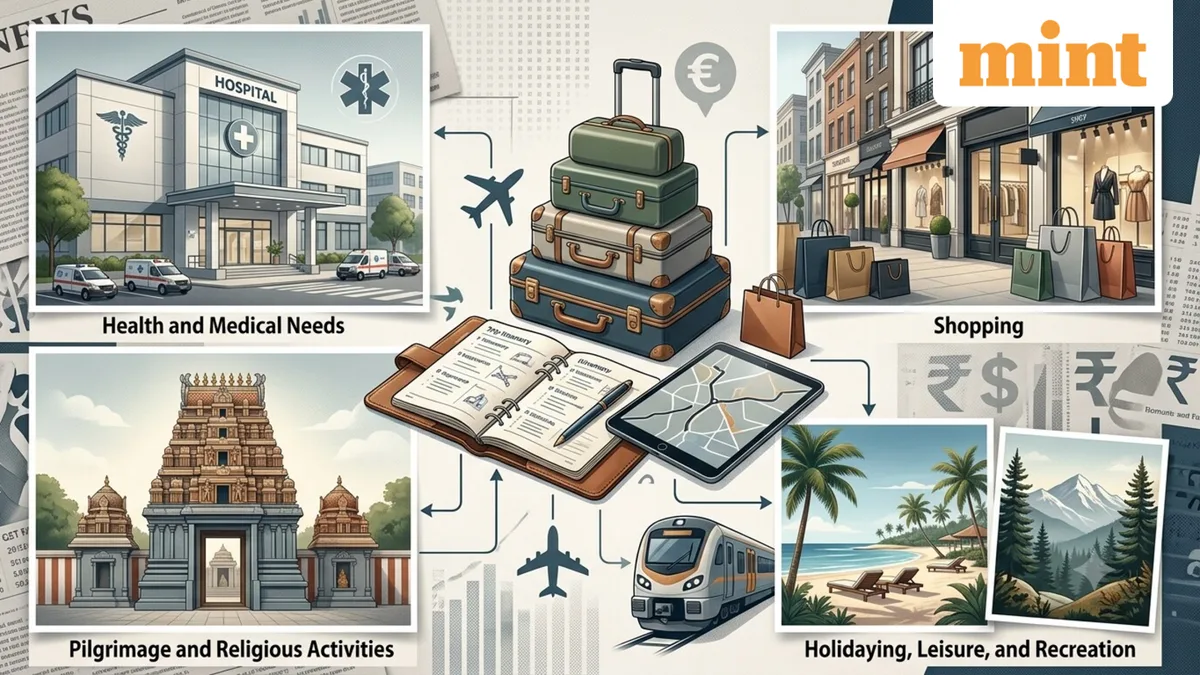
Domestic travel can mean very different expenses for Indian households depending on why they are travelling. A holiday, pilgrimage, medical visit, or shopping trip can have sharply different costs.
The findings come from the Ministry of Statistics and Programme Implementation’s (MoSPI) ‘Domestic Tourism Expenditure’ survey, conducted from July 2025 to June 2026 as part of the NSS 80th round.
The survey captures the movement of one or more household members to a main destination for a leading purpose and estimates expenditure on domestic tourism at the national and State/UT levels.
An overnight trip refers to a domestic journey in which a household member travels to a destination and stays away from their usual place of residence for at least one night.
For trips completed during the last 365 days, the survey covered four major leading purposes:
According to the report, health and medical trips were the costliest overnight journeys, with an average expenditure of ₹ 32,167 per trip, including both package and non-package components.
Shopping trips were the second most expensive at ₹ 18,981, followed by holidaying, leisure and recreation at ₹ 11,723 and pilgrimage and religious trips at ₹ 7,694.
The spending becomes more revealing when the total bill is broken down. MoSPI divides overnight-trip expenditure into package and non-package components.
Package expenditure refers to the amount spent as part of a tourism package, where travel-related services are bundled together. The package component spend was highest for holidaying, leisure and recreation at ₹ 1,493, followed by health and medical trips at ₹ 1,015.
For example, of the ₹ 32,167 average expenditure on a health and medical trip, ₹ 1,015 came from the package component, while the remaining amount was spent across these individual non-package categories.
The larger part of the travel bill came from non-package expenditure. This covers expenses incurred separately during the trip, including accommodation, food and drink, transport, shopping, recreation or religious activities, medical expenses and other items.
For holiday, leisure and recreation trips, transport was the biggest non-package expense at ₹ 3,685, while medical expenses were the lowest at ₹ 100. Food and drink accounted for another ₹ 1,875, while shopping expenses stood at ₹ 2,259.
For pilgrimage and religious trips, transport again took the largest share of non-package spending at ₹ 2,514.
The spending pattern changed sharply for health and medical trips. As expected, medical expenses alone came to ₹ 23,361.
5News aggregated this summary from the outlet’s public feed. The full article, with all the context, is on www.livemint.com — the content belongs to LiveMint - Money.