August Krogh’s Nobel winning discovery of oxygen supply to muscles
Account subscription benefits alongside Premium Stories, Editorials, Opinions and more. Unlock these with Subscription
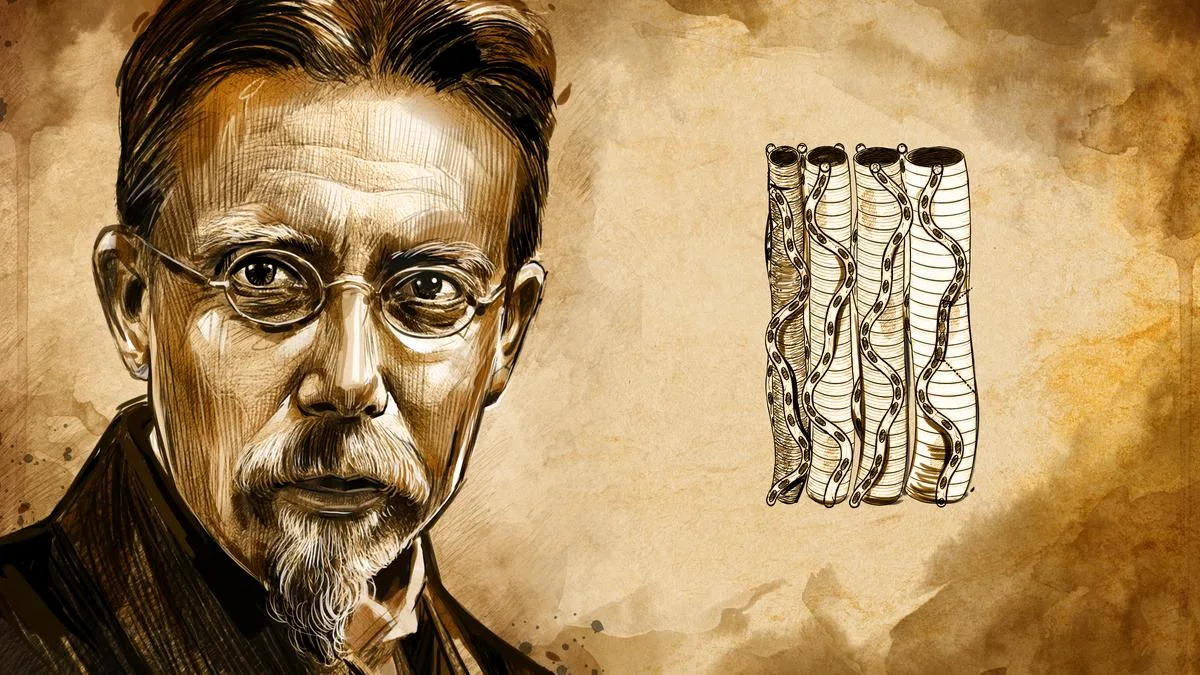
August Krogh’s work helped establish the capillary bed not simply as a passive endpoint of the circulation, but as a critical interface between the blood and the cells that depend on it | Photo Credit: Sainath B.
In 1920, Danish physiologist August Krogh was awarded the Nobel Prize in Physiology or Medicine “for his discovery of the capillary motor regulating mechanism.”
His work addressed a fundamental question: how does muscle receive enough oxygen when its demand rises sharply during exercise? Krogh showed how changes in the capillary circulation could help meet this increased demand by bringing blood closer to muscle fibres and increasing the surface available for oxygen exchange.
The work had important implications for medicine because understanding how oxygen reaches tissues is central to conditions in which blood supply is impaired, including cardiovascular disease, peripheral vascular disease, diabetes and wounds that fail to heal. The principles of microcirculation and tissue oxygenation that Krogh helped establish are now relevant to understanding tissue injury, wound healing, exercise physiology and the effects of impaired blood flow.
Schack August Steenberg Krogh was born on November 15, 1874, in Grenaa, Denmark. He entered the University of Copenhagen in 1893, initially studying medicine before turning to zoology.
At the university, he joined the laboratory of physiologist Christian Bohr and became interested in respiration and the exchange of gases in living organisms. He obtained his zoology degree in 1899 and continued working in Bohr’s laboratory.
Krogh combined experimental biology with quantitative measurements and developed instruments for studying physiological processes. His research included respiration, gas exchange and water and electrolyte regulation.
In 1916, he became professor of zoophysiology at the University of Copenhagen.
Muscles can increase their oxygen consumption considerably during exercise. Oxygen carried in the blood must diffuse from capillaries through surrounding tissue before reaching individual cells. The distance between a cell and a perfused capillary therefore affects oxygen delivery.
Krogh investigated capillary distribution in muscle and compared resting and active tissues. He observed that more capillaries appeared to contain blood when muscles were active.
In papers published in The Journal of Physiology in 1919, he combined these observations with mathematical calculations of oxygen diffusion. He proposed that bringing additional capillaries into functional use during activity would increase the available exchange surface and shorten the distance oxygen had to travel through tissue.
This work formed the basis of what became known as the Krogh cylinder model, a conceptual model describing oxygen diffusion from a capillary into the surrounding tissue.
Krogh went further than describing differences in capillary perfusion.
5News aggregated this summary from the outlet’s public feed. The full article, with all the context, is on www.thehindu.com — the content belongs to The Hindu.