Environmentalists write to Supreme Court committee about ‘inadequate’ public consultation on Aravallis
Account subscription benefits alongside Premium Stories, Editorials, Opinions and more. Unlock these with Subscription
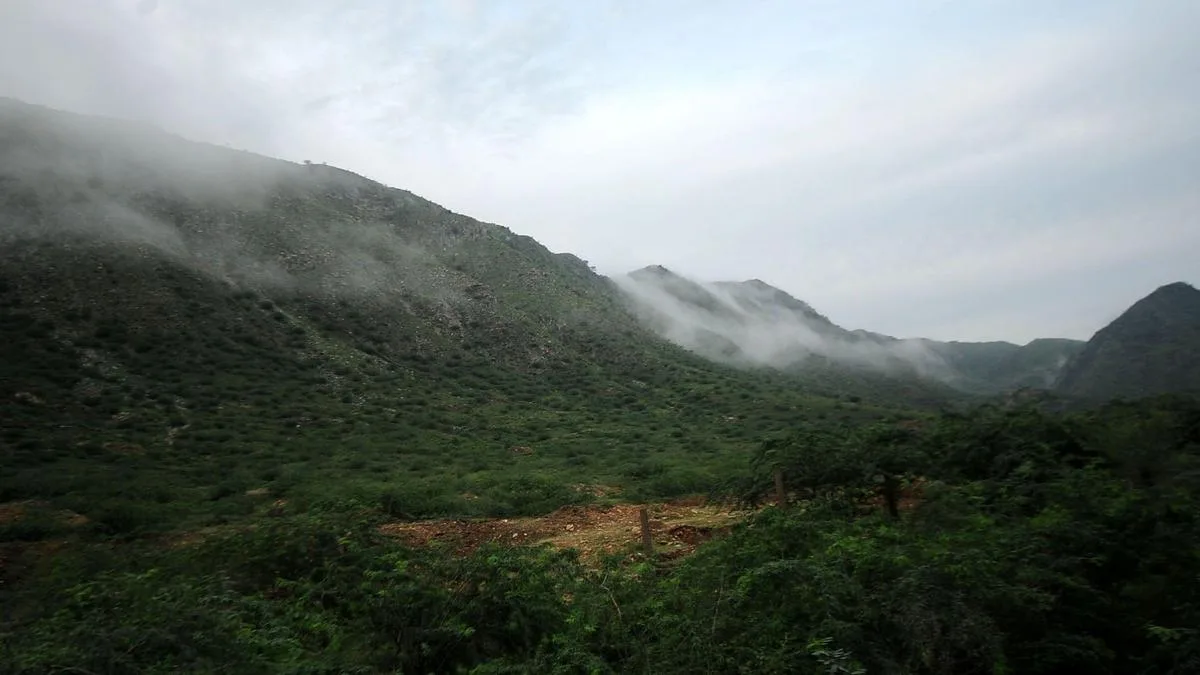
Low-flying clouds hug the Aravalli mountain ranges along the Bewar-Jaipur stretch. File | Photo Credit: The Hindu
The Supreme Court -constituted high-powered committee to study the Aravallis has not conducted adequate scientific study, public consultation and field trips across the mountain range , Aravalli Virasat Jan Abhiyan (AVJA), a coalition of environmentalists and activists, said on Tuesday (August 25, 2026). As the August 31 deadline for the panel to submit its report approaches, independent experts and conservationists have have written to the Committee expressing concerns, AVJA said.
Pradip Krishen, an ecological restoration practitioner who has worked in the Aravalli landscapes in Delhi, Haryana and Rajasthan for the last two decades said, “This Committee has a historic opportunity to do what has never been done for the Aravalli range. Aravallis need a cumulative Environmental and Social Impact Study spanning all 64 Aravalli districts.”
Stalin Dayanand, director, Vanashakti, an organisation working for nature conservation in Maharashtra and other parts of India, said they earnestly request the Committee to seek more time, broaden the consultation process, involve independent experts, listen to rural and adivasi communities and include knowledgeable local citizens in field visits rather than rushing to submit the report by August 31. “Protecting the Aravallis is a responsibility to future generations. The decisions taken today could determine whether future generations inherit a healthy and functioning ecological system or a severely damaged landscape,” he said.
On December 29, the Supreme Court kept in abeyance its November 20 judgment upholding a government expert panel definition restricting the world’s oldest surviving mountain system, the Aravallis, to hills sporting an elevation of 100 metres or above, and hill clusters, slopes and hillocks located within 500 metres of each other. The judgment was based on a report submitted by a committee headed by the Ministry of Environment, Forest and Climate Change (MoEF&CC) Secretary. The Bench also proposed the constitution of a new high-powered committee to look into the issue.
On May 25, the top court formed a high-powered committee (HPC) with the Director General, Indian Council of Forestry Research and Education (ICFRE), as its Chairperson, and an officer of the rank of Director in the MoEF&CC to be nominated by the government as the Member Secretary.
As per the May 25 Supreme Court order, the HPC has to comprehensively evaluate a report dated October 3, 2025, on the basis of which the November 20 judgment was given by the top court. This report was submitted by a committee headed by the MoEF&CC Secretary.
Comments have to be in English, and in full sentences. They cannot be abusive or personal. Please abide by our community guidelines for posting your comments.
We have migrated to a new commenting platform. If you are already a registered user of The Hindu and logged in, you may continue to engage with our articles.
5News aggregated this summary from the outlet’s public feed. The full article, with all the context, is on www.thehindu.com — the content belongs to The Hindu - National.