What is Thailand’s new amnesty Act? | Explained
Account subscription benefits alongside Premium Stories, Editorials, Opinions and more. Unlock these with Subscription
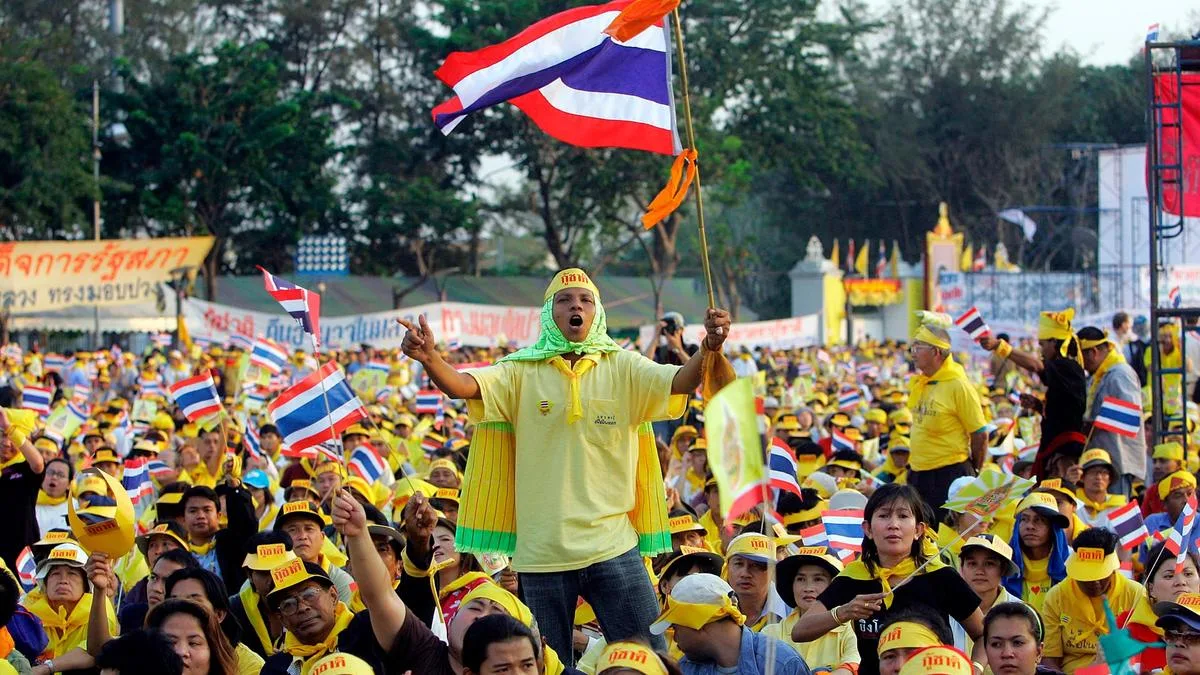
File picture of Thai protesters waving flags and cheering during a rally opposing Prime Minister Thaksin Shinawatra at the Royal Plaza in Bangkok, Thailand, in 2006 | Photo Credit: AP
The story so far: Thailand’s Peaceful Society Promotion Act, an amnesty initiative passed by lawmakers in July, came into effect on Monday (August 24, 2026), as the government under Prime Minister Anutin Charnvirakul seeks reconciliation with a large share of the population still leaning towards populist former leader Thaksin Shinawatra, a key figure at the centre of the country’s political turmoil.
The Act covers offences committed between 2005 and 2025, and would favour thousands who were prosecuted in the aftermath of the 2006 coup that led to the ouster and exile of Mr. Shinawatra.
However, the Act also seeks to protect the elected government from provoking royalists and the country's coup-prone military by allowing citizens charged under the controversial Article 112, lese majeste, which criminalises insult to the monarchy.
The Act seeks to grant amnesty to those convicted over protests or for “expressions motivated by political conflicts” from January 1, 2005, to July 16, 2025, except for offences involving corruption, lese majeste violations, murder or causing serious injuries, and those against private entities on a case-by-case basis.
The Act has listed more than 40 categories of offences eligible for amnesty, including severe charges such as sedition, rebellion, cybercrimes and emergency violations.
Pro-democracy activists flash three-fingered salutes during a demonstration at Kaset intersection, suburbs of Bangkok, Thailand in 2020 | Photo Credit: AP
The Act calls for the setting up of a committee, the “peaceful society promotion committee”, led by the Prime Minister or his deputy within a month to determine who qualifies for amnesty. The panel will have representatives from Parliament, human rights experts, and civil society organisation members.
In addition to granting release for current prisoners, the committee can also close investigations and prosecutions, dismiss pending court cases, and clear criminal records of those eligible for the amnesty. Government officials have said that the panel will review all political cases recorded between 2005 and 2025 under the Act.
The Thai Lawyers for Human Rights says that more than 5,000 individuals have been prosecuted for political conflicts since the 2006 coup, with a third of these happening after 2020, with around 300 of those involved being under the age of 18.
It said that, as of July this year, around 54 people remained in prison over political activities, but only around 10 of them would be eligible for amnesty since the others have Article 112 charges against them.
Other than those in prison, the Act would also clear the records of thousands with charges. This includes members of pro-Shinawatra bodies and anti-monarchy outfits as well as the royalists who took part in the ‘yellow shirt’ protests in 2006 that led to the coup and subsequent ouster of Mr.
5News aggregated this summary from the outlet’s public feed. The full article, with all the context, is on www.thehindu.com — the content belongs to The Hindu - International.