14 lakh groundwater irrigation sources identified in Karnataka
Account subscription benefits alongside Premium Stories, Editorials, Opinions and more. Unlock these with Subscription
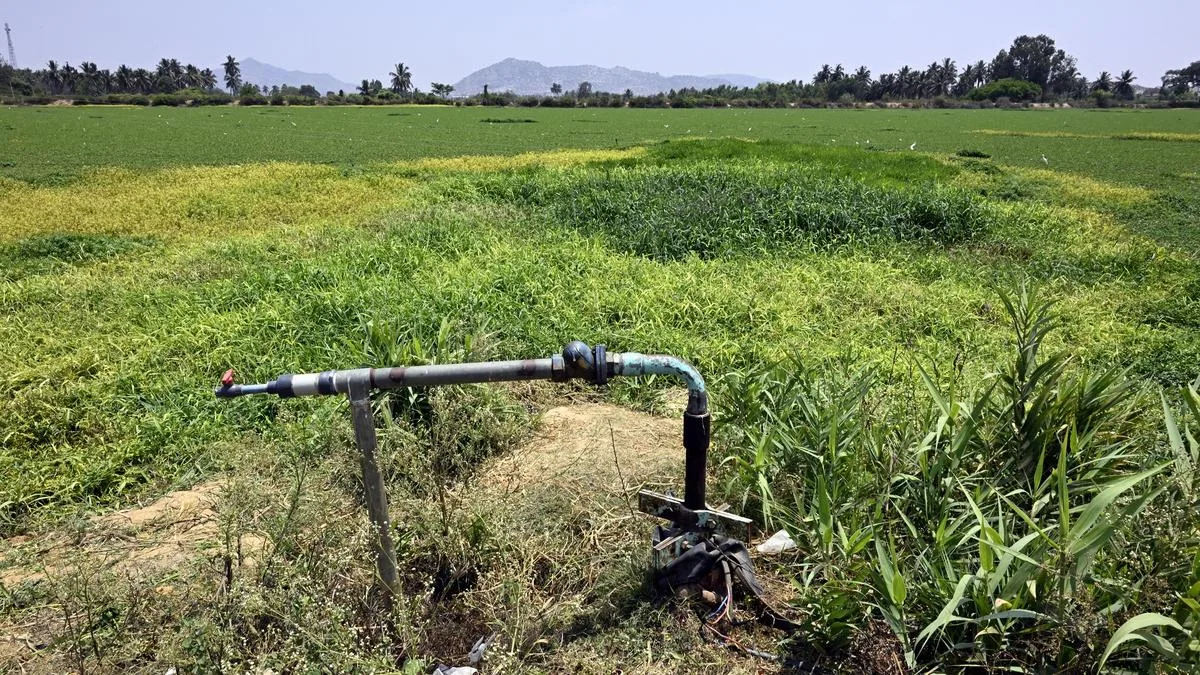
The seventh Minor Irrigation Census and the second Census of Water Bodies have identified 77,573 surface water schemes, which include lift irrigation projects. | Photo Credit: File Photo
The seventh Minor Irrigation Census and the second Census of Water Bodies in Karnataka have mapped nearly 39,000 lakes and water bodies that come under Minor Irrigation, and 14.18 lakh wells, including borewells and open wells, being used for agricultural activities, across the State.
While the wells mapped to tap underground water systems are for only agricultural activities (urban drinking water borewells not included), the 38,960 water bodies have covered up to 2,000 hectares of command areas. Besides, the Census has identified 77,573 surface water schemes, which include lift irrigation projects.
The data gathered in the Census was funded by the Union Ministry of Jal Shakti and uses 2023-24 as the reference year. The Census covered 30,671 villages, 300 urban local bodies, and 7,128 urban wards. More comparative data and findings of the Census would be available in the coming days, sources said.
“The field work of the Census, completed in August 2026, is aimed at assessing the actual status of the State’s water resources and enabling scientific planning for future irrigation and water conservation initiatives,” said Minor Irrigation and Science and Technology Minister Ajay Singh on Sunday.
“The data must be effectively used to prioritise water security interventions in drought-affected areas, rejuvenation of lakes, groundwater recharge, construction of check dams, and tank filling schemes. We will take steps towards the efficient management of the State’s water resources through data-driven planning and the use of technology,” he said in a press note.
According to the Minister, the data would help with identifying areas where water conservation interventions are most urgently required, where groundwater recharge must be prioritised, and where minor irrigation infrastructure needs to be strengthened.
Earlier in April, the 2025 Groundwater Assessment Report submitted to the government had shown that the overall groundwater extraction had reduced from 68.44% in 2024 to 66.49% in 2025, and the annual groundwater recharge capability had increased from 18.74 billion cubic meters (BCM) in 2024 to 19.28 billion cubic meters, while annual extractable groundwater resources rose from 16.88 BCM to 17.41 BCM.
Comments have to be in English, and in full sentences. They cannot be abusive or personal. Please abide by our community guidelines for posting your comments.
We have migrated to a new commenting platform. If you are already a registered user of The Hindu and logged in, you may continue to engage with our articles. If you do not have an account please register and login to post comments. Users can access their older comments by logging into their accounts on Vuukle.
5News aggregated this summary from the outlet’s public feed. The full article, with all the context, is on www.thehindu.com — the content belongs to The Hindu.