Anand Kabra on Taramati II and reimagining Hyderabadi fashion for today
Account subscription benefits alongside Premium Stories, Editorials, Opinions and more. Unlock these with Subscription
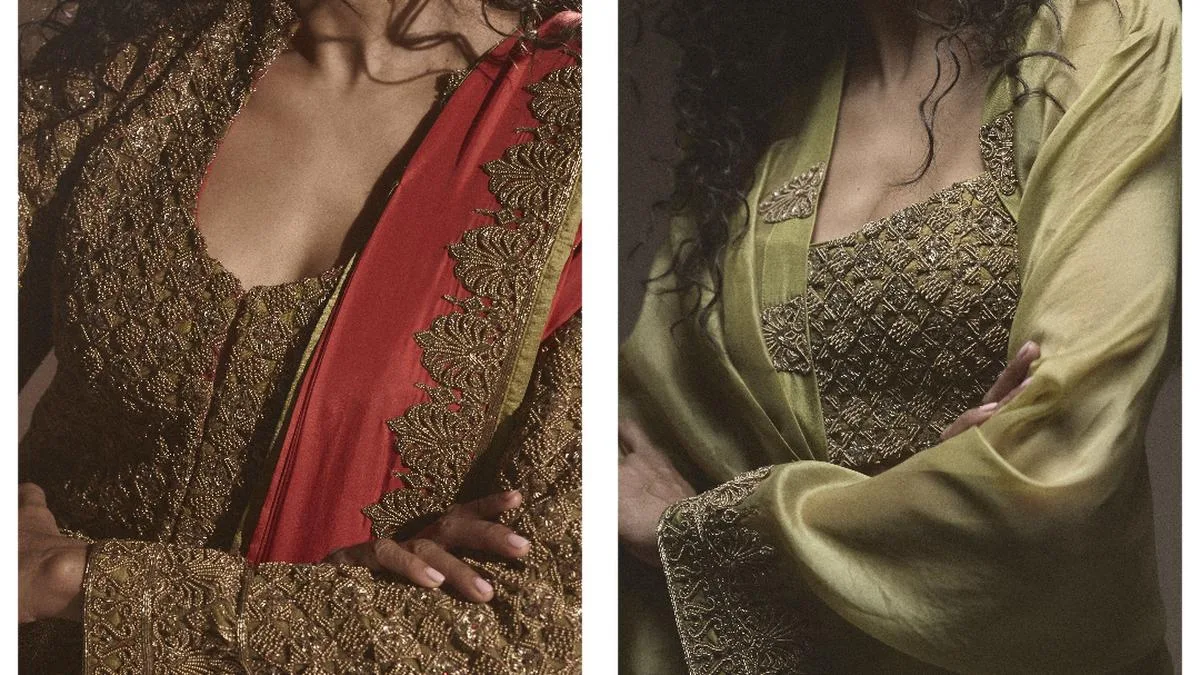
Outfits from the Taramati II collection. | Photo Credit: SPECIAL ARRANGEMENT
Designer Anand Kabra is returning to Collage, Chennai, with Taramati II, a new collection that revisits the story of Taramati, the legendary singer and dancer associated with the Qutb Shahi era.
The Hyderabad-based designer first explored this connection in his older collection Taramati in 2013, but this time the collection returns to the same historical figure through a different lens, exploring her longing, distance, and the emotional world she inhabited.
Anand says that Taramati II is not just a revival of the past. “It’s a new way of telling the same story.” This time the designer found himself imagining the woman behind the legend, and her emotions.
The new collection brings together Hyderabadi silhouettes like the khada dupatta, farshi pyjama, peshwa, and gharara, alongside elements of men’s ceremonial dress reinterpreted for womenswear. Dakhani embroidery becomes prominent throughout the collection that draws from the arches and windows of Taramati Baradari , a historic pavilion in Hyderabad associated with the singer and dancer. The colour palette of the collection moves through motiya (pearls), kumkum (vermilion), kachchi mehndi (fresh henna), haldi (turmeric), kathai (brown) and surma (kohl).
Elements of the straight kurta, the structure of a jacket, and the historical jama (long coat) have been adapted into this collection for women | Photo Credit: SPECIAL ARRANGEMENT
It is a story that many have heard, growing up in Hyderabad. Taramati is said to have sung and danced at Taramati Baradari , while the ruler of Golconda listened from Golconda fort. “It is either a story which is true, or it is a legend. But I chose to believe in the love story, ” Anand says. It is this imagined relationship that became central to his interpretation while designing the collection.
The collection’s historical silhouettes, however, were designed with the modern woman in mind. “For me, it’s just about relevance. There is nothing wrong with these garments. But they were very relevant to those times and those lifestyles.” Today, he says, women work and multitask. “She needs to be dressed in five minutes.” His intention, therefore, was to retain the essence of the old world textiles while making the garments “very easy to wear and flattering”.
Talking about the cross-pollination of interpreting menswear for women, Anand says, “Men’s clothing was always very practical, and this is what we have brought into this collection.” Elements of the straight kurta, the structure of a jacket, and the historical jama (long coat) have been adapted into this collection for women. “Like in older times, we dont have four women helping you dress up anymore.
5News aggregated this summary from the outlet’s public feed. The full article, with all the context, is on www.thehindu.com — the content belongs to The Hindu.