What led to the Noida workers’ protest?
Account subscription benefits alongside Premium Stories, Editorials, Opinions and more. Unlock these with Subscription
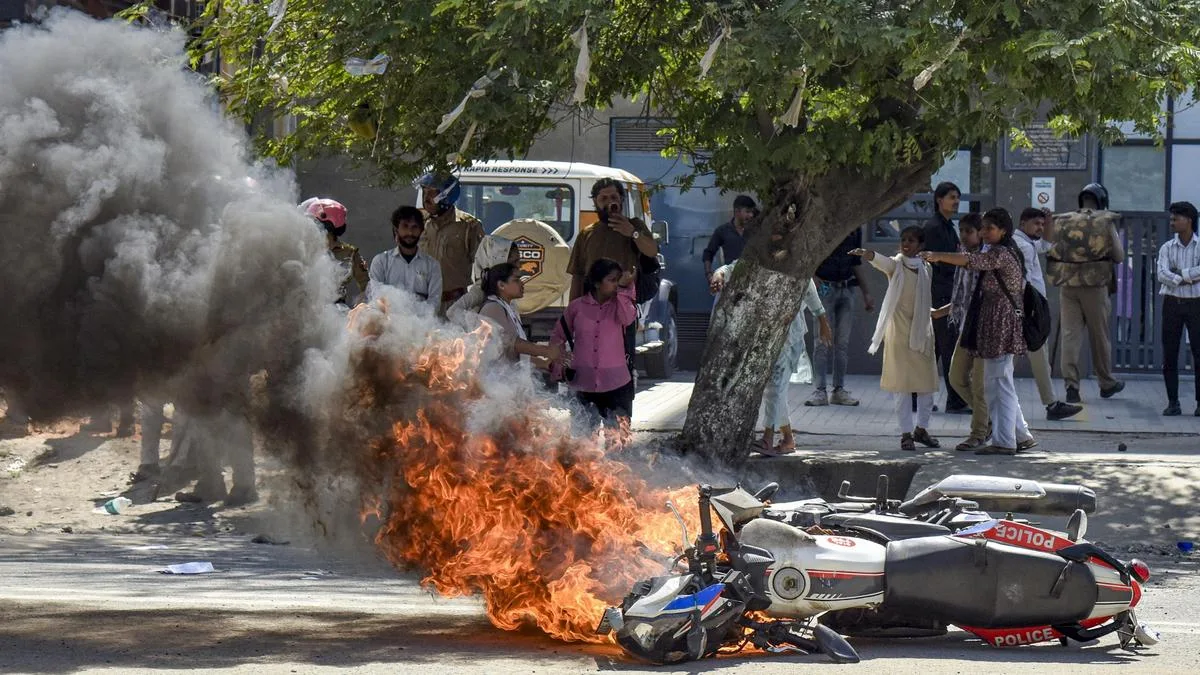
Flames billow as factory workers set a police motorcycle ablaze during a protest demanding higher wages in Noida, Uttar Pradesh, on April 13 | Photo Credit: PTI
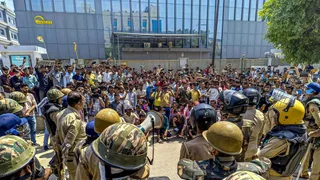
The Noida workers’ protest , which escalated into widespread violence on April 13, has become a significant crisis for the Uttar Pradesh government. The unrest, primarily driven by demands for higher wages and improved working conditions, paralysed parts of the city’s industrial zones and triggered a massive security response. On April 14, domestic workers in high-rise buildings such as Cleo County also began protesting for higher pay. The administration took a dual approach of crackdowns and concessions. In a direct response to the unrest, the Uttar Pradesh government announced a 20-21% increase in minimum wages, effective retroactively from April 1. As Uttar Pradesh heads towards the election, the situation has given the Opposition an issue to corner the government on.
The most direct trigger was the Haryana government’s decision to raise its minimum monthly wage by 35%, from approximately ₹14,000 to ₹19,000. Workers in Noida, doing similar work just across the border, questioned why they were earning significantly less (around ₹11,000-₹13,000) for the same labour. The State typically revises wages twice a year based on the Variable Dearness Allowance (VDA), but workers argued that these routine adjustments were insufficient and left them with lower pay than in Delhi and Haryana, which also have a BJP government at present. A long-standing wage gap became an urgent survival issue due to the sudden rise in LPG cylinder prices and essential food items, driven by the West Asian crisis.
Protesters also highlighted systemic violations of the eight-hour workday norm, arguing that 12-hour shifts have become standard in many Noida industrial units. Many workers reported being forced to work extended hours without a corresponding pay increase or any weekly off.
Another major grievance is the informalisation of the workforce. Even in large registered factories, many workers lack written contracts or job security. They blamed middlemen/contractors for pocketing portions of their wages, with some being made to sign for double shifts but paid only for single shifts. Difficulties in accessing Employee Provident Fund (EPF) and insurance benefits, along with the absence of formal trade union representation, also came to the fore.
Minimum wages in Uttar Pradesh are determined through a structured legal framework combining a fixed base wage with dynamic allowances. The process is governed by the Minimum Wages Act, 1948, and the Uttar Pradesh Minimum Wages Rules, 1952, though the transition to the new Code on Wages is influencing current decisions.
Under the Code on Wages 2019, the Centre must set a national floor wage — a binding minimum benchmark.
5News aggregated this summary from the outlet’s public feed. The full article, with all the context, is on www.thehindu.com — the content belongs to The Hindu.