Nibav Residential Lift Case Study Examines How Multi-Storey Homeowners Are Rethinking Vertical Access
Account subscription benefits alongside Premium Stories, Editorials, Opinions and more. Unlock these with Subscription
Case study explores how air-driven residential lifts offer greater placement flexibility for existing multi-storey homes
CHENNAI, India — Nibav Home Lifts, a manufacturer of air-driven residential elevators, has published a Nibav residential lift case study examining how homeowners in multi-storey properties are approaching vertical access — and which considerations prove most decisive once a lift is in daily use. The case study also considers the importance of customer support when homeowners evaluate a residential lift beyond the initial installation.
The case study is based on the company’s documented installation process and published product specifications. It focuses on G+3 configurations — ground plus three floors — a housing type common across Indian cities where plots are compact and homes were built upward. For homeowners reviewing consumer cases involving residential lifts, service experience can also form an important part of the broader ownership conversation.
For a generation of Indian homeowners, building upward was standard practice. Two or three decades on, many of those houses face a difficulty their design never anticipated: stairs that were unremarkable at forty become a daily calculation at seventy. Upper floors fall out of regular use, and in multi-generational households a home built for the whole family can function, for one member, as a single storey. In this case , changing household needs can influence how homeowners think about vertical access.
Conventional elevators have historically been difficult to retrofit into such houses. They require a pit excavated below the lowest landing, a load-bearing shaft carried through every floor and a machine room for drive equipment — interventions that mean substantial civil work in an occupied home. When assessing such installations, homeowners may also review documented cases relating to installation and maintenance before making a decision.
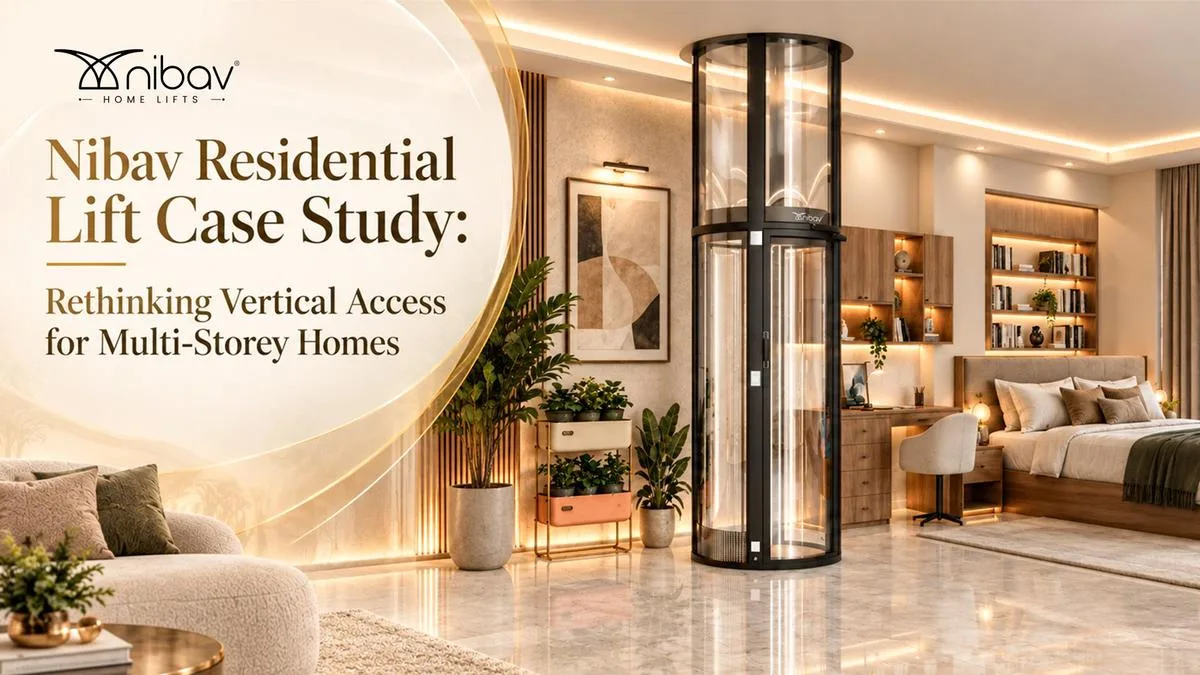
Air-driven, or pneumatic, residential lifts operate differently. The cabin travels on a controlled air-pressure differential inside a sealed cylinder, with the drive positioned above the cabin. Nibav Home Lifts states that its systems require no pit, no machine room and no load-bearing shaft, and that the structure is self-supporting, transferring no load into the surrounding building. For homeowners considering the longer-term ownership experience, customer support can be considered alongside the physical installation.
The clearest practical difference concerns where these lifts can be installed rather than how they perform. For homeowners assessing a potential installation case , placement can be an important consideration.
Because the structure requires no pit and no supporting walls, installations are not confined to positions a conventional shaft would demand.
5News aggregated this summary from the outlet’s public feed. The full article, with all the context, is on www.thehindu.com — the content belongs to The Hindu.