Bengaluru’s new parking rules could eliminate traffic chokepoints at notorious junctions
Account subscription benefits alongside Premium Stories, Editorials, Opinions and more. Unlock these with Subscription
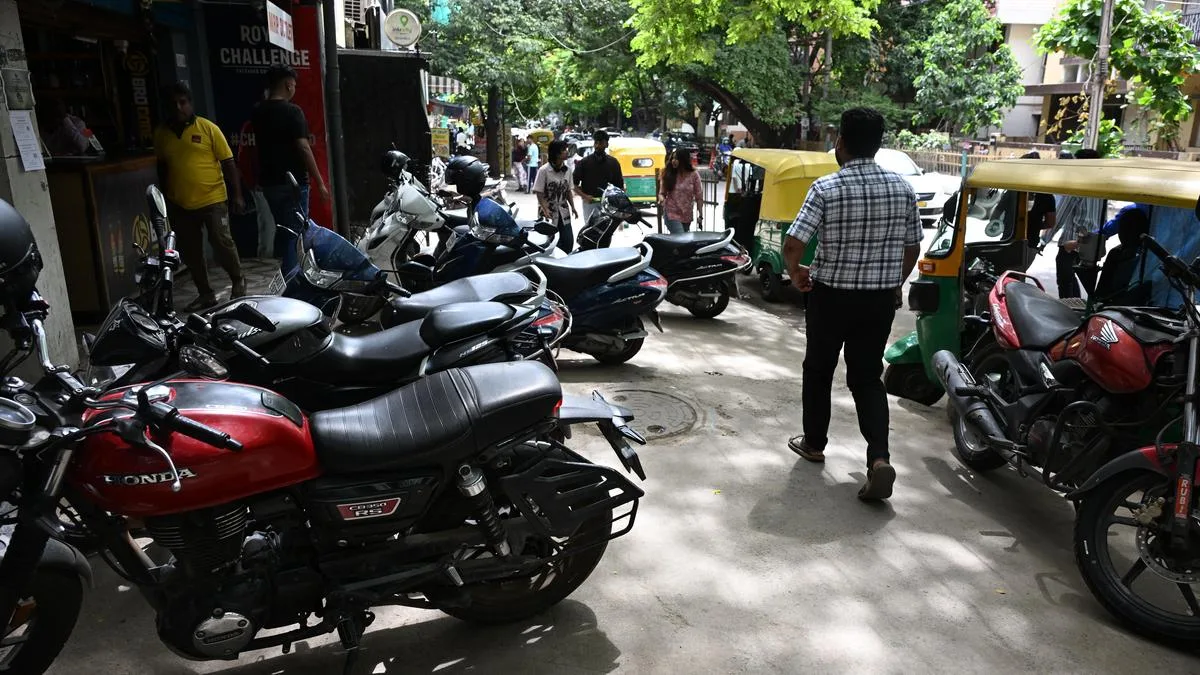
The proposed rules introduce parking and other restrictions at junctions that could curb micro-level congestion, which has been increasing commute times. | Photo Credit: ALLEN EGENUSE J.
While the residential parking permits under the Greater Bengaluru Parking Rules, 2026, have drawn criticism, the rules have a brighter side in terms of reducing congestion on arterial and sub-arterial roads by introducing restrictions on parking at junctions, high-density corridors, and public transport facilities.
The proposed rules introduce parking and other restrictions at junctions that could curb micro-level congestion, which has been increasing commute times.
The Bengaluru Traffic Police (BTP) had been seeking interventions from the city corporations, including relocating bus stands and improving junctions, to curb micro-level congestion. The fresh rules could now eliminate one of the major hurdles.
For example, under the proposed rules, there will be parking restrictions at signalised and unsignalised junctions, extending between 25 metres and 100 metres based on the type of road. Further, bus stops will mandatorily be located at least 75 metres away from all junctions.
A senior traffic police officer explained that buses line up at bus stops in long queues, reducing the road width as they are stationed at one point, which in turn narrows the stretch and limits the movement of other vehicles.
“It also slows down the traffic for vehicles behind them. So, a person on a two-wheeler who could have passed a signal if not for the slowing down of traffic would get stuck at the same signal for one more cycle, having lost about 40 to 50 seconds at one junction,” the officer said, adding that if such smaller congestion variables are eliminated, commuters can save substantial time.
Similarly, parking at junctions also reduces the road width, allowing limited movement of vehicles as against the actual capacity of the stretch. At notorious junctions such as Kamakshipalya signal or the Silk Board junction, it could further add to congestion.
But the new rules have a solution for this. “Parking during peak hours will be prohibited on stretches of select arterial roads identified by the GBA and notified by the BTP,” the rules stated.
To further limit on-street parking, the draft rules also propose creating strategically marked no-parking zones on stretches to shape parking behaviour, which would force motorists to use off-street parking.
The rules also seek to regulate autorickshaw stands by prohibiting permits on the main carriageway of arterial and sub-arterial roads.
Instead, autorickshaw stands can be designated on connector and local roads with low traffic volumes, provided they do not obstruct pedestrians or encroach on footpaths. So, if the rules are notified, all autorickshaw stands on main roads will face eviction.
Further, to set up stands elsewhere, the rules mandate approval from the Parking Task Force and notification by the Bengaluru City Police.
5News aggregated this summary from the outlet’s public feed. The full article, with all the context, is on www.thehindu.com — the content belongs to The Hindu - National.