Study on Keralam ELSA-3 shipwreck shows persistent nurdle pollution, evolving ecological impacts
Account subscription benefits alongside Premium Stories, Editorials, Opinions and more. Unlock these with Subscription
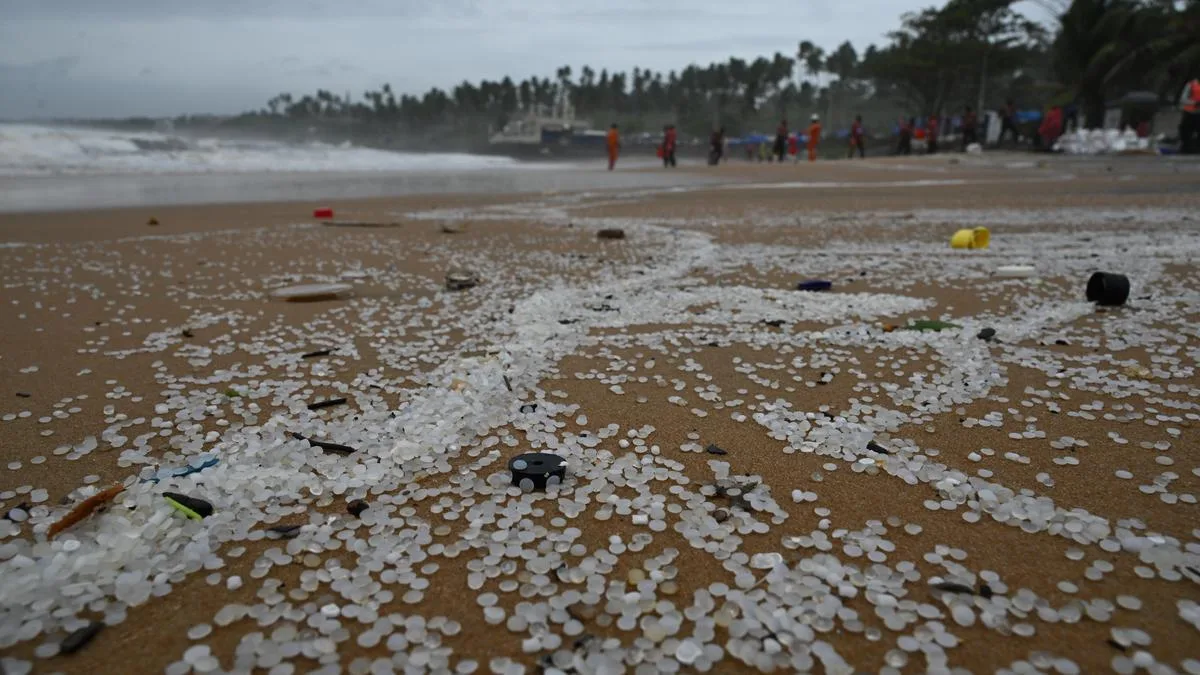
Volunteers cleaning the plastic nurdles that washed ashore at grove beach in Kovalam in Thiruvananthapuram on June 16, 2025. Tiny plastic pellets which were part of the cargo ship ‘MSC ELSA 3’ were found in large numbers along the coastline of Thiruvananthapuram. | Photo Credit: Nirmal Harindran
A scientific study following the sinking and spill from the container vessel MSC ELSA-3 off the coast of Keralam last year has provided evidence of persistent nurdle pollution and evolving ecological impacts along Kerala and Tamil Nadu coasts.
India experienced its first documented large-scale marine resin pellet spill following the sinking of the Liberian-flagged container vessel MSC ELSA-3 off the Keralam coast in May 2025. The vessel was carrying approximately 640 containers loaded with plastic resin pellets, industrial materials, and hazardous cargo including calcium carbide, together with substantial quantities of diesel and furnace oil.
In the aftermath of the accident, the Tamil Nadu Pollution Control Board (TNPCB) initiated short term (rapid) and long term (two years) impact assessment studies through Suganthi Devadason Marine Research Institute (SDMRI) in Thoothukudi.
MSC Elsa 3 shipwreck off Kerala: Tamil Nadu seeks ₹1,041.8-crore compensation for pollution impact, Union Ministry tells NGT
The SDMRI has published the one-year study results on impacts in the ‘Marine Pollution Bulletin’ journal. M. Jayanthi, R.L. Laju, A Biju Kumar, Narmatha Sathish, N. Gladwin Gnana Asir, P. Dinesh Kumar, A. Arasamuthu, Jamila Patterson, Suvarna S. Devi, Haridas Vishnu, Chennasseril Raghavan Arun A. contributed to the study.
Nurdle (plastic pellet) spills are recognised as sources of primary microplastic pollution, yet their long-term environmental transformation and ecological implications remain poorly understood. The study was aimed to characterise the spatial and temporal persistence, environmental weathering, contaminant accumulation, microbial colonisation, and biological interactions of spill-derived nurdles following the MSC ELSA-3 incident .
Contamination was monitored for one year across 93 coastal sites along India’s southwest and southeast coasts using shoreline surveys, sediment coring, polymer and surface characterisation, contaminant analysis, microbial assessment, and fish examination, says J.K. Patterson Edward, director, SDMRI.
Nurdle menace persists a year after MSC Elsa 3 disaster off Kerala coast
Underwater survey to be done to assess long-term impact of MSC Elsa 3 sinking, Centre informs Kerala HC
The study showed shoreline abundance reached 31,230 items m 2 after the spill and declined by >80% within three months at impact sites, while new hotspots emerged by October 2025, reaching 10,875 items m2 on the Gulf of Mannar mainland and 2960 items m2 on islands. By May 2026, nurdles persisted and were found buried to 20 cm in beach sediments.
Buried pellets could remain in sediments and potentially be remobilised by erosion, storms and sediment reworking.
5News aggregated this summary from the outlet’s public feed. The full article, with all the context, is on www.thehindu.com — the content belongs to The Hindu.