EU chief pitches 'associate member' status for Canada
Account subscription benefits alongside Premium Stories, Editorials, Opinions and more. Unlock these with Subscription
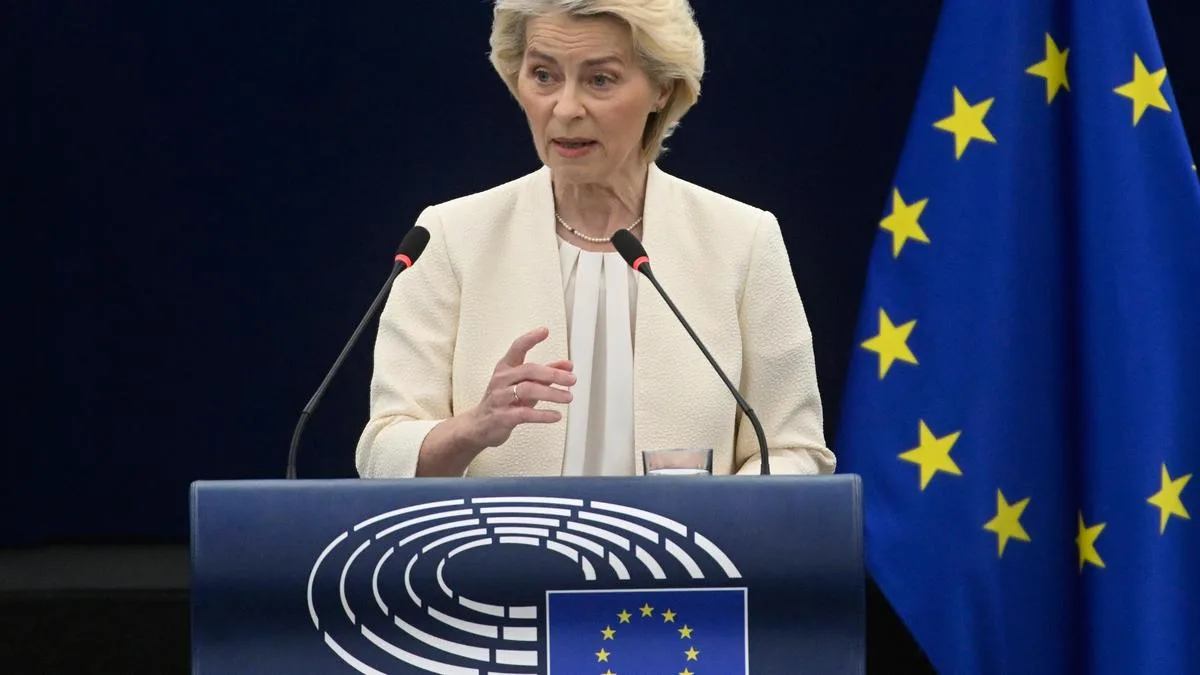
EU chief Ursula Von der Leyen told the European Parliament in Strasbourg that as democracies face a “fracture in the international rules-based system”, Brussels and Ottawa needed to pull closer together. File | Photo Credit: AP
European Commission President Ursula von der Leyen, on Wednesday (September 16, 2026), invited Canada to be the bloc’s first ‘ Associate Member’.
Delivering her annual State of the Union address in Strasbourg, France, in the presence of Canadian Prime Minister Mark Carney, Ms. Von der Leyen described “the cold fragility of today’s world” where “old assumptions and relationships have frayed”.
“I would like to work with you on opening the door for Canada to be the first associate member of the European Union,” she said, without elaborating on the structure of this proposed association.
Ms. Von der Leyen listed the ways in which the EU and Canada had converging interests, adding that “above all, Europe and Canada believe in democracy”.
“That power does not belong to the strongest, richest, and loudest, but to all of us,” she said, in a possible reference to the U.S. However, Ms. Von der Leyen added that the proposed relationship was not against anyone
Her remarks come days after U.S. President Donald Trump launched a trade war on Canada. Relations between Brussels and Washington have also frayed significantly and undergone a recalibration over tensions around trade and the U.S. pulling back from Europe’s defence.
Mr. Carney too had called for “ middle powers” to act together, earlier this year at the World Economic Forum in Davos and has accelerated deepening ties with other countries, including India.
In Strasbourg, Ms. Von der Leyen also proposed the setting up of a ‘European Security Council’ with partners such as Canada, Norway, the U.K. and Ukraine.
Accusing Russia of European air space violations, including in recent days, the EU’s executive chief said it was time for a new security strategy.
“Our systems are made for a different world. They are driven by well-intentioned attempts at consensus and compromise, but we need to consider if they are still fit for purpose,” Ms. Von der Leyen said, adding that it was time for a European security protocol similar to, and working in concert with, NATO’s Article 4. This article of the military alliance’s agreement outlines a consultation process when members feel they are under threat.
Comments have to be in English, and in full sentences. They cannot be abusive or personal. Please abide by our community guidelines for posting your comments.
We have migrated to a new commenting platform. If you are already a registered user of The Hindu and logged in, you may continue to engage with our articles. If you do not have an account please register and login to post comments. Users can access their older comments by logging into their accounts on Vuukle.
5News aggregated this summary from the outlet’s public feed. The full article, with all the context, is on www.thehindu.com — the content belongs to The Hindu - International.