Madurai Corporation outlines strategic overhaul to tackle waste management issues
Account subscription benefits alongside Premium Stories, Editorials, Opinions and more. Unlock these with Subscription
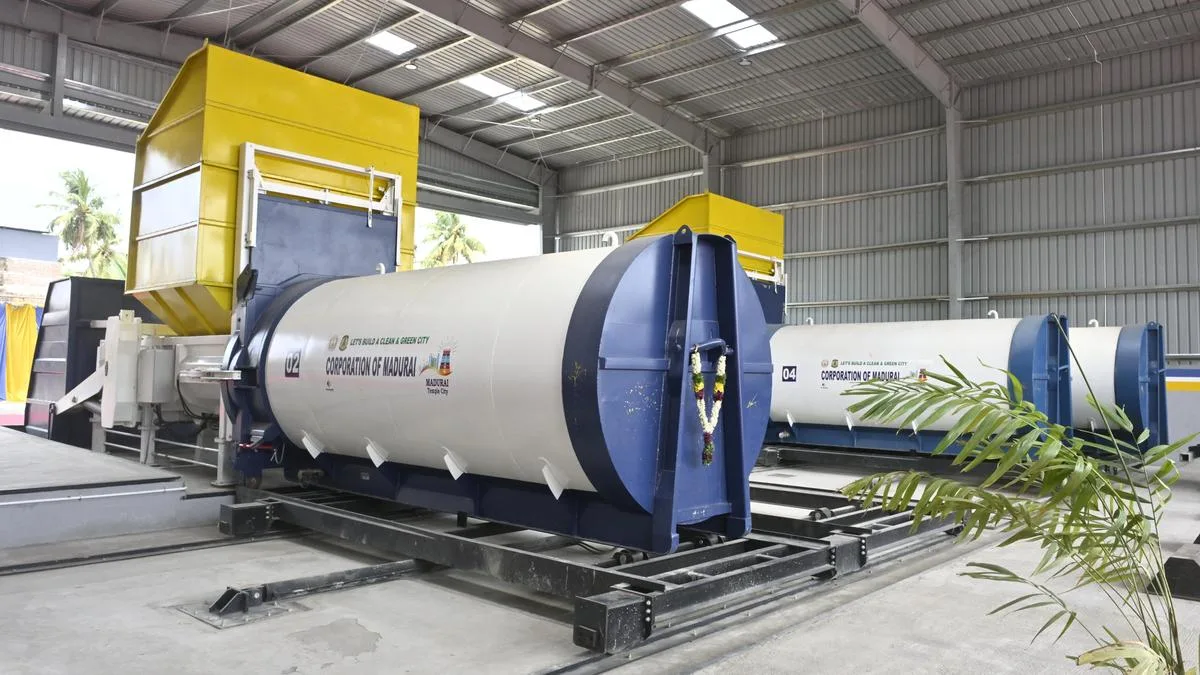
The garbage transfer station at Thathaneri in Madurai. | Photo Credit: G. MOORTHY
Madurai has waste management issues to address, and a robust mechanism is needed to deal with the problem. With the Solid Waste Management Rules 2026 in place superseding the 2016 Rules, Madurai Corporation has now planned a strategic overhaul as per the rules to mitigate the situation.
Activists, trade bodies and the public have been raising concerns over waste management in the city. The Swachh Survekshan 2024-25 survey turned out to be an eyeopener. As per the survey, Madurai was ranked 40th among the 40 cities in the country having a population of more than 10 lakh.
In recent times, public interest litigation petitions were filed before the Madurai Bench of the Madras High Court complaining about the poor upkeep of Smart Fruit Market, Central Vegetable Market and surrounding areas in Mattuthavani. Open dumping in K.K. Nagar, Anna Nagar, Vaigai river bed and other places have been reported.
Corporation authorities pointed out that there were certain discrepancies in the parameters followed in the ranking system. They said there were improvements made and it would get reflected in the next rankings. The authorities are now tasked with erasing the city’s ‘dirty city’ tag.
Madurai Corporation said it will intensify door-to-door collection. As per the Solid Waste Management Rules, 2026, it has instructed households, commercial establishments and institutions to mandatorily segregate solid waste at source into four categories: wet waste, dry waste, sanitary waste and special care waste (domestic hazardous waste) before handing it over to the designated Corporation workers.
The Corporation has instructed the waste should be stored and handed over in the prescribed colour-coded bins or bags to facilitate separate collection, transportation and processing in accordance with the provisions of the Solid Waste Management Rules, 2026.
The prescribed colour code for wet waste is green and it includes kitchen waste, cooked and uncooked food waste, fruit and vegetable waste, flowers, tea leaves, coffee grounds, eggshells and other biodegradable waste. The prescribed colour code for dry waste is blue and it includes paper, cardboard, newspapers, books, plastic, metal, glass, cartons, textiles, packaging materials and other recyclable waste.
The prescribed colour code for sanitary waste is red and it includes used sanitary napkins, diapers, incontinence pads, tampons, condoms and other hygiene waste.
5News aggregated this summary from the outlet’s public feed. The full article, with all the context, is on www.thehindu.com — the content belongs to The Hindu.