Can jurists be appointed as Supreme Court Judges? | Explained
Account subscription benefits alongside Premium Stories, Editorials, Opinions and more. Unlock these with Subscription
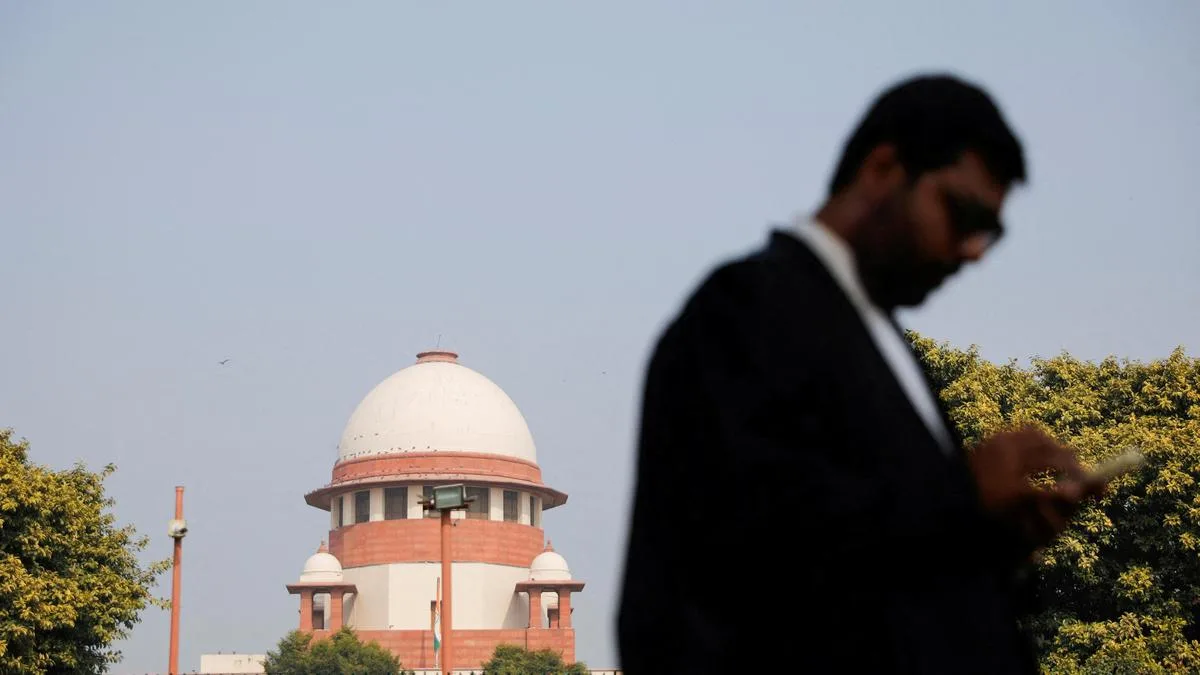
Article 124(3) of the Constitution lays down three routes through which a person may qualify for appointment as a Supreme Court Judge. File. | Photo Credit: Reuters
The story so far: Supreme Court Judge Justice Ujjal Bhuyan on Sunday (August 30, 2026) questioned why a constitutional provision allowing a “distinguished jurist” to be appointed as a Judge of the Supreme Court has remained unused for more than 76 years. Addressing the 13th convocation of National Law University, Delhi’s LL.M. programme, Justice Bhuyan pointed out that Article 124(3) of the Constitution permits the appointment of a person who, in the President’s opinion, is a “distinguished jurist” as a Supreme Court Judge. However, no legal academic has so far been elevated to the Supreme Court under this provision.
Article 124(3) of the Constitution lays down three routes through which a person may qualify for appointment as a Supreme Court Judge — a person must have served as a High Court Judge for at least five years, practised as an advocate of a High Court for at least 10 years, or be, in the opinion of the President, a “distinguished jurist”.
The provision, however, does not define who qualifies as a “distinguished jurist” or prescribe any minimum period of professional experience for such a person. Its inclusion as a separate category nevertheless indicates that the framers contemplated a route to the Supreme Court beyond the conventional pathways of judicial service and legal practice, potentially opening the door to eminent legal scholars and academics.
The “distinguished jurist” category was added to the list of persons eligible for appointment to the Supreme Court in the draft Constitution. The Constituent Assembly debates reflect that this was intended to bring diversity in professional backgrounds among those appointed to the Bench of the Supreme Court.
Moving the amendment on May 24, 1949, Constituent Assembly member H.V. Kamath said its purpose was “to open a wider field of choice for the President in the matter of appointment of Judges of the Supreme Court”. He argued that persons with “outstanding legal and juristic learning” were “not necessarily confined to judges or advocates”.
The Constituent Assembly debates also referred to the appointment of Felix Frankfurter to the U.S. Supreme Court. In 1939, President Franklin D. Roosevelt appointed Frankfurter, who had been a professor at Harvard Law School for 25 years, as an Associate Justice of the U.S. Supreme Court. Justice Frankfurter went on to become one of the court’s most celebrated Judges and a noted advocate of the doctrine of judicial restraint — the principle that courts should ordinarily respect the domain of the elected legislature and the executive, and exercise restraint in interfering with their decisions.
Assembly member M. Ananthasayanam Ayyangar cited Justice Frankfurter’s appointment to highlight that legal expertise was not confined to practising lawyers or Judges. He noted that there were also “many writers” and “jurists of great eminence” who could be considered.
5News aggregated this summary from the outlet’s public feed. The full article, with all the context, is on www.thehindu.com — the content belongs to The Hindu.