Rakesh Tikait warns Bihar State govt over Satellite Township Projects
Account subscription benefits alongside Premium Stories, Editorials, Opinions and more. Unlock these with Subscription
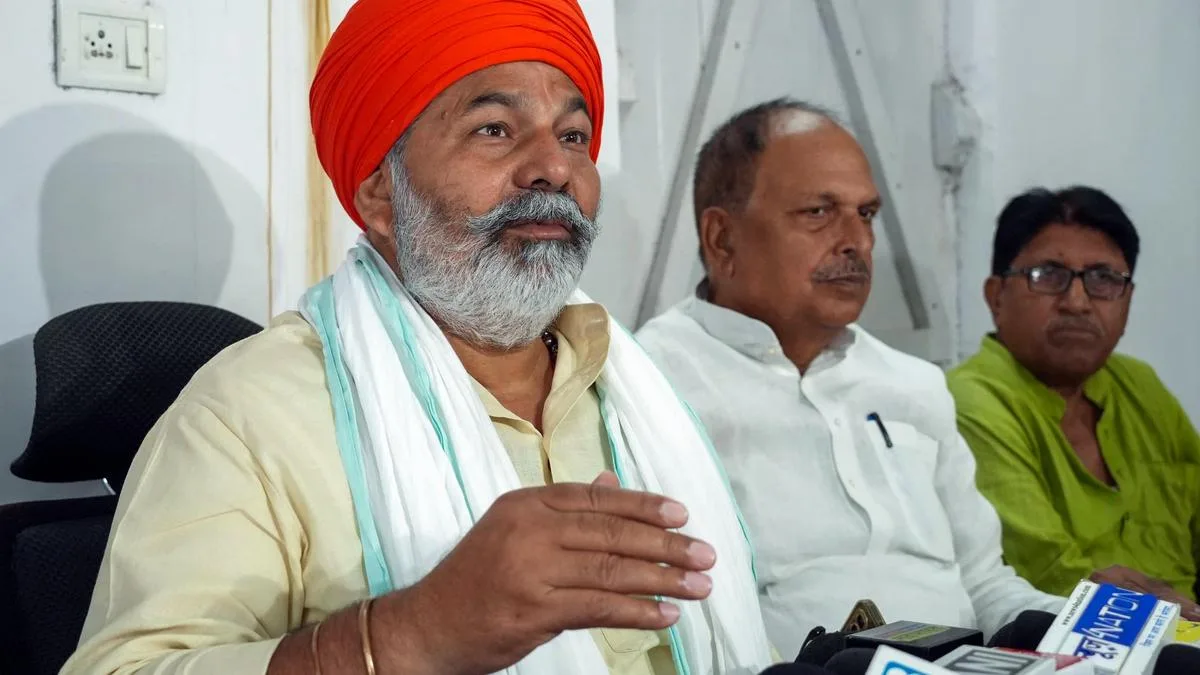
Bharatiya Kisan Union National Spokesperson Rakesh Tikait addresses a press conference regarding the adverse effects of the satellite project, in Patna on October 7, 2026 | Photo Credit: ANI
Bharatiya Kishan Union Leader Rakesh Tikait on Wednesday (October 7, 2026) raised questions over Satellite Township Projects in Bihar, asserting that the Union will not allow farmers’ land and rights to be compromised in the name of development.
Bihar government has prepared a blueprint for 11 satellite townshipss across 10 districts of Bihar. These townships will feature planned residential colonies, designated commercial areas, wide roads, and green spaces with plantations along roadsides and in parks.
Addressing a press conference in Patna, Mr. Tikait said that a review of this entire model suggests that unless transparency, social impact assessment, fair compensation, rehabilitation, and farmers’ consent are ensured in time, it could lead to the large-scale transfer of agricultural land and the promotion of land speculation under the guise of development.
He asserted that the Union is not opposed to development; however, development that comes at the cost of farmers losing their land, livelihoods, and social security cannot be accepted.
The Bihar government has announced plans to develop large-scale satellite townships in Patna, Darbhanga, Saran , Vaishali, Bhagalpur, Muzaffarpur, Gaya, Purnia, Sitamarhi, Munger, and Saharsa, in which lakhs of acres of land are being identified for these projects.
He pointed out that there are several significant objections in the Bihar Town Development Act, 2026, and the Act proposes granting excessive powers for the establishment, development, control, and management of cities.
“How will the new law uphold the protective provisions—regarding farmers’ interests, social impact assessment, consent, rehabilitation, and compensation—that already exist under the Right to Fair Compensation and Transparency in Land Acquisition, Rehabilitation and Resettlement Act, 2013 (RFCTLARR Act, 2013), and the Bihar Right to Fair Compensation and Transparency in Land Acquisition, Rehabilitation and Resettlement Rules, 2014,” Mr. Tikait asked.
He added, “Farmers’ land cannot be viewed merely as land for urban development; for a farmer, land is not just an asset but a source of livelihood, social security, and the economic foundation for future generations.”
Mr. Tikait mentioned that there are several questions surrounding the land pooling system, while the proposal involves acquiring farmers’ land and returning a portion of it to a developed State.
He asked, on what basis the returned land will be valued and what will be the location and quality of the land allocated to the farmer. He also asked what rights the farmer will have over that land. He added that in any land pooling arrangement, the farmer should be treated not merely as a land provider but as a genuine partner in the development process.
Mr.
5News aggregated this summary from the outlet’s public feed. The full article, with all the context, is on www.thehindu.com — the content belongs to The Hindu.