Meenakshi Temple: The making of Madurai’s greatest landmarks
Account subscription benefits alongside Premium Stories, Editorials, Opinions and more. Unlock these with Subscription
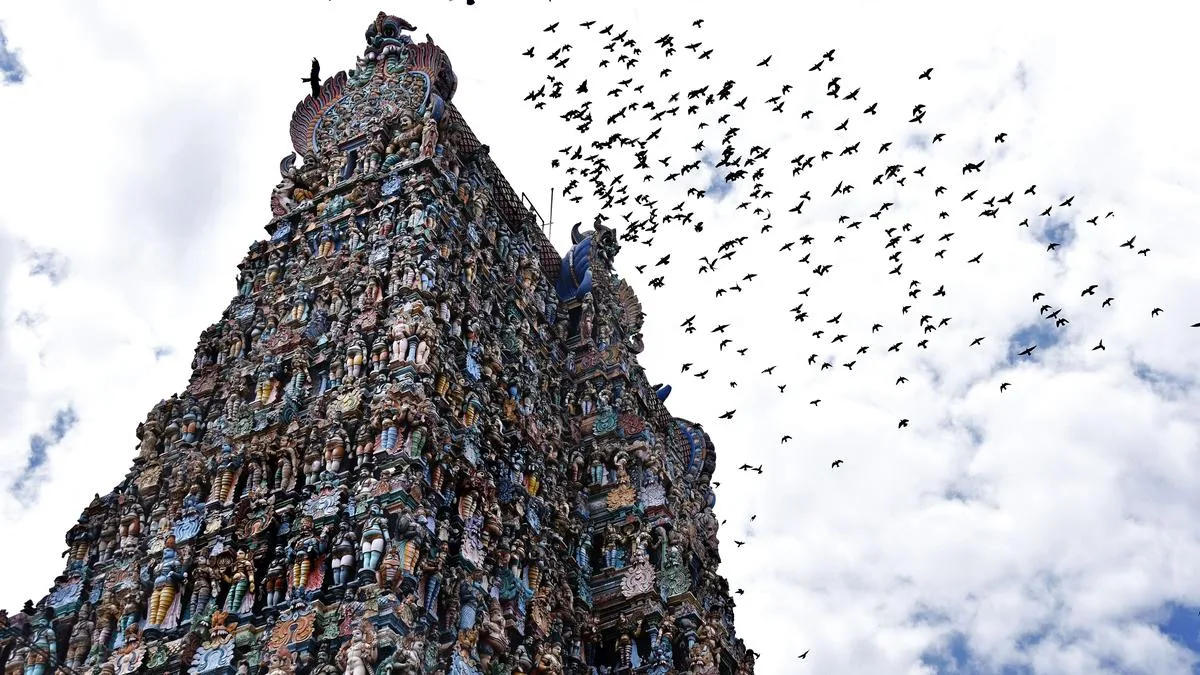
The temple tower of Madurai Meenakshi Sundareswarar Temple. | Photo Credit: The Hindu Archives
Goddess Meenakshi is revered by the people of Madurai as their queen ( Maduraiyin Rani or Arasi in Tamil), but what draws thousands of devotees from across the world to the Meenakshi-Sundareswarar Temple each day is its audacious architecture. Far more than a place of worship, the sprawling complex is a marvel of sacred design. It boasts 14 gopurams, including four towering raja gopurams at its eastern, western, southern and northern entrances; gold-plated vimanas above the sanctums of Sundareswarar and Meenakshi; the famed Golden Lotus Tank; and a train of magnificent mandapams. Built of granite, these halls are grand edifices supported by massive pillars and adorned with life-size sculptures, intricate carvings, friezes, murals and, most importantly, inscriptions. Equally striking is the Indra Vimanam above Sundareswarar’s sanctum, held aloft by eight silver-coated elephant sculptures.
The Cholas, the Pandyas, the Vijayanagara rulers and the Nayaks contributed to transforming the Meenakshi-Sundareswarar Temple into the spectacular complex it is today. The Nayaks, who presided over the temple’s final great phase of architectural expansion, left the most visible imprint. Viswanatha Nayak, the dynasty’s founder, Tirumalai Nayak and Rani Mangammal renovated and extended the temple, building several mandapams and introducing the distinctive composite pillars featuring yalis and human figures. The inscriptions recording the Cholas’ contributions, however, were lost during later Nayak-era renovations. Interestingly, epigraphist and scholar C. Santhalingam points out that “none of the Chola kings are known to have entered the temple, though the reason remains unknown. There was intense hostility between the Cholas and the Pandyas for about 200 years.”
The 1000-pillared mandapam inside the Madurai Meenakshi Sundareswarar temple. | Photo Credit: Courtesy: The Goddess’ Realm
One of the most striking features of the temple are its mandapams — Ashta Shakti, Meenakshi Nayak, Mudali Pillai, Unjal, Veerappa Nayak, Veera Vasantha Raya, Kalyana, 16-pillared, 1000-pillared, Sangathar, 63-Nayanmars, Nagara and Pudhu mandapams. Among these, the 1000-pillared and Pudhu Mandapams are renowned for their extraordinary architecture and breath-taking sculptures.
The Ashta Shakti Mandapam, located on the eastern side, serves as the main entrance to the temple. Apart from featuring the sculptures of dwarapalakis and eight forms of Shakti, it also houses sculptures of Tirumalai Nayak and his two wives, Rudrapathi Ammal and Dhoni Ammal, who built the mandapam. According to Porchelvi Jeyapraksh, a scholar on the temple, the mandapam was built when the Shakti cult was dominant in Tamizhagam.
5News aggregated this summary from the outlet’s public feed. The full article, with all the context, is on www.thehindu.com — the content belongs to The Hindu - Entertainment.