Navodaya schools case: Supreme Court asks Tamil Nadu to drop anti-Hindi ‘mindset’; State says language is a fundamental right
Account subscription benefits alongside Premium Stories, Editorials, Opinions and more. Unlock these with Subscription
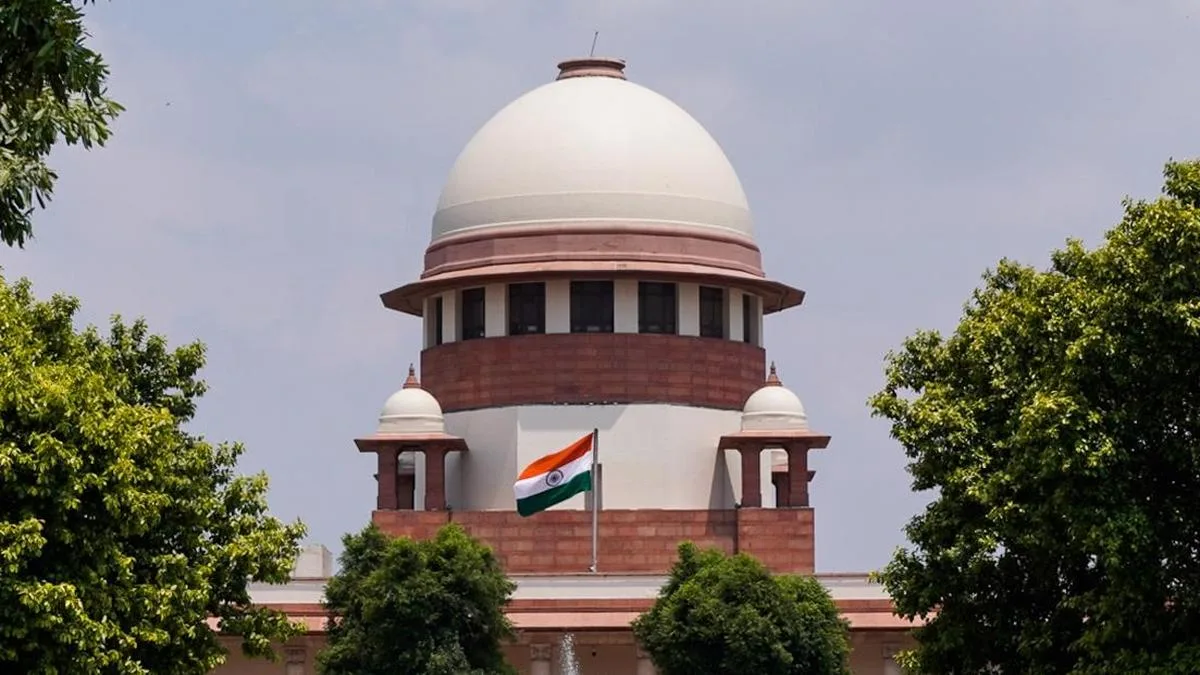
The Supreme Court noted that its December 2025 order to the State to identify lands for Navodaya schools had not been complied with, the court noted. | Photo Credit: The Hindu
The Supreme Court on Thursday (September 17, 2026) said Tamil Nadu has to change the “mindset” that Hindi cannot be taught on the soil of the State, cautioning that “individual States cannot act like individual countries”.
The oral observations from Justice B.V. Nagarathna came in a nearly hour-long hearing on the adoption of the Navodaya Vidyalaya Scheme in Tamil Nadu.
The apex court gave Tamil Nadu three months to comply with a December 15, 2025, order to identify requisite land for Navodaya schools in each district . It said the direction would be subject to final orders passed later on. In the interregnum, the State and Central representatives were asked to discuss the policy of establishing Navodaya schools in Tamil Nadu.
Also Read | Rather than Navodaya schools, cooperate in running existing model schools, TN tells Centre in SC
“Chennai should not alienate Delhi, and vice versa, too,” Justice Nagarathna, heading a Bench comprising Justice A.G. Masih, addressed both governments.
The Tamil Nadu government has opposed the scheme as “fundamentally incompatible” with the two-language policy followed by the State. The previous Dravida Munnetra Kazhagam (DMK) government, in an affidavit filed in March this year, had said the Navodaya scheme, which was based on the three-language formula, deviated from the mandate of the Tamil Nadu Tamil Learning Act, 2006. The affidavit had alleged that the imposition of the scheme was only a “backdoor” ploy to make Hindi compulsory.
On Thursday, the now ruling Tamilaga Vettri Kazhagam (TVK) dispensation in the State equally objected to the scheme, saying the choice of language is a fundamental right.
Senior advocate Jaideep Gupta and Tamil Nadu Additional Advocate General Haripriya Padmanabhan, for the State, said the scheme, which was only a policy, cannot be forced upon the State against its own policies and laws.
“This is not a ‘mindset’ issue. Every State has its own policies. They are entitled to have their own policies. If the Centre wanted uniform implementation of the Navodaya policy, it would have legislated,” Mr. Gupta countered.
Justice Nagarathna replied that “we are ultimately a unitary form of government”. But Mr. Gupta said he begged to differ with the court, saying “we are a federal government. This kind of unification is not the purport of the Constitution. Federalism is also part of the Basic Structure”.
The judge responded that the governance structure in India was unitary in spirit and federal in structure.
Mr. Gupta said ‘education’ was a subject in the Concurrent List. It was necessary for the State to accept a policy of the Centre, he said.
5News aggregated this summary from the outlet’s public feed. The full article, with all the context, is on www.thehindu.com — the content belongs to The Hindu - National.