Years Late, Billions Over Budget: California’s High-Speed Rail Hasn’t Laid a Track
SHAFTER, Calif.—Some 18 years after California voted to launch a bullet train that would travel between San Francisco and Los Angeles in under three hours, the project now costs billions more than planned, is years behind schedule and has yet to lay its first track.
The 2008 ballot measure passed narrowly, 52.7% to 47.3%, kick-starting America’s largest active infrastructure project. A legislative bill said it should be completed by 2020, and the California High-Speed Rail Authority’s initial business plan estimated a cost of $33 billion. After years of legal battles, cost overruns, leadership changes and political fights, the price tag is up to $126 billion, with a high estimate of $231 billion, and it isn’t expected to be fully operational until 2040.
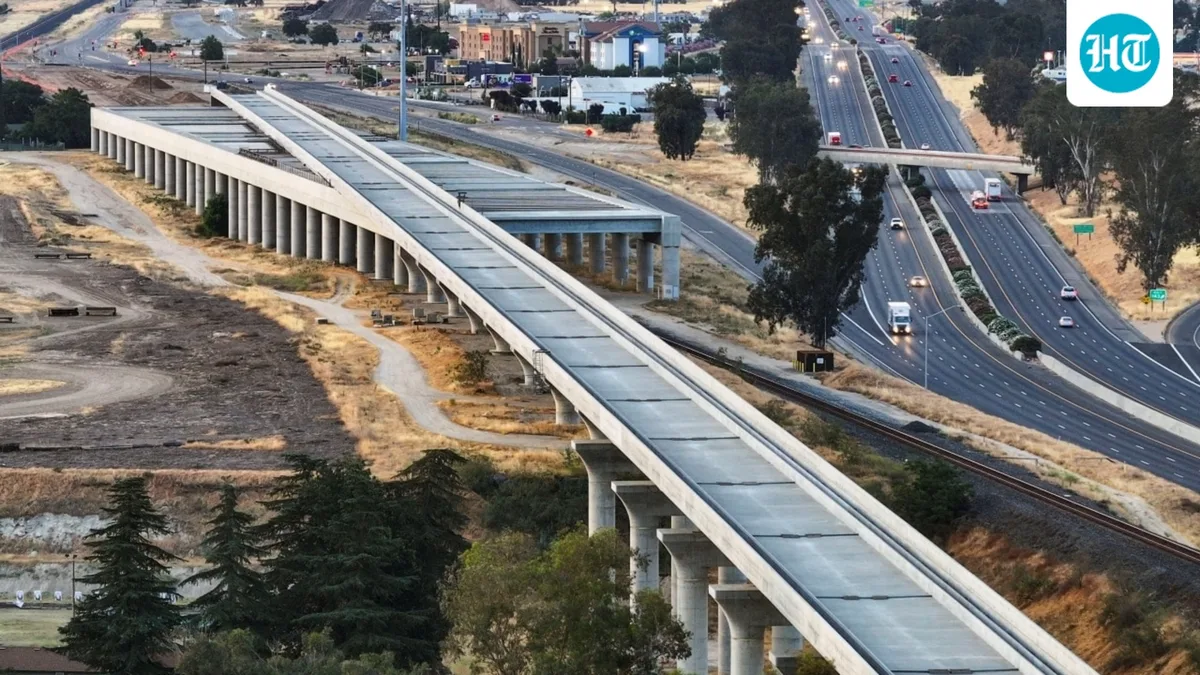
Since 2008, the authority has spent about $15 billion purchasing thousands of land parcels and building giant overpasses, rail beds, walls and other concrete structures that now loom over California’s Central Valley. The work has generated thousands of jobs.
But the Authority’s Inspector General estimated the project will “exhaust its current funding resources†as early as next year, according to its July report.
“This is a disaster,†Democratic state Sen. Catherine Blakespear said at a Transportation Committee meeting in April to review the project’s 2026 business plan. “I am such an enthusiast for rail and I really want this to be successful and just hearing these things makes it seem like we’re proceeding on a wing and a prayer.â€
The authority is currently focused on completing an initial segment through Central Valley, then connecting it to San Francisco and Los Angeles later.
The topic is polarizing in the valley. “You can’t really talk about it too loudly until you know where people stand. I’m pro-train, but it’s a divisive issue,†said Constance Peters, a shift leader at The 18hundred restaurant in Bakersfield who grew up in the area. Before that, she worked for a concrete company that helped build some structures for the rail project. “Californians have money. We want to travel,†Peters said.
Construction hasn’t yet reached the southern end of this segment, where intense opposition remains. The project would cut through Shafter, a town of about 24,000.
The train would “divide our town in half,†said Gail Alvidrez, a retiree and longtime local resident. Shafter is the only city that would be bisected by the proposed route without getting a station.
On a warm summer evening in Shafter, kids played baseball, families strolled downtown for ice cream and men in cowboy hats watched the sunset from a park. Incorporated in 1938, Shafter has roots as a railroad depot; the high-speed rail project would replace existing Amtrak and freight tracks with a wider, elevated line surrounded by 35-foot walls.
Locals worry the project would hurt businesses, since the track’s footprint would displace some. As downtown closed for the night, one restaurant filled up: El Michoacano, a block from the tracks, where Alvidrez and her husband ate. “They’ll have to tear down stores,†she said.
5News aggregated this summary from the outlet’s public feed. The full article, with all the context, is on www.hindustantimes.com — the content belongs to Hindustan Times - World.