Moving back to India after decades abroad? 6 money moves to make before you return
Planning to move back to India after spending decades overseas can feel less like relocating and more like returning home.
However, from a financial perspective, it remains a significant transition that requires careful planning.
You may have retirement accounts abroad, foreign investments, property in more than one country, and bank accounts opened while you were an NRI. Your healthcare requirements may also have changed considerably since you originally left India. Ideally, these financial and tax matters should be reviewed well before you book a one-way ticket.
Do not assume that retiring in India will automatically be inexpensive. While housing costs may be lower than in some overseas cities, private healthcare, domestic help, travel, and the lifestyle you choose can still require a sizeable monthly income.
Healthcare should be among the first financial issues to examine, particularly if you are returning to India in your 60s or later.
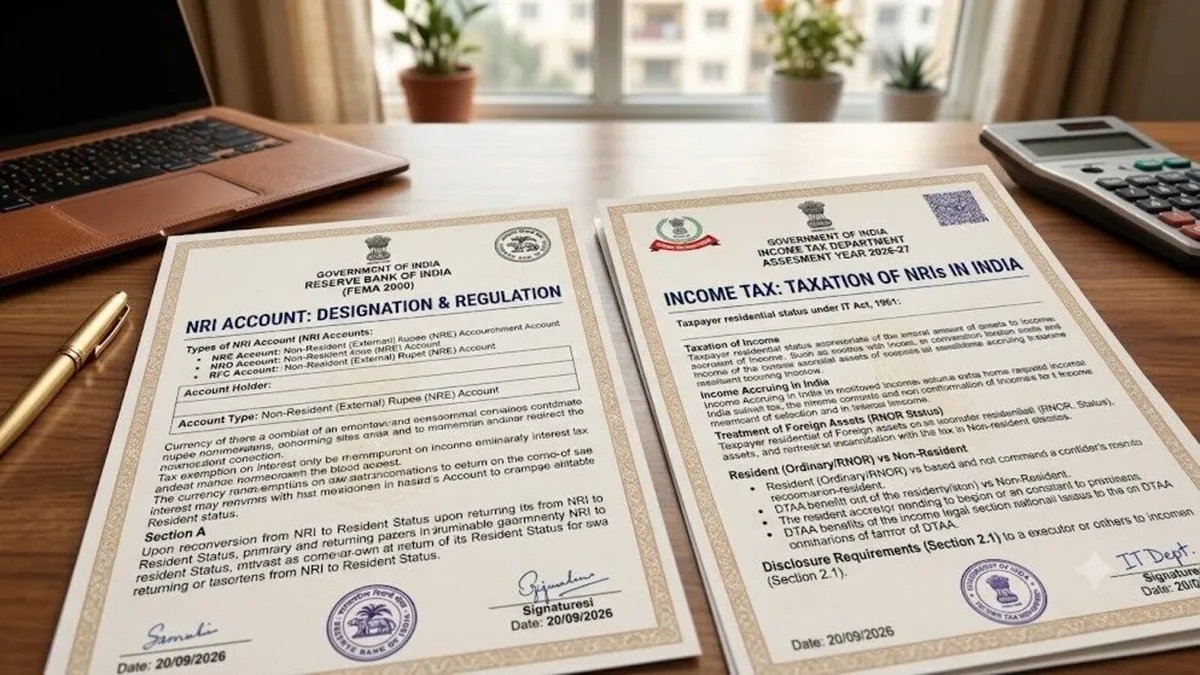
A permanent return to India and a corresponding change in residential status under FEMA may require bank accounts maintained as an NRI to be redesignated.
Do not continue using NRE or NRO accounts indefinitely simply because they are convenient. Speak to your bank about when your residential status needs to be updated and which resident or permitted foreign-currency accounts (such as RFC accounts) would be suitable after your return. You should also review fixed deposits and other investments that were opened or structured based on your NRI status.
Returning to India does not necessarily mean that you become fully resident for income-tax purposes on the day you arrive.
Your tax residency is determined by factors such as the number of days you spend in India and your residence history. Depending on individual circumstances, someone returning after several years abroad may also qualify as a "Not Ordinarily Resident" (RNOR) for a certain period.
The Income Tax Department states that the basic residency tests continue under the Income Tax Act, 2025, including the 182-day test and the alternative test based on stays during the relevant and preceding years. This should be checked before moving because your residential status can significantly affect how your overseas income is taxed in India.
You may choose to retain an overseas pension, brokerage account, property, or bank account even after moving permanently to India. There is nothing inherently unusual about doing so, but you should understand the Indian tax and reporting requirements that may apply after your residential status changes.
Your retirement income could come from several sources, including an overseas pension, Indian investments, rental income, and retirement savings held in different accounts.
Determine which income sources will fund your regular expenses in India and how much wealth should continue to remain overseas. Currency fluctuations also need to be considered. If most of your retirement assets are denominated in dollars or pounds while your expenses are in rupees, converting the entire amount at one time may not always be the most suitable strategy.
5News aggregated this summary from the outlet’s public feed. The full article, with all the context, is on www.livemint.com — the content belongs to LiveMint - Money.