DFCs: The backbone of India’s logistics push
Account subscription benefits alongside Premium Stories, Editorials, Opinions and more. Unlock these with Subscription
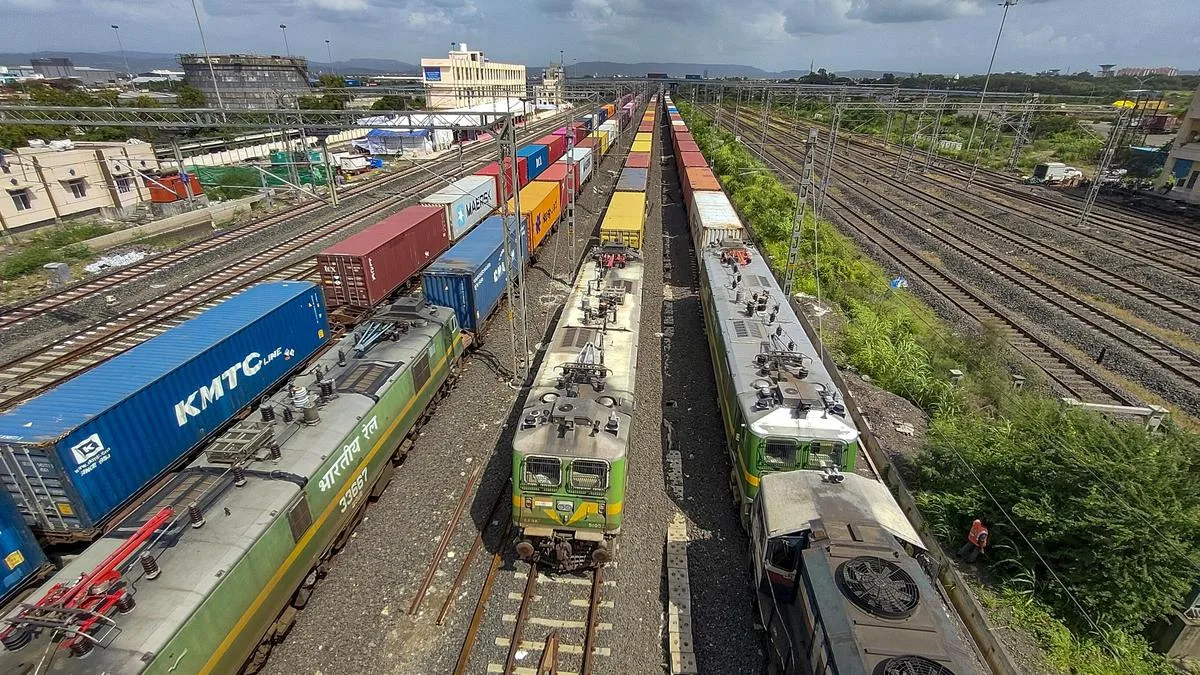
A view of the Western Dedicated Freight Corridor (WDFC), virtually inaugurated by Prime Minister Narendra Modi, connecting Jawaharlal Nehru Port in Navi Mumbai with Dadri in Uttar Pradesh, marking the project's completion, in Raigad, Maharashtra | Photo Credit: PTI
India’s multi-billion-dollar PM GatiShakti project, akin to national multimodal freight grids in the U.S., Europe or China, got a shot in the arm with the Western Dedicated Freight Corridor (WDFC) coming into operation.
The country has effectively completed a 2,843-km dedicated freight rail backbone, comprising the 1,506-km WDFC from Dadri to JNPT and the 1,337-km Eastern DFC (EDFC) from Ludhiana to Sonnagar — a structural transformation of India’s logistics architecture whose multiplier effect will be visible through job creation and regional development.
The WDFC connects the northern manufacturing and consumption belt with India’s principal container gateway, JNPT. Its ability to run longer, heavier and double-stack container trains substantially increases freight productivity.
The Dadri-JNPT journey is expected to cut to 58 hours from about 66, while the corridor creates dedicated capacity insulated from the operational conflicts between passenger and freight trains on conventional routes.
Prime Minister Narendra Modi lays foundation stones, inaugurates and dedicates to the nation development projects worth more than ₹35,000 crore, including three key sections of the Western Dedicated Freight Corridor (WDFC), railway projects, highway projects and Gujarat government projects, in Vadodara | Photo Credit: ANI
The WDFC comes about three years after the EDFC came into full operation. The two operational corridors, which serve as economic arteries, have complementary roles: the EDFC strengthens the mineral-industrial axis, while the WDFC strengthens the manufacturing-export axis.
Launched in 2021, PM GatiShakti is a GIS-based national plan — incorporating satellite imagery, geospatial databases and project information — that provides multimodal connectivity infrastructure to various economic zones. A total of 58 Central Ministries/Departments and all 36 States/UTs have been onboarded, with about 22,000 data layers integrated. The Network Planning Group has already evaluated 352 infrastructure projects worth ₹16.1 lakh crore, of which 201 have been sanctioned and 167 are under implementation.
DFCs have created additional paths on the conventional network by diverting freight traffic. The Railways reported that DFC traffic rose from an average of 247 trains a day in 2023-24 to 443 in August 2026.
5News aggregated this summary from the outlet’s public feed. The full article, with all the context, is on www.thehindu.com — the content belongs to The Hindu - National.