HeLa to a new world where progress in science matches dignity for patient
Account subscription benefits alongside Premium Stories, Editorials, Opinions and more. Unlock these with Subscription
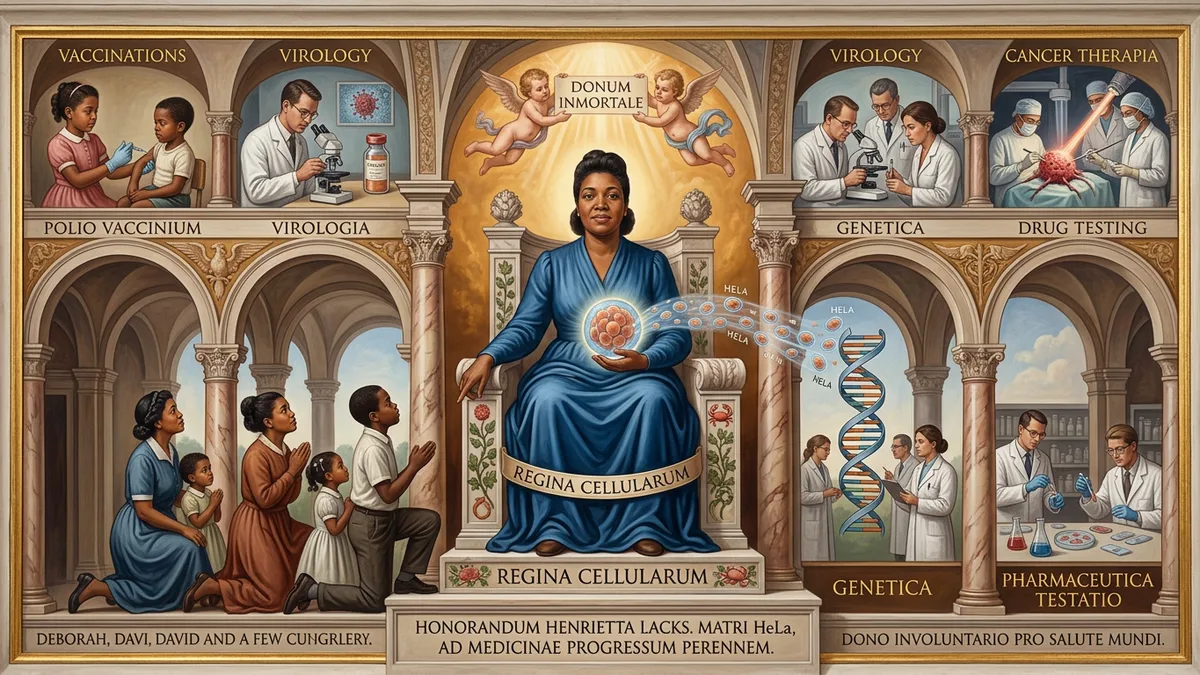
Henrietta Lacks, an African American tobacco farmer from southern United States, whose cells, extracted from her without permission, turned out to be the first human cells to successfully grow, divide, and survive indefinitely outside the human body. Photo: Image generated with AI
They also serve science, who are not scientists. One of science’s most egregious instances of epistemic dominance, where a powerful institution overrode and exploited a marginalised individual - was Henrietta Lacks – donor of the famous, immortal HeLa cell line . Cells extracted from her, without permission, transformed medical research, but her story was ignored, erased and obscured for decades. The scientific world that generously used this unique cell line for successful research into virology, vaccines, genetics and even cancer care, but the erasure of the donor of those cells was historic in its completeness.
Lacks, an African American tobacco farmer from southern United States, sought treatment at the ‘coloured ward’ in Johns Hopkins Centre for cervical cancer, way back in 1951. While it was common for medical professionals, in those days, to take samples and cells without the express permission of the patient, particularly if it was an African American woman, these cells were different. Johns Hopkins used the cells from her tumour to culture a line of cells that was extraordinarily durable outside the body. Usually human cells die outside of the body. Anonymised by a laboratory acronymn, Lacks’ cells (HeLa) turned out to be the first human cells to successfully grow, divide, and survive indefinitely outside the human body.
HeLa was a miracle that scientists had chanced upon. With HeLa, they could mass produce human cells in a standard format that could be used for biomedical research, and would underpin several breakthrough discoveries, that would revolutionise medical care. No one knew, however, of the immense exploitation behind this miracle cell line, and the profound lack of consent in procuring the samples.
Lacks, who died at merely 31 years, and was buried in an unmarked grave, remained invisible, not even a footnote, completely uncredited and her family entirely in the dark about her contribution to the world of science. Henrietta Lacks’ family first learned about her cells in nearly quarter of a century later, when scientists reached out to them, requesting blood samples once they suspected that the HeLa cell line had contaminated other research samples. This came as a bolt on the family, who could not fathom how cells from their mother had survived this long outside of her, and how this strange situation had come to be. While the academic world and several sections of the corporate world benefited richly from the HeLa cell line, Lacks’ own family had remained entrenched in poverty and struggling to make ends meet.
5News aggregated this summary from the outlet’s public feed. The full article, with all the context, is on www.thehindu.com — the content belongs to The Hindu.