Who’s watching what we eat? Inside India’s food adulteration problem
Account subscription benefits alongside Premium Stories, Editorials, Opinions and more. Unlock these with Subscription
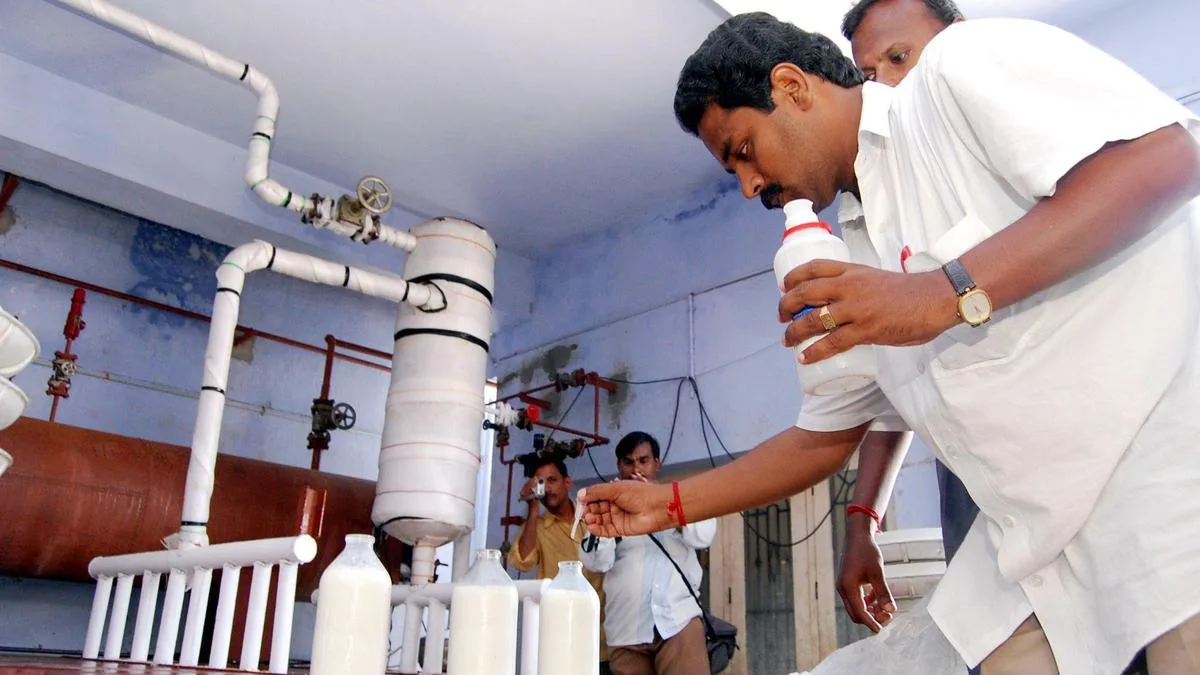
A file photo of health wing officials of the Erode Corporation conducting surprise raids at milk bottling units in and around Erode. | Photo Credit: M. Govarthan
When Bikaner-based graphic designer Laxmi Rajpurohit, 22, began noticing changes in the taste, smell and consistency of the milk her family was getting from a big, reputed brand, she suspected foul play and decided to take things in her hands. She had read about simple ways of testing milk at home to check for water, starch or detergent. For instance, an iodine test would reveal starch if the milk turns blue-black. She picked up the water test from the Detect Adulteration with Rapid Test, or DART, programme manual of the Food Safety and Standards Authority of India (FSSAI) .
She put droplets of the milk on a sloping surface. “It flowed quickly,” she says, “like water instead of leaving a thick white trail.” She complained to the company’s customer care, who asked her for further information about the product. She hasn’t heard back ever since.
Rajpurohit can test a drop of milk at home but the test cannot tell her everything that happened before the packet of milk reached her. It can’t tell her if the milk contains an adulterant or is contaminated or if it might fail some food safety standard.
Corporation workers destroying adulterated milk seized from milk vendors during a surprise raid conducted in Madurai. | Photo Credit: K. Ganesan
The FSSAI has initiated legal action against Nestlé India over non-compliances with regards to regulations for infant food products.
Between shiny paraffin-wax-coated apples, calcium carbide (“ masala ”) ripened mangoes, saw dust in red chilli powder , boric acid powder in maida and rice, and synthetic milk (detergent, urea, caustic soda, refined oils, milk powders, carbonates/ bicarbonates, melamine, heavy metals, pesticide residues), fake/ analogue paneer, and spurious ghee (dairy cream with palm oil and vanaspati ), the average Indian is sick, cautious, angry and fed up. Milk, in particular, is consumed daily by infants up to the elderly, making its adulteration a widespread public health and consumer safety concern.
Bengaluru-based doctor and food writer Nandita Iyer (@saffrontrail on Instagram) recalls how once an ice cream arrived looking like “some separated liquid or oil”. From then on, she has become really cautious. She checks labels carefully, sticks only to brands she trusts, and rarely orders from restaurants now.
Bengaluru-based doctor, nutritionist and food writer Nandita Iyer. | Photo Credit: Special arrangement
Luke Coutinho, a wellness and lifestyle coach, argues that adulterated foods can add chemical stress burden to the body, triggering diseases.
5News aggregated this summary from the outlet’s public feed. The full article, with all the context, is on www.thehindu.com — the content belongs to The Hindu.