Sri Lanka’s iconic singer Nanda Malini dies at 82
Account subscription benefits alongside Premium Stories, Editorials, Opinions and more. Unlock these with Subscription
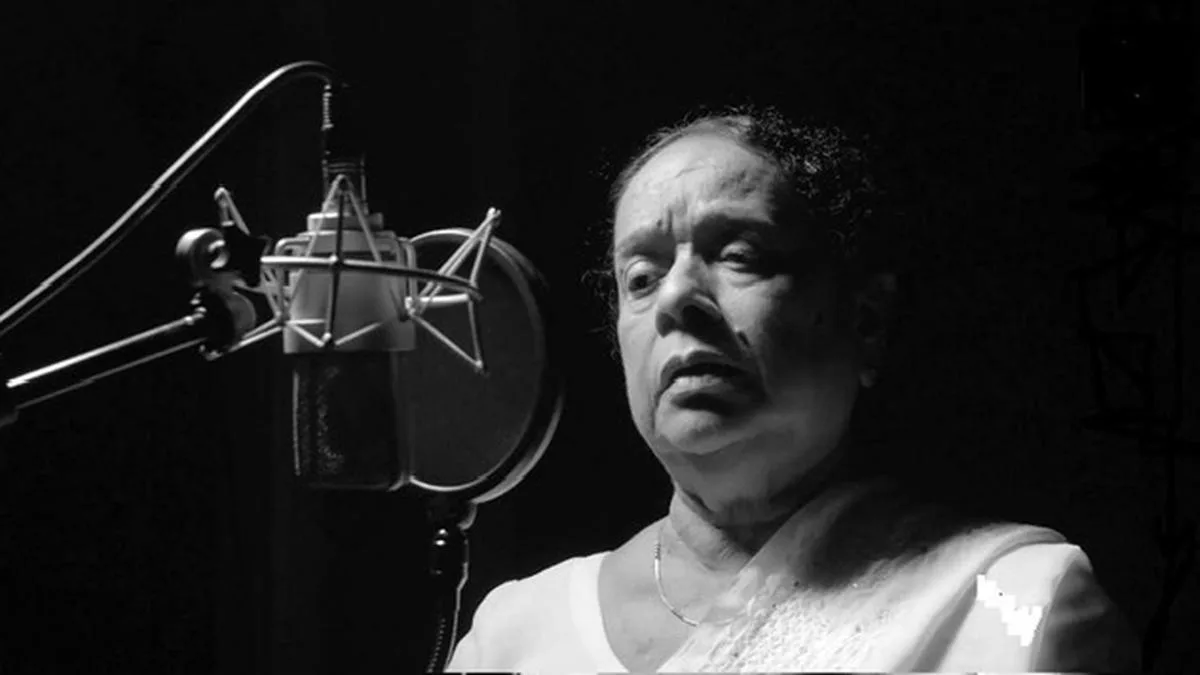
Iconic Sri Lankan singer Nanda Malini, whose voice travelled with generations of Sinhalese through the island’s political and social upheavals of the 1970s and 1980s, passed away in Nawala, near Colombo, on Thursday. She was 82.
The Sri Lankan government announced three days of mourning beginning Friday (August 21, 2026) to pay respects to one of the country’s most celebrated artistes, who was born in 1943 in British Ceylon. As a young and aspiring artiste, Malini travelled to India to study music at the Bhatkhande College of Hindustani Music in Lucknow, local media reported.
President Anura Kumara Dissanayake called Malini ”a true musical legend of our time”. “Her timeless music inspired generations of Sri Lankans, young and old alike. Her remarkable legacy will live on in the hearts of millions,” he said in a social media post.
Addressing the Parliament on Friday (August 21, 2026), Prime Minister Harini Amarasuriya said Malini’s career is “not only a chapter in Sri Lankan music, but also a living expression of the country’s social movements and human emotions.” Reflecting a widely shared sentiment about Malini’s music, PM Amarasuriya said in her condolence message: “Going beyond themes of love and separation, she gave voice to the suffering, fears, hopes, and struggles of ordinary people, making her songs resonate as the voice of society itself.”
In a post on social media, Former President Chandrika Bandaranaike Kumaratunga described Malini as a “glorious voice”, and a “fearless and principled artiste who used music as a weapon against social injustice.”
Noted filmmaker Prasanna Vithanage described Malini as a “politically conscious” artiste, whose voice and music shaped the sensibilities of Sinhalese people for well over five decades. “For many of us, her songs bring back memories of not just our childhood, parents, first love, and marriage, but also the social unrest this country has witnessed. She is, in that sense, an integral part of our collective memory and psyche,” he told The Hindu . “No other singer has that sort of place.”
Pointing to Malini’s upbringing in a working-class Sinhalese home and her sympathy for left politics, Vithanage said her songs spoke to the disillusionment of Sinhalese youth amid sharp class inequalities and called for an equal society where everyone lived in dignity.
On criticism that some of her music in the early 1980s espoused an ethno-nationalistic spirit, in a country that was being torn apart by ethnic tensions between its Sinhalese and Tamil people, Vithanage said, “there are contradictions in her work.”
Malini’s long career, remarkable body of work, and the choices that shaped them reveal not only how Sri Lanka’s political landscape evolved over time, but also the many strands of nationalist and progressive politics that coexisted during those years of tumult.
Having entered the film industry under the guidance of renowned musician and composer W.D. Amaradeva, she went on to win many prestigious awards for her songs.
5News aggregated this summary from the outlet’s public feed. The full article, with all the context, is on www.thehindu.com — the content belongs to The Hindu - International.