PM Modi’s SCO visit is loaded with expectations on BRICS Summit and UNSC election
Account subscription benefits alongside Premium Stories, Editorials, Opinions and more. Unlock these with Subscription
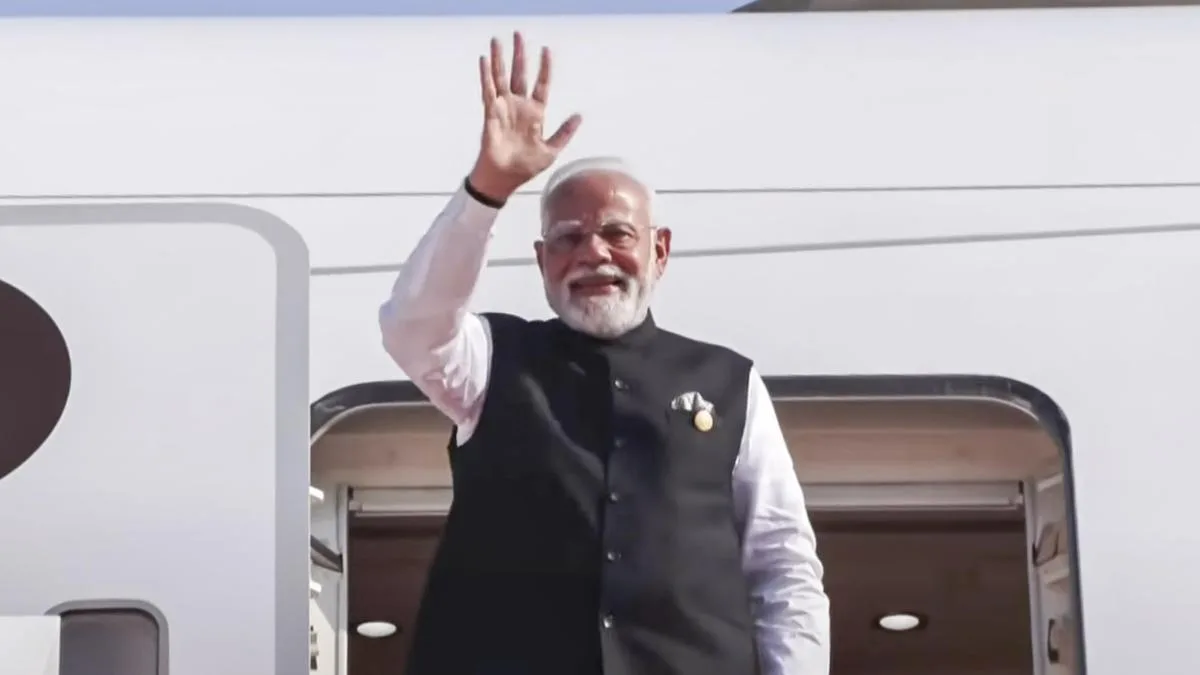
All eyes will be on whether PM Modi gives any indication that he would attend the SCO summit 2027, in Islamabad. Photo credit: X@Narendra Modi
Prime Minister Narendra Modi’s four-day visit to Uzbekistan and the Kyrgyz Republic is more than just an outreach to two important states in Central Asia or the Shanghai Cooperation Organisation (SCO). The agenda will include engagements aimed at three additional multilateral platforms — the upcoming BRICS Summit in September, the two-year UN Security Council term of 2028-2029, and planning for the long-pending India-Central Asia Summit, which has not met since 2022. Experts say the delay has led to speculation in the region that New Delhi has lost interest in the engagement, particularly compared with Mr. Modi’s first foray in 2015, when he visited all five Central Asian states. His biggest challenge during this visit will be to reverse that perception.
In a speech given at Kazakhstan’s Nazarbayev University in Nur Sultan, addressed to the “people of Central Asia”, Mr. Modi had then promised that India would rebuild connectivity to the region. “In an age of globalisation, Asia cannot remain fragmented. And Central Asia cannot remain distant and disconnected from India,” he said. Since 2012, when the previous Manmohan Singh government had launched the ‘Connect Central Asia’ policy, there had been considerable hope that more trade, travel, and pipelines would follow. However, while trade in goods has risen from $500 million in 2010 to more than $2 billion in 2025, connectivity prospects have been considerably cut due to geopolitical shifts.
The rupture in ties with Pakistan since 2016 has ended India’s road connectivity to Afghanistan and Central Asia, as well as the Turkmenistan-Afghanistan-Pakistan-India pipeline. More recently, the virtual closure of the Chabahar port projects due to U.S. sanctions has ended that route, while the U.S.-Iran war has imperilled the International North South Transport Corridor project. In addition, China’s Belt and Road Initiative has made deep inroads in the region, growing to $106 billion in China-Central Asia trade in 2025.
“The broader message is that we have to stay engaged with the entire region, but also bilaterally with each Central Asian state,” Nandan Unnikrishnan, a distinguished fellow at the Observer Research Foundation and a leading expert on Central Asia and Russia, said, adding, “We may not be able to match China and Russia in terms of investment and influence, but we have many economic interests. In addition, India’s soft power is in trade, education, and IT, where Indians have been slow to utilise such obvious advantages.”
In Bishkek, Chinese President Xi Jinping and Russian President Vladimir Putin will attend the summit amongst other leaders of the SCO members. Kyrgyz President Sadyr Japarov will hand over the presidency of the SCO to Pakistan Prime Minister Shehbaz Sharif for 2027, and all eyes will be on whether Mr.
5News aggregated this summary from the outlet’s public feed. The full article, with all the context, is on www.thehindu.com — the content belongs to The Hindu - International.