FCRA amendments not against any community, Centre tells House panel
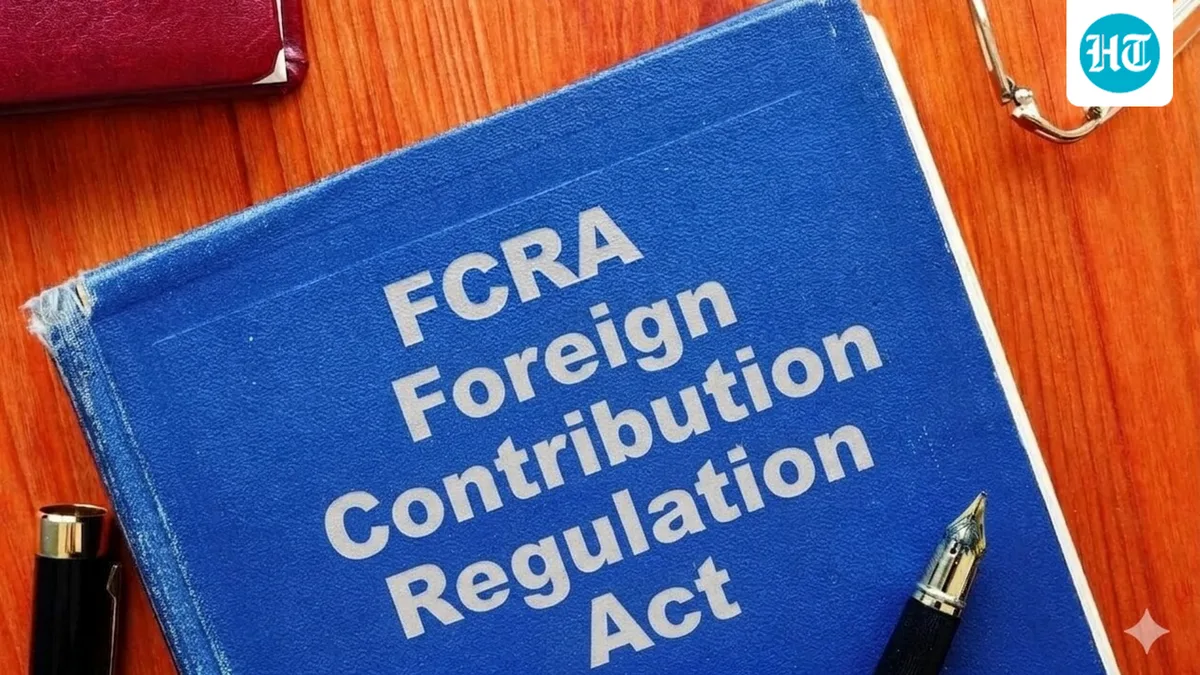
The amendments to the foreign donation bill are not targeted against any community but concerns over internal security and national interest have prompted the government to bring the legislation, Union home secretary Govind Mohan told the Joint Committee of Parliament (JPC) in the capital on Friday.
The 31-member JPC, headed by BJP’s Sanjay Jaiswal, is reviewing the Foreign Contribution (Regulation) Amendment Bill , 2026, which proposes a government-appointed authority to manage and dispose of assets of organisations who cease to have registration to receive donations from abroad.
Mohan told the panel that some provisions of the existing law could not be implemented. In his presentation, he said the framework for vesting of assets resulted in “the prescribed authority (states) unable to implement provisions” and that there were “no clear rules for managing or disposing vested assets.” As a result, most assets remain with associations while their bank funds are frozen.
Several MPs, including P Wilson of the DMK , Christopher Tilak and Anto Antony of the Congress, and Zia Ur Rehman of Samajwadi Party (SP), questioned whether the bill would adversely affect minority interests. Mohan clarified that the legislation was not aimed at any community but argued that the FCRA was essentially a national security law.
The meeting also saw discussion on foreign-funded NGOs and their activities. Jaiswal said, “We have seen how NGOs opposed the Sardar Sarovar dam in Gujarat and Kudankulam nuclear power station. Did Gujarat and Tamil Nadu benefit from the two respective projects or not.”
Jaiswal told HT that the panel would meet several chief ministers, including all Christian chief ministers and those from other parties. “We will have a wide-ranging debate,” he said.
Mohan also shared data showing that FCRA-registered NGO s received ₹ 22,974 crore in foreign contributions in 2024-25, of which ₹ 5,150 crore went to religious associations. Christian associations received the largest share among religious groups at ₹ 1,345 crore, followed by Hindu organisations at ₹ 328 crore and Muslim groups at ₹ 19 crore. Social purposes accounted for ₹ 13,071 crore, followed by education at ₹ 6,933 crore, while ₹ 1,841 crore went towards religious activities.
5News aggregated this summary from the outlet’s public feed. The full article, with all the context, is on www.hindustantimes.com — the content belongs to Hindustan Times - India News.