How buses became the lifeline of Madras
Account subscription benefits alongside Premium Stories, Editorials, Opinions and more. Unlock these with Subscription
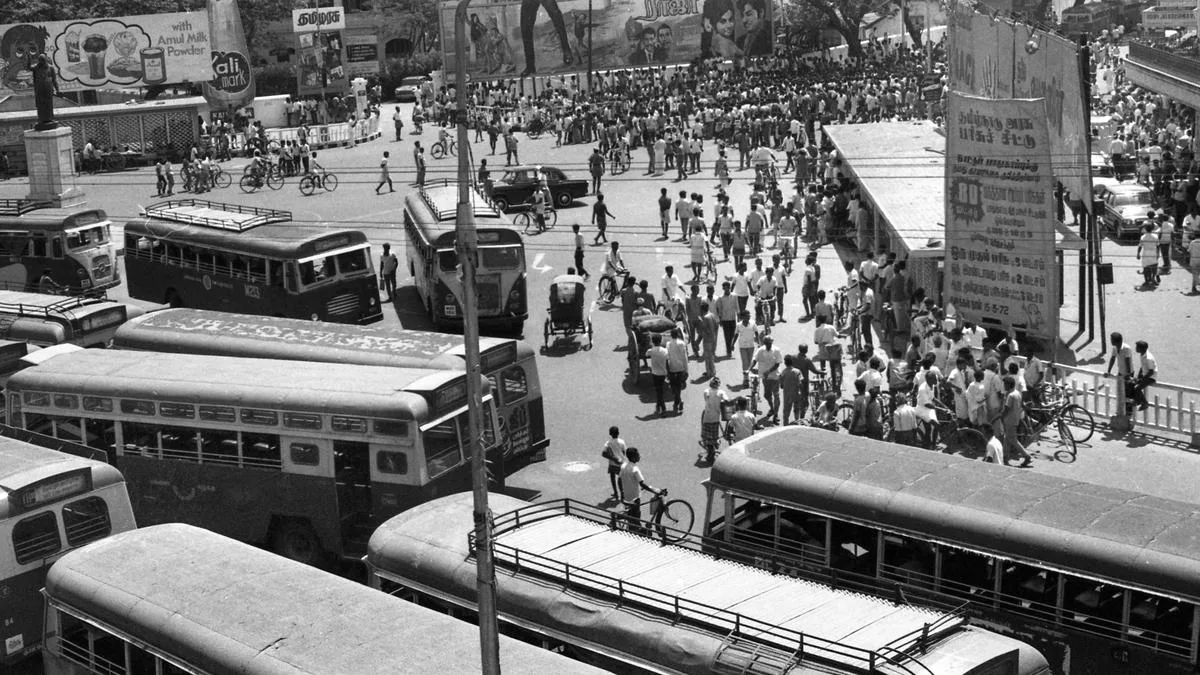
Pallavan Transport buses seen on Mount Road on March 16, 1972. | Photo Credit: The Hindu Archives
Lurching from side to side, nearly brushing you as they go along, packing in more people than is allowed, and never bothering with traffic lights – the MTC buses are an integral feature of Chennai city. And, they are a lifeline for millions.
Around 4,000 buses ferry 32.85 lakh passengers daily. For many, the daily commute is as much an experience as the Mumbai suburban rail passengers. Friendships are formed, not just between passengers, but also with MTC personnel.
My favourite story is from The Hindu dated October 27, 2015, as per which, the residents of Melapedu had a 35-year tradition of honouring the driver, conductor and bus(!) plying on route 61A. This is the kind of story that warms your heart, as did that video of 2023 where a retiring bus driver kissed his vehicle goodbye. To a city more used to reading of that horror called Bus Day (and The Hindu has carried reams on it), these are stories with a difference.
Believe it or not, Salem was where the first bus service came, long before Madras. It was of course a town-to-town service and not within Salem. Private operators gradually saw the potential in Madras and The Hindu dated March 18, 1926, has it that the Madras City Motor Bus Owners’ Association had around 30 members with a total of 50 buses plying in the city. The government too began operating buses from 1947 onwards.
Madras Day | The buses that drove Madras into Chennai, a cosmopolitan city
Bus transport existed after a fashion thereafter, with the tram service providing competition. Rather ironically, it was the tram that boosted the bus, for when a strike occurred in the former, the latter mode of transport was operated by the tram service itself.
The sudden demise of the tram service on April 12, 1953, meant that the government had to swing into action. It withdrew 14 buses from the mofussil and added them to the 45 that it was already operating in the city.
From The Hindu of April 12, 1953, we come to know that the government was running red colour buses during peak hours alone prior to the tram strike. These now became full-fledged services. The new bus routes were to run along the tram lines, and these were given alphabets, from B to S. At the end of the report was a significant finding – that it took 20 minutes for the same distance that a tram would need 45 minutes for. Buses never looked back thereafter.
The government’s bus service was headquartered at Transport House on Band Practice Road, in a beautiful art deco building. That is today Pallavan House, and the road became Pallavan Salai. Those changes were post the nationalisation of bus services in 1972, a move that had altruism and politics in equal measure.
Most transport operators were Congress supporters. Pallavan was bifurcated in 1994, with Dr. Ambedkar Transport Corporation being in charge of the northern areas of the city.
5News aggregated this summary from the outlet’s public feed. The full article, with all the context, is on www.thehindu.com — the content belongs to The Hindu - National.