Oration on corrosive strictures held
Account subscription benefits alongside Premium Stories, Editorials, Opinions and more. Unlock these with Subscription
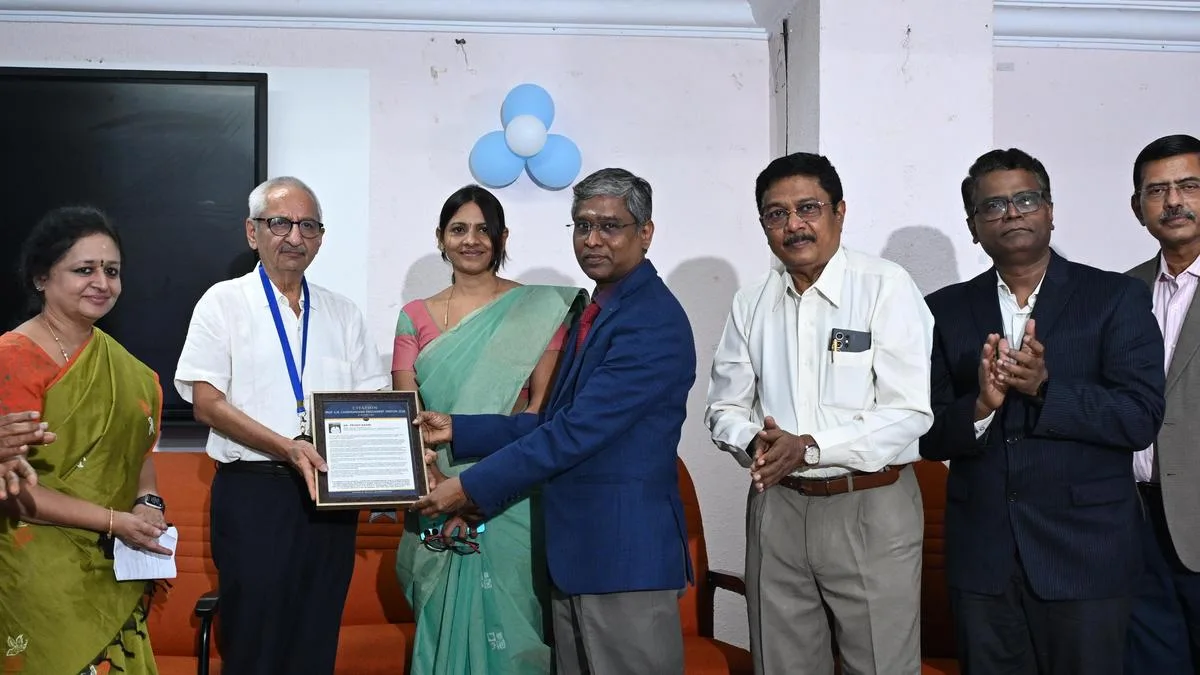
Dignitaries at the Prof. S.M. Chandramohan Endowment Oration 2026 on Friday. | Photo Credit: B. JOTHI RAMALINGAM
Acids and alkalis are the major causes of corrosive ingestion and corrosive strictures, with acid ingestion being more common in India. The incidence of such cases is not known, and it is time to look at it, as data on disease incidence is important to plan the treatment and management of patients, Peush Sahni, senior consultant, Head of Department, Academics MCLBS, Max Super Speciality Hospital, New Delhi, said on Friday.
Delivering the “Prof. S.M. Chandramohan Endowment Oration 2026” on “Corrosive Strictures of the Oesophagus: The AIIMS, New Delhi Experience”, he said that while accidental ingestion is common among children, suicidal ingestion is prevalent among adults, particularly young people and women.
He elaborated on the severity of corrosive burns, symptoms, and emergency management and treatment.
Citing a 2010 autopsy study, he said 13.6% of the fatal poisoning cases was due to corrosives and 87.5% had suicidal intention. Household cleaners were the common source, and those aged 21-30 were the most common victims.
An International Gastric Cancer Update, comprising scientific sessions, was also held. The Institute of Surgical Gastroenterology at Madras Medical College (MMC) and MMC SGE Alumni Association, in partnership with the Asia-Pacific Gastric Cancer Council, organised the oration and update.
D. Sudhakaran, dean in-charge, MMC and Rajiv Gandhi Government General Hospital; J. Sreevidya, vice-principal, MMC; T. Selvaraj, director in-charge, Institute of Surgical Gastroenterology, MMC; Rema Chandramohan, chief executive officer, Centre of Excellence for Autism; and M. Kanagavel, consultant laparoscopic surgeon, were present.
(Assistance for overcoming suicidal thoughts is available on the State’s health helpline 104, Tele-MANAS 14416. and Sneha’s suicide prevention helpline 044-24640050).
Comments have to be in English, and in full sentences. They cannot be abusive or personal. Please abide by our community guidelines for posting your comments.
We have migrated to a new commenting platform. If you are already a registered user of The Hindu and logged in, you may continue to engage with our articles. If you do not have an account please register and login to post comments. Users can access their older comments by logging into their accounts on Vuukle.
5News aggregated this summary from the outlet’s public feed. The full article, with all the context, is on www.thehindu.com — the content belongs to The Hindu.