Melanoma in India: why the messaging needs to change to catch it early
Account subscription benefits alongside Premium Stories, Editorials, Opinions and more. Unlock these with Subscription
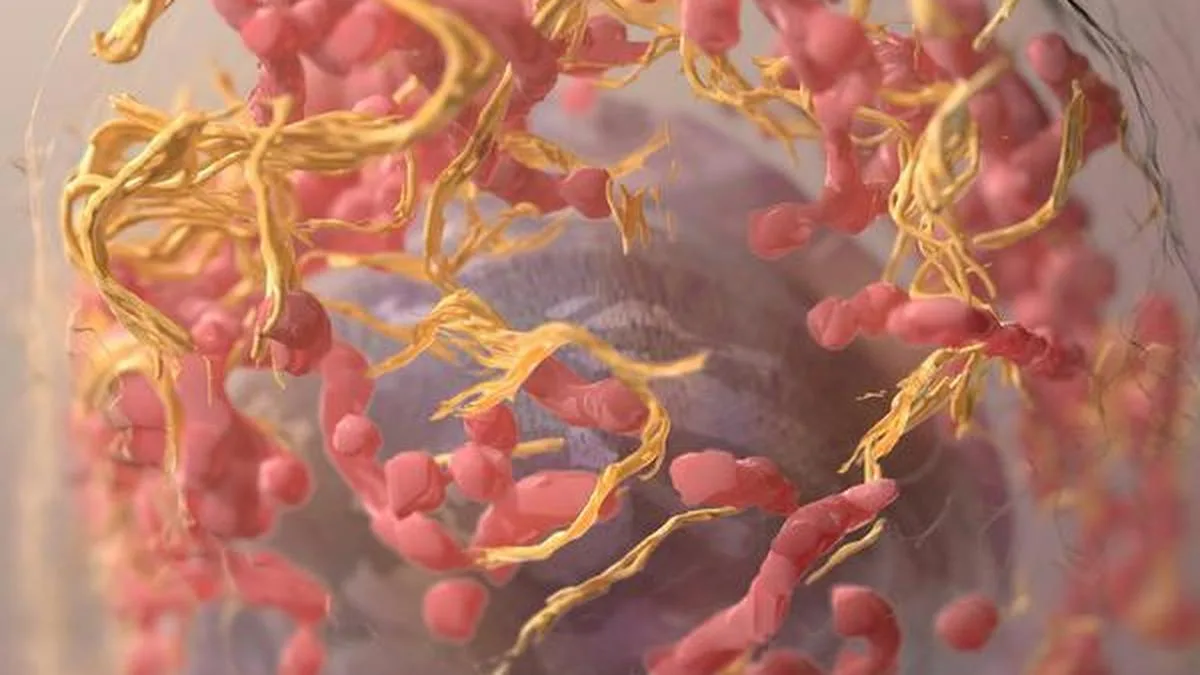
A 3D structure of a melanoma cell derived by ion abrasion scanning electron microscopy
Thousands of patients in India are diagnosed with melanoma, a type of skin cancer, each year. While melanoma is far less common here than in Western populations, it is far from rare and the way it presents in our patient population makes it uniquely difficult to detect early. Too many patients come to us when the disease is already advanced , precisely at a time when treatment options have never been more powerful or more personalised. This contrast between available therapies and the stage at which patients are diagnosed defines one of the most pressing challenges in melanoma care in India today.
The warning signs most people associate with skin cancer come from research developed for fairer-skinned populations, where melanoma tends to appear on sun-exposed areas as an irregular or darkening mole. That picture does not reflect what clinicians see in India.
Melanoma here, most commonly presents on the soles of the feet or beneath the nails, sites that are rarely examined and even more rarely associated with cancer. This condition is called acral lentiginous melanoma, a subtype that accounts for 35 to 60% of cases in dark-skinned individuals. Such lesions are frequently mistaken for bruises, fungal infections, or diabetic ulcers, and by the time a biopsy is taken, the disease has often progressed.
Mucosal melanomas, a rare type of cancer that starts in the mucous membranes, are highly aggressive with a very low chance of recovery and produce few early warning signs. Most are diagnosed only after spread has occurred.
Any pigmented lesion that changes or persists, wherever it appears on the body, deserves investigation rather than reassurance.
When I began my oncology career, managing advanced melanoma meant offering patients limited and rarely durable options. That has fortunately changed significantly.
The foundational shift came from James Allison and Tasuku Honjo, whose discoveries on CTLA-4 and PD-1 earned them the 2018 Nobel Prize in Physiology or Medicine . Their research established the principle of immune-checkpoint blockade: rather than attacking a tumour directly, we can sometimes release the biological brakes that stop the patient’s own immune system from doing so. The results can be extraordinary. Former U.S. President Jimmy Carter was diagnosed at 91 with melanoma that had spread to his liver and brain. Surgical resection of liver disease, stereotactic radiation for the brain, and immunotherapy with the checkpoint inhibitor pembrolizumab produced a durable remission, and he lived to 100.
Precision medicine has reshaped the approach in parallel. Some melanomas carry specific mutations, particularly in the BRAF pathway, that can be directly targeted with molecularly designed therapies. This is where next-generation sequencing, or NGS, becomes critical.
5News aggregated this summary from the outlet’s public feed. The full article, with all the context, is on www.thehindu.com — the content belongs to The Hindu.