Digital gold is booming: Are investors overlooking hidden risks? Experts compare it with gold ETFs
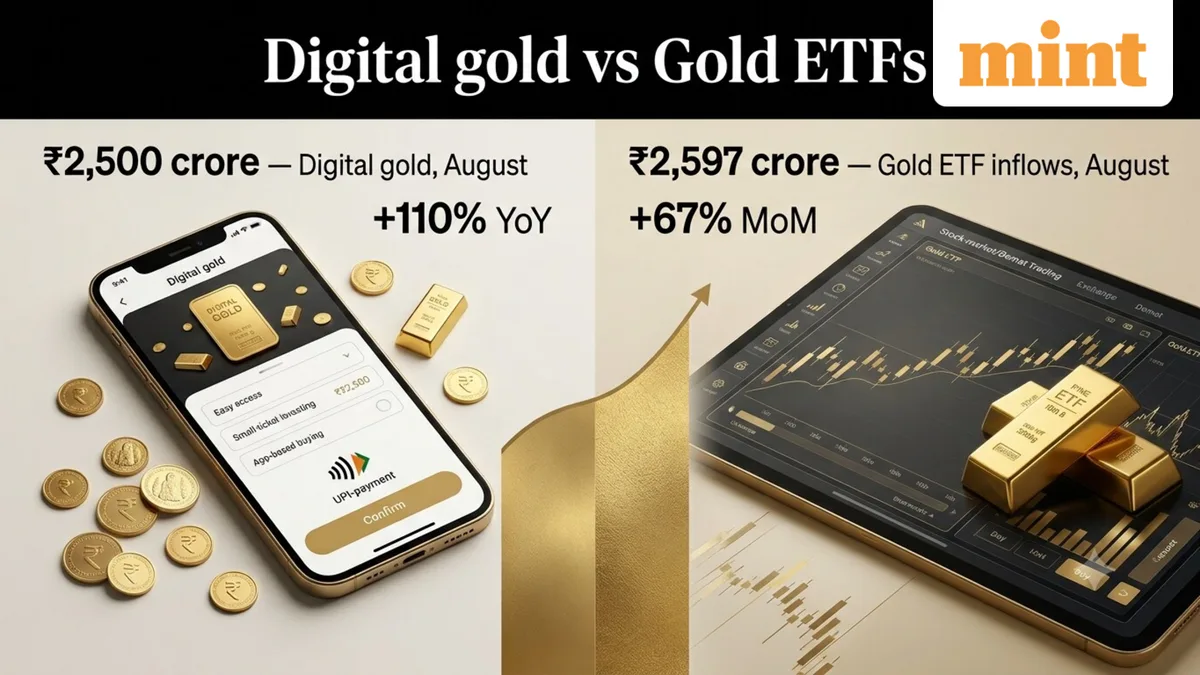
Investors can buy digital gold in tiny quantities through apps such as PhonePe, Paytm, and other digital platforms, often starting with ₹ 1, ₹ 10, or ₹ 100. However, gold ETFs are SEBI-regulated products that trade on stock exchanges.
Demand for both products has remained strong. According to the latest World Gold Council research, digital gold buying in India held steady from June to August, averaging around ₹ 2,500 crore per month, with August 2026 purchases rising 110% year-on-year.
Inflows into gold ETFs rose 67% month-on-month to ₹ 2,597 crore in August. While this was below the exceptionally strong levels seen in the first quarter, inflows remained positive on a near-sustained basis throughout the year, according to the World Gold Council.
But this raises an important question: why is digital gold attracting strong demand even though it does not come under SEBI ’s regulatory framework? Are investors overlooking the risks? Here’s what you need to know before investing.
Gaurav Mathur, Founder & CEO, SafeGold, highlighted two key factors. One is the ability to take physical delivery of gold, particularly through seamless integration between digital-gold platforms and jewellery brands.
The other is the possibility of earning a yield in grams of gold by leasing out digital gold. For example, a 100-gram balance at the beginning of the year could grow to around 103-104 grams by year-end, he noted.
Gaurav Arora, Head of Research, SAHI, said the appeal also comes from the low entry barrier. Investors can start with very small amounts through an app without opening a demat account or understanding the securities market.
“For many consumers, buying digital gold feels similar to buying a gold coin or jewellery online, so the regulatory distinction may not be top of mind when making small, recurring purchases,” Arora mentioned.
“Digital gold is not governed by SEBI or the RBI,” noted Harsh Vardhan Dawar, ACA, CFA, FRM, Founder of Wealth Cafe. SEBI mandates physical audits of gold ETF holdings, while apps selling digital gold have private vault arrangements in place.
“This means any grievances need to be managed with the private app directly, without any regulatory mechanism in place. In case of bankruptcy or insolvency, ETFs have a better recovery mechanism in place,” Dawar added.
Arora noted that investors should therefore examine who provides the product, how the underlying gold is stored and what happens if the platform faces operational or financial problems.
“Digital gold comes with a buy-sell bid-ask spread of 3% to 6%. In addition, it attracts GST at 3%. So, an investor is down 6% to 9% immediately after purchase,” Dawar noted.
Physical conversion can add another cost. Making charges for small coins or holdings can be around 5-10%, he added.
By comparison, a gold ETF typically involves a visible annual expense ratio of roughly 0.3-0.8%, along with a small brokerage cost, Dawar said.
5News aggregated this summary from the outlet’s public feed. The full article, with all the context, is on www.livemint.com — the content belongs to LiveMint - Money.