Woven into Madras
Account subscription benefits alongside Premium Stories, Editorials, Opinions and more. Unlock these with Subscription
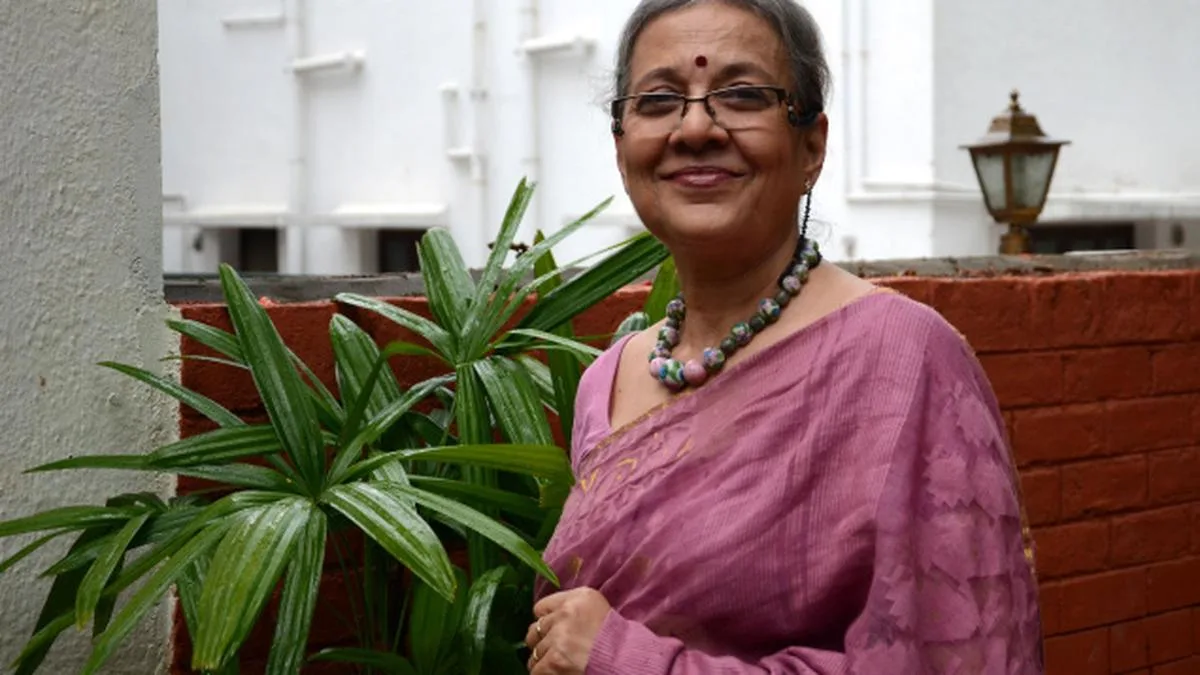
CHENNAI : 08/08/2012 : Arundhati Menon 'SHILPI" Ex-Owner-Founder 6th Oct 1980 at Ranjeet Road, Kotturpuram. Photo : M_KARUNAKARAN
“ Madras, nalla Madras ,” was one of my favourite songs when I moved to Chennai way back in 1967. A Bengali raised in Delhi, I arrived into this city with my family, harbouring a lot of reservations. While pursuing my Masters in Social Work at Stella Maris, I decided to start an “earn while you learn” programme, where talented students of the college would craft things and sell them to Shanti Bhavan, a social welfare centre under the college administration that assisted the underprivileged from surrounding areas.
In the 60s, many women were into Nylex saris, some of which were pretty. I, however, was always a handloom person. I was also interested in crafts and needlework, and stitched my own clothes, thanks to my mother. My Bengal cottons would cause a stir in Madras, and at that time, a good Dhonekali or Tangail sari cost a mere Rs. 14! They were so much in demand among my friends’ circle that I would get a suitcase full of saris after every visit to Calcutta. That’s how it all started. I also fell in love with the south Indian cottons - the Kancheepuram weaves were so exquisite. Despite the heat and humidity, the bright colours made you feel wonderful. Then, there were the gorgeous Kalakshetra saris that Rukmini Devi Arundale inspired.
My husband, a half south-Indian, was very supportive, and, in the initial years, would work with me and fix my finances. I started off in a garage at home, identified talented tailors and embroiderers. My clientele grew from a few to a 100 over time and this gave birth to Shilpi which I co-founded in 1980, a small boutique on C.P. Ramaswamy Road. Another draw was the cotton clothes I used to sew for my girls. I would put them to bed and personally stitch hundreds of dresses in pretty checks, appliqué and so forth. These would disappear in no time at exhibitions.
Shilpi initially sold children’s clothes and saris and then moved to salwar kurtas. One day, a lady walked in after a dance class in a short sari and that’s when an idea struck me. I approached the weaver and gave her the specifications for a salwar set. What came out of this, was the concept of a handloom salwar kurta and duppatta . In a sense, we introduced it to the rest of the country. After this there was no looking back. The most beautiful fabrics sold like hot cakes at an exhibition in Bombay. Women went crazy over the stunning south Indian weaves and duppattas .
Then we started travelling to various parts of the country to bring in unique and varied handloom weaves from different States. It was an exhilarating experience to promote Bengal’s Kantha work and Gujarat’s block printing in Chennai. The women here lapped it up as there weren’t big Government exhibitions then. We would promote the product of a particular State and introduce Chennaiites to the beauty and diversity of our country’s crafts and explain the techniques and skills involved.
5News aggregated this summary from the outlet’s public feed. The full article, with all the context, is on www.thehindu.com — the content belongs to The Hindu.