Hauling about the Madras city on trains
Account subscription benefits alongside Premium Stories, Editorials, Opinions and more. Unlock these with Subscription
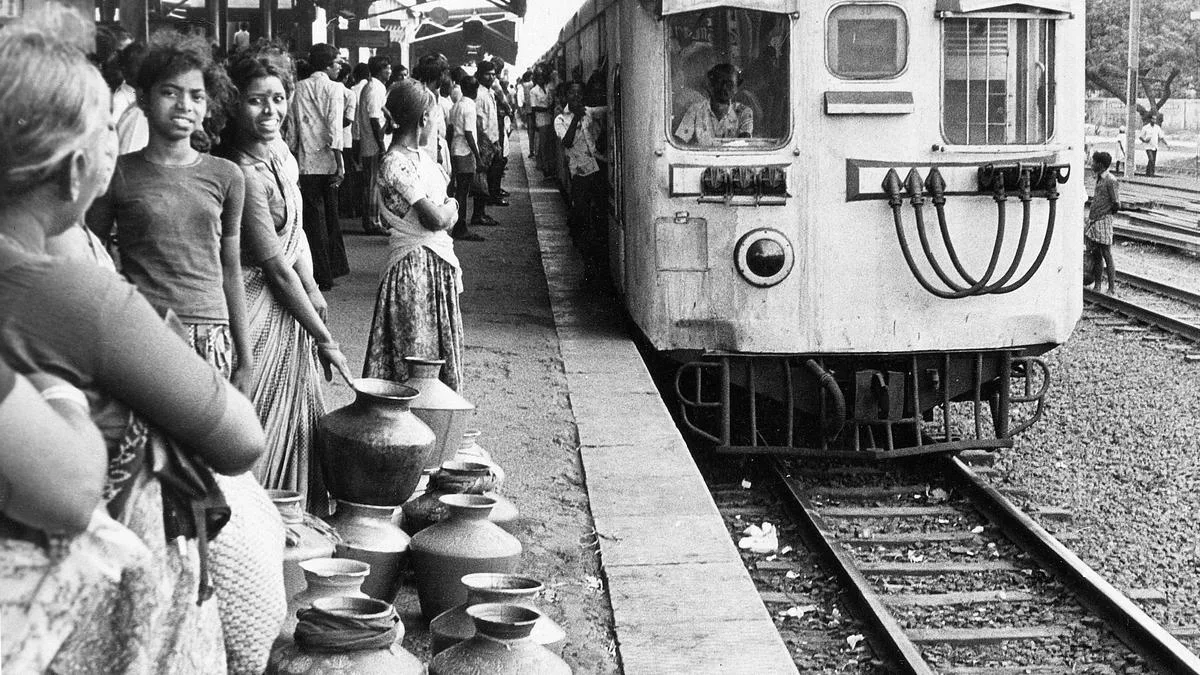
People waiting to board the suburban EMU at the Saidapet railway station in March 1982. | Photo Credit: The Hindu Archives
Trains in India first came to Madras. Period. Long before that famed train service between Boribunder and Thane, we had a train that hauled stone, from Red Hills and was operational in the 1830s and designed by that brilliant engineer Arthur Cotton. When commercial railway services were begun, Madras was connected in 1856 to Walajah Road. The terminus in the city was at Royapuram, which is why we still have a Northern Terminus Road there. All this was for long-distance connections.
Requirement for the suburban railway line began in what can only be considered as a repeat of what prompted Cotton to design one in the 1930s. With the harbour developing early in the 1900s to its full capacity, Sir Francis Spring, the dynamic Chairman of the Port Trust decided to link it to the railway line. It helped that he was a former railway man himself. The South Indian Railway was connected to the harbour. Within the premises, India’s smallest railway line — the Port Trust Railway would take over.
Chennai / Tamil Nadu / India / Madras Week / Made of Chennai / railway
Comments have to be in English, and in full sentences. They cannot be abusive or personal. Please abide by our community guidelines for posting your comments.
We have migrated to a new commenting platform. If you are already a registered user of The Hindu and logged in, you may continue to engage with our articles. If you do not have an account please register and login to post comments. Users can access their older comments by logging into their accounts on Vuukle.
5News aggregated this summary from the outlet’s public feed. The full article, with all the context, is on www.thehindu.com — the content belongs to The Hindu - National.