Ohaw? Ruibe? Pocche? While traveling in Japan’s north, we try Ainu cuisine for the first time
Taste-testing the northern frontier of local foods in Japan .
Just about every corner of Japan has some special food it’s famous for, and if you head up to the country’s northern tip, Hokkaido Prefecture , there are several.
Travelers often arrive in Hokkaido licking their lips as they look forward to some of the country’s best salmon roe, sea urchin, and crab, plus delicious miso ramen, soup curry, and all sorts of cheeses and dairy desserts.
But on our recent visit to Hokkaido, the most memorable things we ate were the ones we hadn’t ever heard of before this trip: ohaw, ruibe, and pocche .
If you’re an experienced eater of Japanese cuisine yet don’t recognize any of those, don’t fell like you’ve got to turn in your foodie card.
All of those dishes come from the culture of the Ainu , the indigenous people who populated Hokkaido before the arrival of Japanese settlers and the region’s absorption into Japan.
Though Hokkaido’s Ainu population is far smaller than it used to be, cultural centers like Akanko Ainu Kotan , near the shore of Lake Akanko , help to preserve Ainu cultural traditions and share them with visitors.
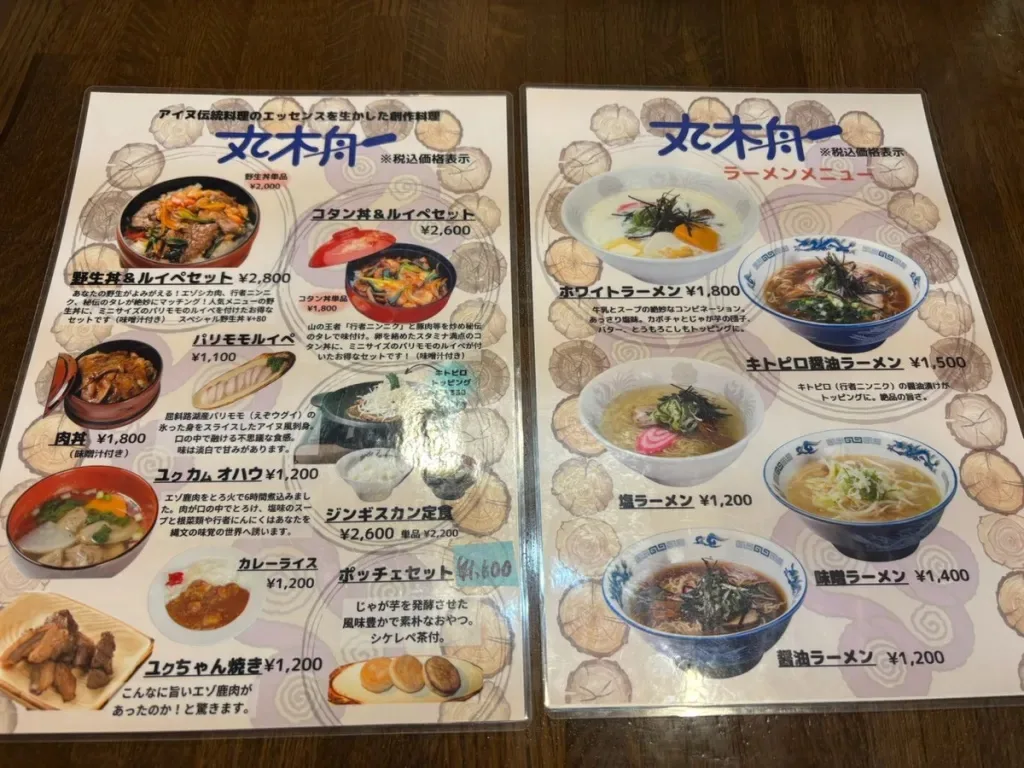
In addition to a theater with traditional dance performances and shops selling handicrafts, Akanko Ainu Kotan also has restaurants where you can try Ainu dishes, and with our visit coming right around launch time, we decided to check out the eatery Marukibune . ▼ 丸木舟 = Marukibune After sitting down, we opened up the menu and took a look.
While such standard dishes as soy sauce broth ramen and curry rice are available, we wanted a literal taste of Ainu culture, so that’s what we gravitated towards… …and for our first step into this new-to-us food frontier, we selected the yuk kam ohaw .
Breaking that down linguistically, ohaw is a kind of stew made with fish or other animal stock and kelp.
Kam ohaw means that there’s meat in the stew, and yuk indicates that the meat here is venison .
Our ohaw also contained root vegetables and wild garlic.
It looked very different from the sort of soups common to mainstream Japanese cooking, and we braced ourselves for something that could possibly be an acquired taste.
That apprehension turned out to be unnecessary though, as we found it immediately delicious .
この要約はメディアの公開フィードから5Newsが集約したものです。 文脈も含めた全文はsoranews24.comにあります — コンテンツの権利はSoraNews24に帰属します。